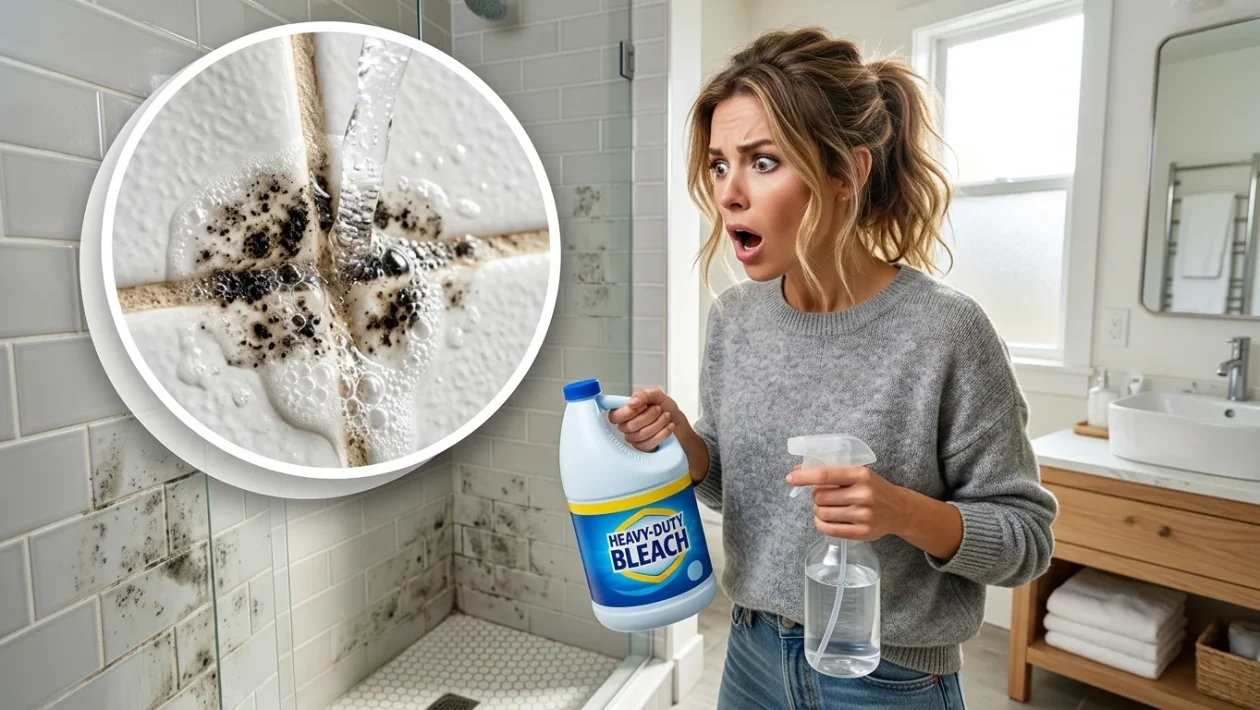
The Bleach Illusion
When mold appears in bathrooms, kitchens, or basements, most homeowners immediately reach for bleach. However, health and environmental agencies warn that this heavy-duty chemical is rarely the most effective solution.
Bleach is a powerful disinfectant capable of destroying mold on hard, nonporous surfaces like ceramic tile, sinks, and glass. Its major flaw lies in its inability to penetrate porous materials.
When applied to drywall, wood, or grout, bleach only addresses the surface. The underlying mold roots survive and inevitably regrow long after the area appears clean.
Why Vinegar Wins the Battle
White distilled vinegar operates completely differently. As a mild acid, it easily penetrates porous surfaces to attack mold at its source.
The Environmental Protection Agency (EPA) recognizes vinegar as a highly effective agent for killing many common types of household mold, especially in small, isolated patches.
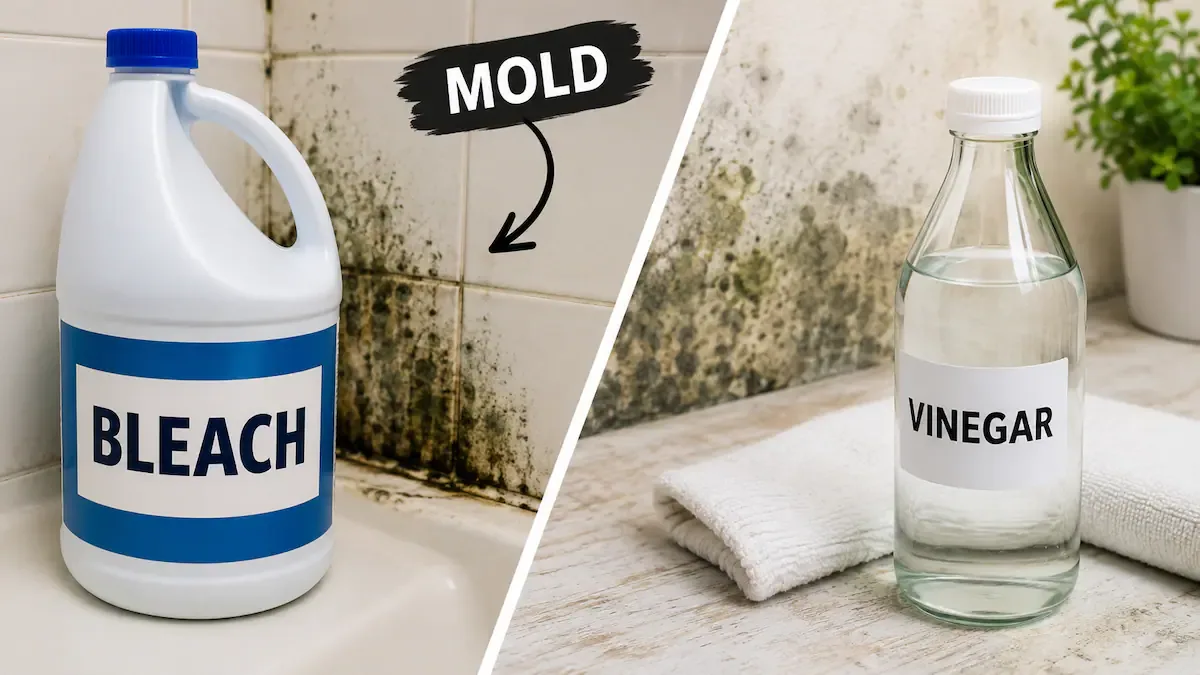
Choosing the right cleaner can help remove mold more effectively and prevent it from returning.
Safety is another crucial dividing line. Bleach releases harsh fumes and poses severe respiratory risks. If bleach is accidentally mixed with vinegar or ammonia, it generates highly toxic, potentially lethal gases.
The Official Strategy for Eradication
For minor household mold outbreaks, experts consistently recommend white distilled vinegar over bleach.
The EPA stresses that simply applying a disinfectant is never enough. Physical scrubbing and moisture removal are mandatory steps. The Centers for Disease Control and Prevention (CDC) backs this up, noting that controlling indoor humidity and immediately repairing water leaks are the only guaranteed ways to prevent mold from returning.
Because vinegar reaches deeper into materials, it leaves far fewer surviving spores behind.
When Bleach is Actually Useful
While vinegar is the superior killer, bleach still has a specific role in household maintenance. Experts say it is appropriate for:
- Cleaning mold strictly from sealed tile, glass, or solid bathtubs.
- Disinfecting nonporous surfaces after the mold has already been physically removed.
- Erasing stubborn dark stains left behind by a dead mold colony.
Whenever you handle bleach, always wear gloves and eye protection, and guarantee the room has maximum ventilation.
The Step-by-Step Removal Process
If you spot a small patch of mold, follow this expert-approved protocol to remove it safely:
- Fix the leak: Identify and eliminate the moisture source before doing anything else.
- Gear up: Put on non-porous gloves, protective goggles, and an N95 mask.
- Apply vinegar: Spray undiluted white distilled vinegar directly onto the mold and let it sit undisturbed for one hour.
- Scrub: Use a stiff-bristled brush to scrub the mold away physically.
- Dry: Wipe the area completely dry to deny future mold the moisture it needs to survive.
There is a strict limit to DIY removal. If the mold spans more than 10 square feet, or if it was caused by raw sewage or highly contaminated floodwater, the EPA advises stepping away and hiring a professional mold remediation service.