The Science of Pantry Cleaning
Standard household cleaners are often expensive and packed with harsh synthetic chemicals. Sometimes, the most effective solutions are already sitting in your kitchen pantry or refrigerator.
Unconventional cleaning methods might sound like internet myths designed for quick views. However, certain raw foods possess natural chemical properties—like high acidity or natural oils—that efficiently break down grease, rust, and hard water stains.
The Onion Grill Scrubber
Cleaning a burnt, greasy barbecue grill grate is a notoriously difficult chore. Wire brushes can shed dangerous metal bristles into your food, making them a risky choice for routine maintenance.
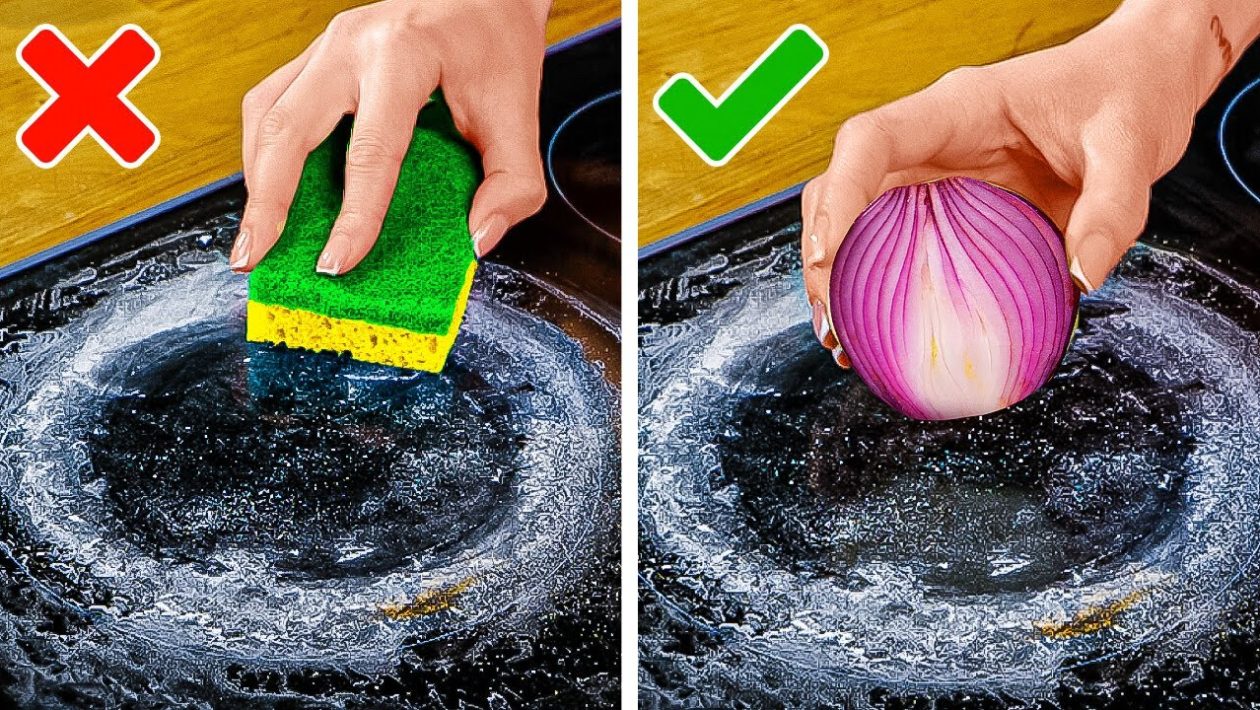
Instead, grab a standard white or yellow onion. Cut it in half, pierce the rounded side with a long grilling fork, and rub the flat, exposed side directly onto a hot grill grate.
The onion’s natural acidity and moisture strip away baked-on carbon and grease on contact. It also leaves behind a mild, savory seasoning for your next cookout without leaving any toxic chemical residue.
Polishing Tarnished Metal With Ketchup
Tarnished copper pots and brass fixtures can make a kitchen look instantly neglected. Commercial metal polishes usually emit strong fumes that require heavy ventilation during use.
Standard ketchup offers a cheap, fume-free alternative for restoring metal. The condiment contains a high concentration of acetic acid from its vinegar base, combined with naturally occurring citric acid from the tomatoes.
Smear a thick layer of ketchup over tarnished cabinet pulls, copper bottoms, or decorative brass. Let the paste sit for about 30 minutes, then wipe it away with a warm, damp cloth to reveal the restored shine.
Erasing Wood Scratches With Walnuts
Scratched hardwood floors and vintage wooden furniture usually prompt a trip to the hardware store for specialized wood-stain markers. A raw, unsalted walnut works just as well for superficial surface scratches.
Take a shelled walnut and rub it diagonally across the scratch. Afterward, rub your bare finger over the area to create friction and warm up the nut’s natural oils.
The soft walnut meat physically fills the indentation in the wood. Simultaneously, the oils seep into the grain, darkening the scratch to seamlessly match the surrounding finish.
The Grapefruit and Salt Scrub
Soap scum and hard water mineral stains in bathtubs require serious abrasive power to remove. While bleach and heavy-duty scouring powders do the job, they can permanently etch delicate finishes and irritate the lungs.
Cut a large grapefruit in half and dip the exposed flesh generously into coarse kosher salt. Use the salted grapefruit half as a handheld scrubber directly on the bathtub basin, glass doors, and chrome fixtures.
The intense citric acid cuts directly through stubborn soap scum and calcium deposits. The coarse salt acts as a gentle abrasive that pulls up the dirt without scratching porcelain or fiberglass.