Cleaning porcelain tile floors efficiently requires choosing the right household products. Using the wrong cleaners creates a cloudy haze over the glaze, destroying the tile’s mirror-like finish.
Why Commercial Cleaners Leave Porcelain Dull
Most commercial multi-surface cleaners and powdered soaps contain waxes or fats that are notoriously difficult to rinse away. On glazed porcelain, these chemicals create an invisible micro-layer that quickly acts as a magnet for dust.
This greasy film is the real culprit behind the dull appearance and footprints that appear immediately after mopping. To maintain a high gloss, the floor requires products that break down dirt without leaving any oily residue behind.
The Two-Bucket Method for a Mirror Shine
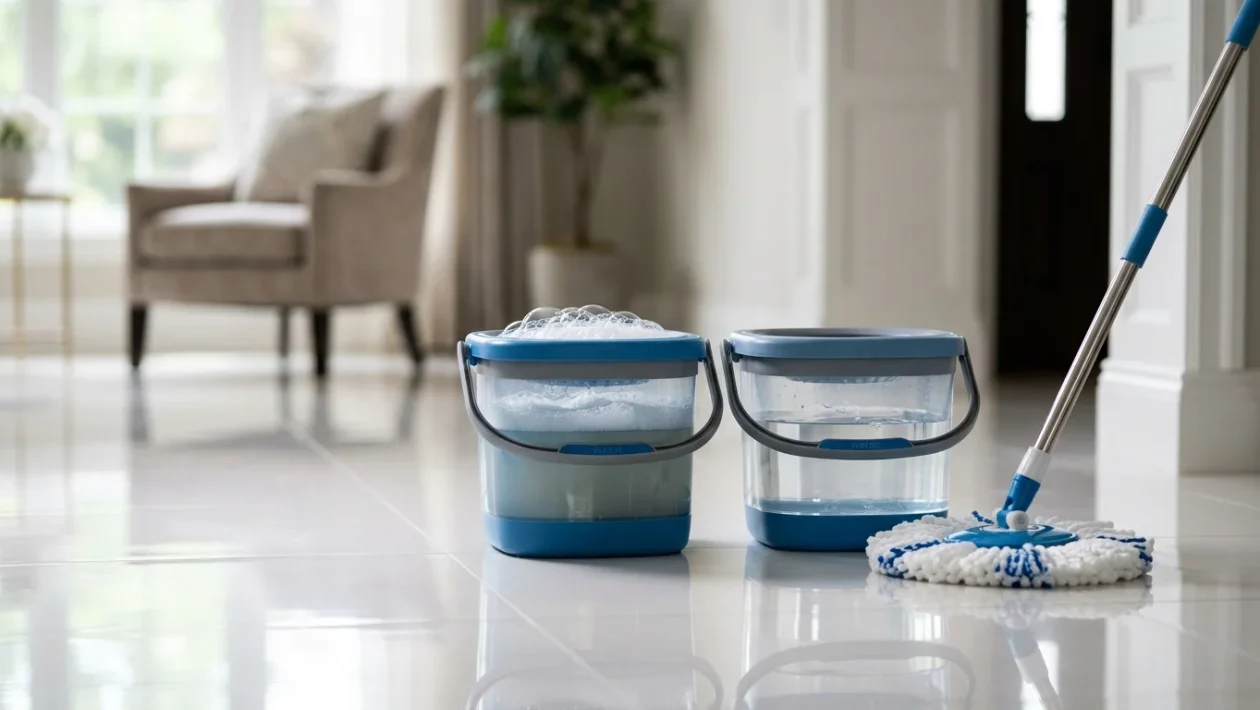
This technique relies on keeping two separate buckets while mopping. The first bucket holds the diluted cleaning solution, while the second is strictly for rinsing the dirty mop before dipping it back into the clean solution.
This strict separation prevents soapy, dirty water from returning to the floor, ensuring the glaze is left completely clean. Here is how the two-bucket method compares to other common practices:
- The Two-Bucket Method: Delivers maximum mirror shine with zero chemical residue.
- Traditional Single Bucket: Leaves a dull, cloudy finish by spreading dirty water and high chemical residue.
- Floor Waxes: Offers a temporary artificial shine but creates extreme residue buildup that eventually peels.
The Perfect Cleaning Formula
Porcelain is a highly non-porous material, meaning it requires very little soap to get clean. The safest and most effective ratio is diluting one tablespoon of neutral dish soap in roughly 1.3 gallons of warm water.
Never use acidic products, concentrated bleach, or abrasive scouring powders on porcelain tiles. These harsh chemicals irreversibly damage the protective enamel layer, leaving the floor permanently dull.
The Worst Mopping Mistakes
Using stiff nylon brooms or rough cotton cloths can create invisible micro-scratches in the glossy enamel. Over time, dust accumulates inside these scratches, making stain removal increasingly difficult.
To guarantee the durability and beauty of your tile, flooring manufacturers recommend specific tools for the job:
- Soft-bristle brooms: Perfect for sweeping fine daily dust without creating abrasive friction.
- Microfiber cloths: Highly efficient at absorbing dirt and moisture without shedding lint or scratching the floor.
- Spin mops: These make rinsing the mop head much easier and help control the amount of moisture applied to the ceramic tiles.
Frequently Asked Questions
Removing stubborn grease and safely using vinegar are common concerns for homeowners with glazed floors. Here are the facts based on ceramic industry experts.
Can I use white vinegar to clean porcelain tiles?
Yes, but only in moderation and heavily diluted. Vinegar is excellent for cutting grease and removing mold from grout lines. However, you must rinse it thoroughly to prevent the acidity from degrading the tile’s enamel over time.
How do I remove old kitchen grease without scratching the floor?
Apply a single drop of concentrated neutral dish soap directly onto the stain using a damp, soft microfiber cloth. Let it sit for five minutes to break down the oils, then wipe away with clean water. Never use steel wool.
Adopting the correct cleaning method protects your flooring investment and keeps your home looking spotless longer. By skipping greasy commercial cleaners, your porcelain tiles will naturally recover and maintain their original mirror shine.