White vinegar has quietly become a staple for household cleaning, prized for its ability to cut through grime and neutralize stubborn odors. One of the most effective ways to use it involves an area often overlooked until it becomes a problem: the shower drain.
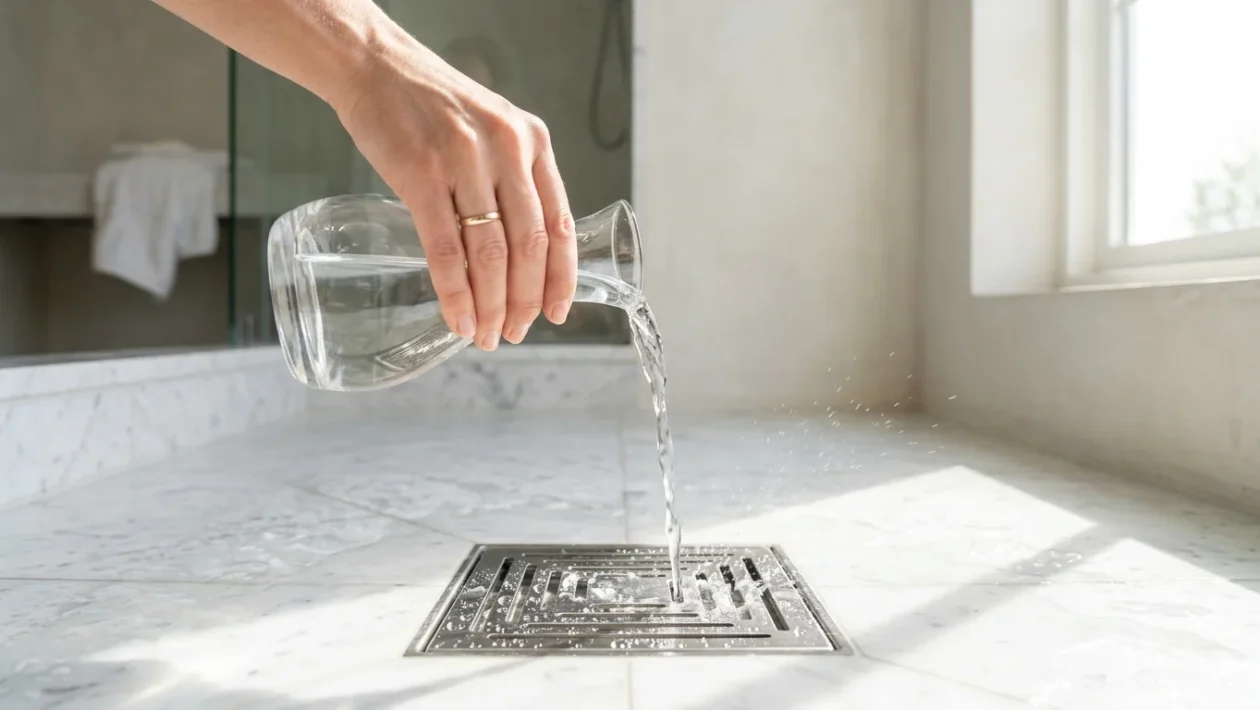
White vinegar poured over a shower drain grate to break down residue.
Routine maintenance of shower pipes often requires harsh chemicals. However, a simple pour of white vinegar tackles the daily buildup caused by moisture, soap scum, and organic residue.
The Science Behind the Hack
Over time, minerals, hair, and soap adhere to the inside of your pipes. White vinegar naturally loosens this debris before it can form a solid blockage.
The acidic nature of the liquid also neutralizes the lingering, musty odors generated by trapped moisture and decaying hair. While it will not dissolve a massive, existing clog, regular application keeps the pipes flowing smoothly and extends the time between deep cleans.
By adopting this method, households can significantly reduce their reliance on aggressive, expensive commercial drain unblockers. It serves as a cost-effective, environmentally friendly alternative.
How to Treat Your Drain
To get the best results, start by physically removing any visible hair or debris resting on the drain grate.
A clean shower floor and drain after routine plumbing maintenance.
Follow these three steps to clear the plumbing:
- Pour a generous amount of white vinegar directly down the drain.
- Let the liquid sit undisturbed for 20 to 30 minutes to break down the grime.
- Flush the drain heavily with hot water to wash away the loosened residue.
Some homeowners add baking soda to the mix for an extra foaming action. Yet, pure white vinegar is fully capable of handling routine preventive maintenance on its own.
Frequency and Crucial Warnings
For optimal results, treat your shower drain once a week or every 15 days, depending on how heavily the shower is used. Consistent application stops dirt buildup in its tracks.
However, safety remains paramount when using household cleaners. You must never mix white vinegar with bleach or chlorine-based products.
Combining these common chemicals triggers a severe reaction that releases highly toxic chlorine gas.