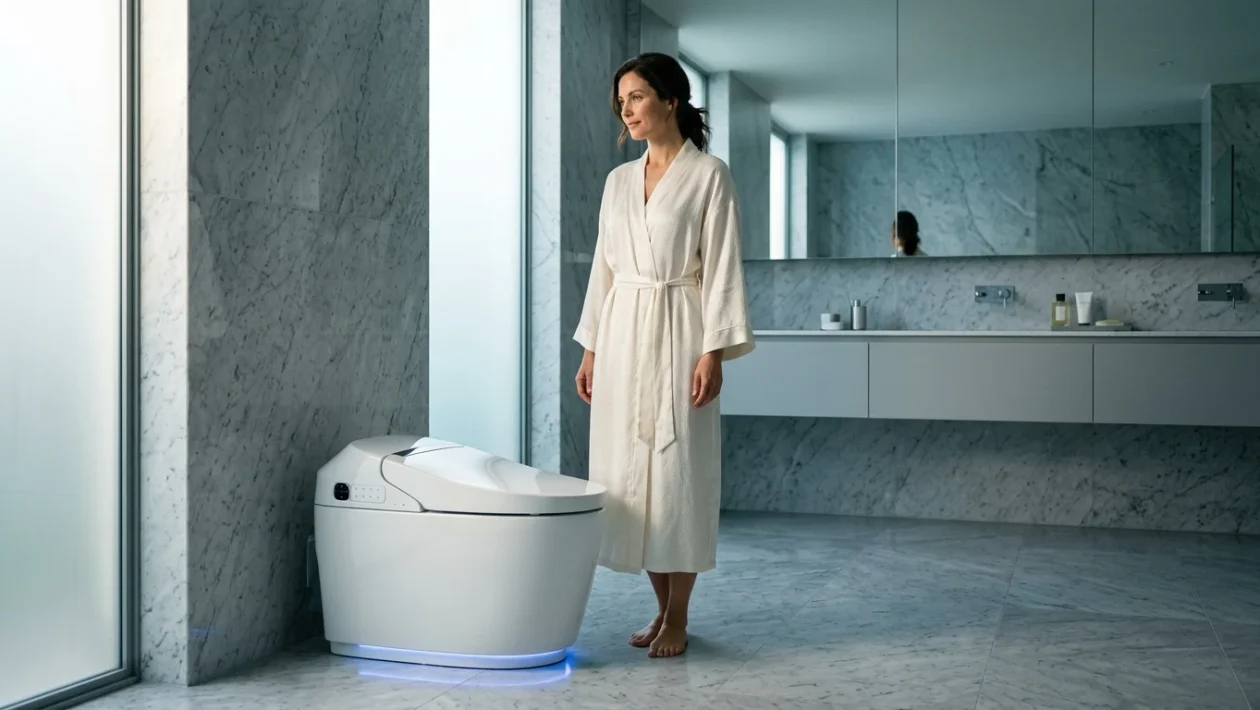
A modern, high-tech smart toilet featuring an automated bidet system in a contemporary bathroom.
The Rise of the High-Tech Bathroom
The bathroom is undergoing a profound technological transformation. Smart toilets are no longer rare novelties reserved for luxury hotels or Asian travel destinations.
As we head into 2026, these high-tech fixtures are positioning themselves as a dominant global trend in residential homes. The shift is driven by a consumer demand for superior comfort, enhanced hygiene, and daily efficiency.
Inside the Washlet Revolution
Commonly known as washlets, these devices originated in Japan but are now experiencing massive international adoption. They merge standard toilet functions with an integrated bidet in a single, streamlined unit.
Smart toilets utilize advanced water-cleaning systems. Users can completely customize the water temperature, pressure, and spray direction for a tailored hygiene experience.
The technology goes far beyond just washing. Modern units feature warm-air drying, heated seats, and automatic motion sensors that detect when a user enters the room.
Because of these lifestyle upgrades, architects and interior designers now view smart toilets as a baseline standard for modern residential projects.
Phasing Out Toilet Paper
The most disruptive impact of smart toilets is the rapid reduction of toilet paper. Cleansing with water simply provides a significantly more thorough clean than traditional dry paper.
This touchless technology is highly skin-friendly and drastically reduces physical contact with bacteria. Many premium models also feature self-cleaning programs and built-in antibacterial surfaces to maintain high sanitary levels.
The environmental benefits are equally significant. Eliminating daily paper consumption slashes household demand for natural resources, aligning smart toilets with global sustainability goals.
Maintenance and Changing Habits
While automation simplifies the bathroom routine, smart toilets are not completely maintenance-free. Standard disinfection routines are still necessary to prevent odor and bacteria buildup.
The booming popularity of washlets represents a permanent shift in how we approach personal hygiene. Integrating this technology points to a future where homes are explicitly designed for maximum efficiency and environmental sustainability.