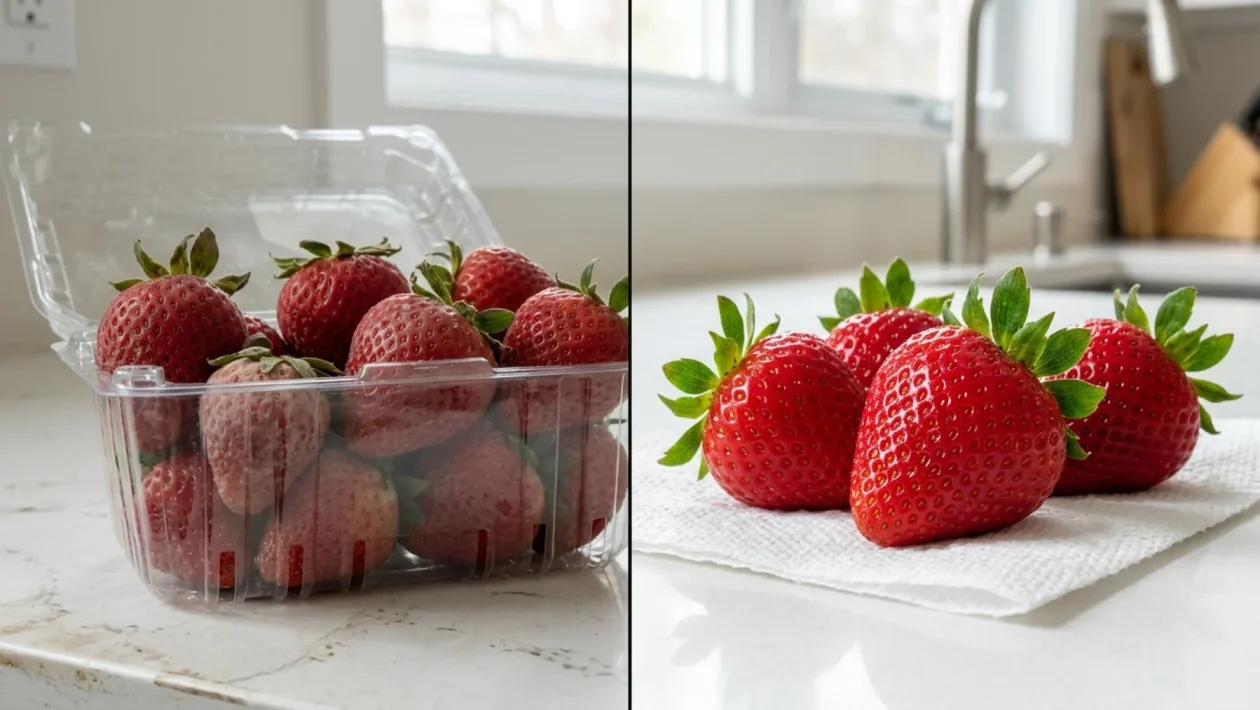
You’ve just paid premium prices for a gorgeous clamshell of May 2026 spring berries. You run them under the tap for three seconds, shake them off, and take a bite. Stop right there—you are likely chewing on a microscopic cocktail of field dirt, agricultural chemicals, and fuzzy mold spores.
Washing strawberries the wrong way is the absolute fastest route to mushy, flavorless fruit that rots in your fridge. But don’t panic. There is a dead-simple, foolproof method recommended by food safety specialists that guarantees perfectly clean, crisp berries every single time.
The Expert-Approved Method to Strip Away Grime
Look, I get it. When you bring home a fresh haul of President’s Choice or Driscoll’s berries from the supermarket, your first instinct is to just rinse and eat. But water alone doesn’t cut through the stubborn residues clinging to the fruit’s porous skin.
Here is a hard fact that should change how you prep your snacks: Strawberries consistently top the Environmental Working Group’s “Dirty Dozen” list, with tests revealing that a single conventional strawberry can retain up to 22 different pesticide residues. A superficial splash of cold water barely scratches the surface.
“A quick rinse under the faucet removes superficial dust, but it does absolutely nothing to neutralize oil-based agricultural sprays or deep-seated bacteria hiding around the seeds,” explains Dr. Sarah Jenkins, a leading North American food safety researcher. “You need a mild alkaline or acidic solution to break those bonds.”
Washing Strawberries Properly: The Step-by-Step Breakdown
You don’t need expensive, store-bought veggie washes to get the job done right. The ultimate handyman’s trick for the kitchen relies on something you already have sitting in your pantry.
- The Prep: Keep the green stems (the calyx) perfectly intact. Removing the stems before washing creates a direct wound where water and chemicals can flood into the core of the berry.
- The Solution: Fill a large glass bowl with cold water. Add one teaspoon of baking soda for every two cups of water. Baking soda is a natural, alkaline powerhouse that effectively degrades surface pesticides.
- The Soak: Submerge your strawberries in the bath. Set a timer for exactly five minutes—no more, no less. Letting them sit too long will turn them into waterlogged sponges.
- The Final Rinse: Scoop the berries out with your hands or a slotted spoon. Place them in a colander and give them a thorough 30-second rinse under cold, running water to wash away the loosened debris and baking soda.
Locking in that Clean, Sweet Crunch
Washing your fruit is only half the battle. If you toss wet berries straight into a container, you are practically begging for mold to take over by tomorrow morning. Moisture is the mortal enemy of a firm, crunchy strawberry.
Immediately after rinsing, lay your strawberries out in a single layer on a clean kitchen towel or a double layer of paper towels. Gently pat the tops dry, and let them air out for about 15 minutes before storing them.
| The Expert Way (Crunchy & Fresh) | The Amateur Way (Soggy & Spoiled) |
|---|---|
| Washing only right before eating. | Washing the whole box on grocery day. |
| Using a baking soda soak to lift dirt. | A quick 2-second splash of tap water. |
| Drying thoroughly on a kitchen towel. | Tossing wet fruit back into the plastic clamshell. |
Frequently Asked Questions
Should I wash my strawberries right when I get home?
Absolutely not. Washing strawberries introduces moisture, which accelerates mold growth. Always store them unwashed in the fridge and only clean the exact portion you plan to eat right then and there.
Can I use white vinegar instead of baking soda?
Yes, you can. A solution of one part white vinegar to four parts cold water is excellent for killing mold spores and extending shelf life. Just ensure you rinse them very thoroughly afterward so you don’t end up with salad-dressing-flavored fruit.
Do organic strawberries still need this deep clean?
100 percent. “Organic” means they were grown without synthetic pesticides, but they are still exposed to organic fertilizers, soil-borne bacteria, birds, insects, and human hands during the supply chain journey. Always wash your produce.
🤝 Listen, taking an extra five minutes to clean your produce correctly is a game-changer for your health and your tastebuds.
💡 Nobody wants a soggy, gritty mouthful of fruit, especially when spring is serving up the absolute best crops of the year.
📱 Try this baking soda soak the next time you unpack your groceries, and I guarantee you’ll notice a massive difference in how bright and fresh your berries taste.
👇 Good luck in the kitchen, and don’t forget to share your thoughts or your own favorite fruit-prep tips in the comments below!