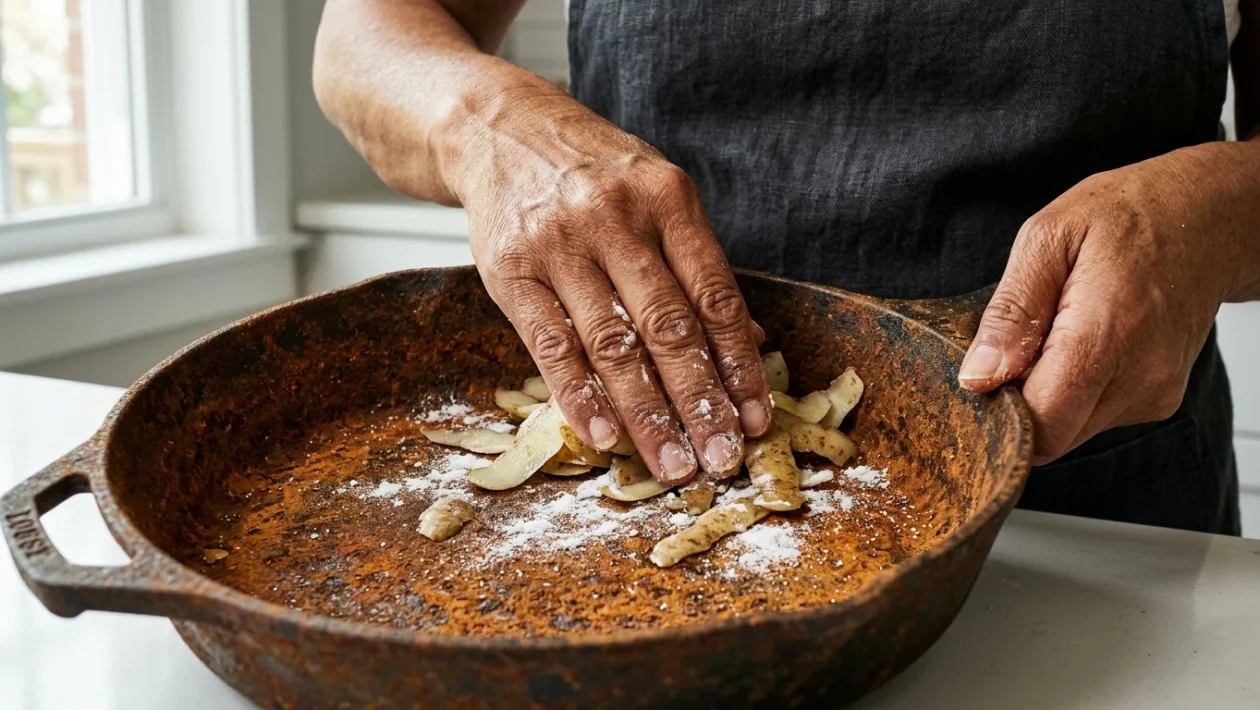
A rusted cast iron pan being cleaned with baking soda and fresh potato peels.
Consumers are increasingly ditching expensive, chemical-heavy cleaning products for affordable, natural alternatives. One highly effective method for restoring rusted metal surfaces involves just two pantry staples: potato peels and baking soda.
The Science of the Mixture
This cleaning method relies on basic chemistry rather than heavy scrubbing. Baking soda acts as a mild abrasive that directly attacks the oxidized layer forming on the metal.
Meanwhile, potato peels contain oxalic acid. This natural compound is highly effective at breaking down and dissolving rust buildup at the molecular level.
When combined, these two ingredients create a powerful reaction. They loosen stubborn rust stains on iron and steel cookware without damaging the underlying surface.
How to Erase Rust Stains Overnight
Restoring a heavily rusted pan requires minimal effort and no specialized tools. To treat damaged metal, follow this exact process:
- Apply the powder: Sprinkle baking soda directly over the rusted areas of the metal.
- Add the potato: Place the moist side of the potato peels directly onto the affected spots. Alternatively, embed the rusted object into a freshly cut potato.
- Let it sit: Leave the mixture on the metal overnight so the oxalic acid can fully penetrate the rust.
- Rinse and scrub: The following morning, scrub the object with a brush under running water to wash away the dissolved residue.
For severely degraded metal, you can repeat the process several times. Always dry the object immediately after rinsing to halt any new oxidation.
Protecting Pans from Future Rust
Moisture is the primary catalyst for rust on cast iron and steel cookware. The most effective preventative measure is keeping your pans completely bone-dry.
After washing, wipe the metal down with a dry cloth immediately. Never let water sit on the surface, as the oxidation process begins almost instantly.
Once the pan is completely dry, rub a thin layer of vegetable oil over both the inside and outside. This creates a lasting protective barrier against ambient moisture in your kitchen.
Store your cookware in a dry, well-ventilated cabinet away from steam. If you need to stack multiple pans, place a paper towel or protector between them to prevent the protective oil layer from scratching off.