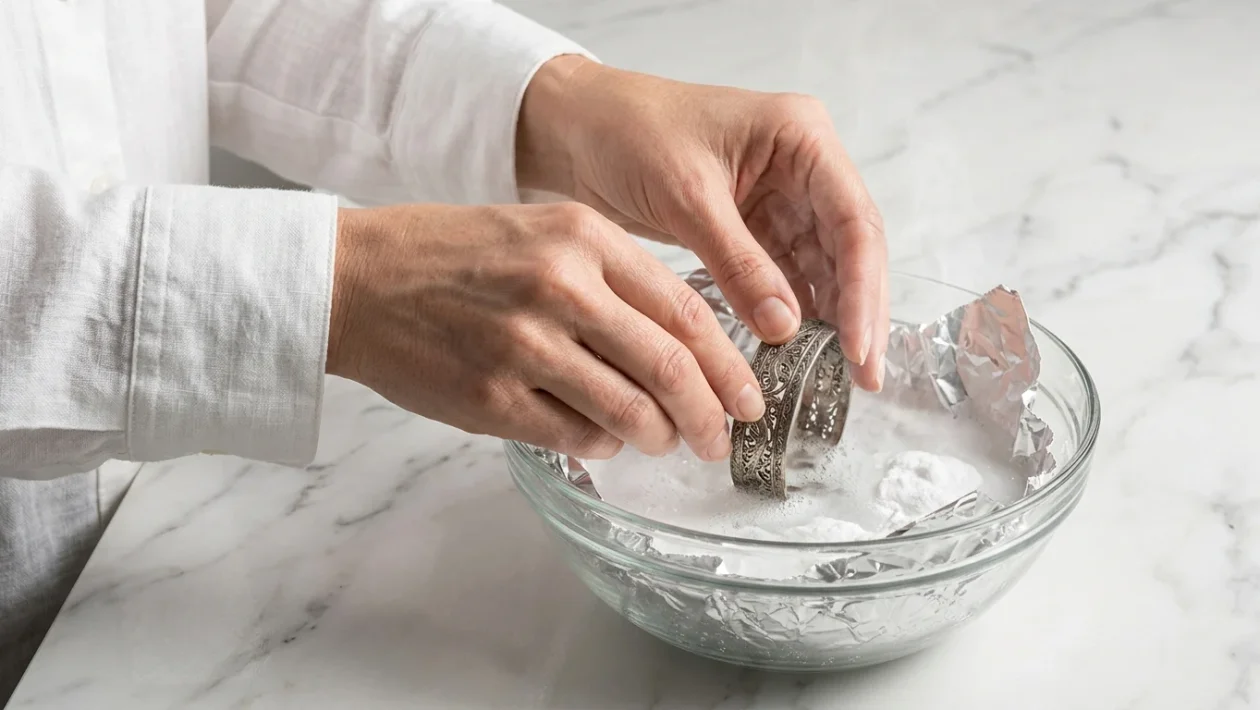
Tarnished silver jewelry submerged in a bowl with aluminum foil, baking soda, and hot water.
Tarnished silver doesn’t require harsh chemicals or hours of vigorous scrubbing. A basic combination of baking soda, salt, hot water, and aluminum foil can completely restore your items in minutes.
This method works exceptionally well for everyday silver objects. You can easily revive rings, necklaces, bracelets, cutlery, and collectible coins.
How the Aluminum Foil Hack Actually Works
Over time, silver reacts with sulfur in the air to form silver sulfide, a dark, stubborn layer of tarnish. Removing it usually requires physical abrasion, but this household trick relies on an electrochemical reaction instead.
The Role of Aluminum and Electrolytes
When silver touches the aluminum foil inside the solution, a localized chemical reaction occurs. Aluminum is a highly reactive metal that easily gives up electrons.
The aluminum forces electrons into the silver sulfide, converting it back into pure, metallic silver. During this exchange, the sulfur physically transfers from your jewelry onto the aluminum foil.
The baking soda and salt do not clean the silver directly. Instead, they act as electrolytes, supercharging the hot water to conduct electricity and facilitate the rapid exchange of electrons.
Step-by-Step: Cleaning Silver at Home
You only need a few basic household supplies to trigger this chemical reaction. Gather a sheet of aluminum foil, 1 tablespoon of baking soda, 1 tablespoon of salt, and 2 to 4 cups (500 ml to 1 liter) of very hot water.
Follow this exact process for the best results:
- Line a heat-safe container with the aluminum foil, keeping the shiny side facing up.
- Place your tarnished silver directly on top of the foil.
- Sprinkle the baking soda and salt evenly over the items.
- Pour the hot water into the container until the silver is completely submerged.
- Let the mixture sit untouched for 5 to 10 minutes.
- Carefully remove the jewelry, rinse it thoroughly under clean water, and buff it dry with a soft cloth.
If your silver is heavily tarnished or hasn’t been cleaned in years, you can safely repeat the procedure a second time.
What to Clean—and What to Avoid
This technique is highly recommended for solid silver and sterling silver. It reverses the chemical tarnish process without stripping away the metal or risking permanent scratches.
However, the electrochemical reaction and high water temperature will severely damage certain fragile materials. You must never use this method on silver-plated jewelry, as it can separate the plating from the base metal.
You should also avoid submerging any pieces containing porous or delicate stones, including:
- Pearls
- Opals
- Turquoise
- Coral
- Amber
- Emeralds