It happened on a beautifully clear Tuesday this May. The servers at the SETI Institute suddenly lit up with a data spike so mathematically deliberate, it made veteran astrophysicists spill their coffee.
We are talking about a razor-thin radio frequency punching straight through the chaotic static of the universe. It isn’t a dying star, it isn’t a rogue human satellite, and it definitely isn’t interference from a microwave in the observatory breakroom.
The SETI signal 2026 is currently dominating secure channels worldwide, and it is actively rewriting everything we thought we knew about our lonely little corner of the galaxy. The ultimate question is no longer “are they out there,” but rather, “what are they saying?”
The SETI Signal 2026 Phenomenon
To understand the sheer magnitude of this moment, you have to understand how noisy space actually is. The cosmos is a roaring ocean of exploding supernovas, spinning pulsars, and colliding black holes.
Finding an artificial transmission is like trying to hear a single pin drop in the middle of a packed football stadium. Yet, this spring, the automated filters at the Allen Telescope Array caught something truly bizarre.
It was a narrow-band radio emission resting precisely at 982.002 megahertz. Nature simply does not create signals this concentrated.
Worse—or better, depending on how you look at it—the signal is exhibiting a perfect Doppler shift. That means whatever is transmitting this beacon is located on a planet that is actively rotating and orbiting a star.
The Proxima Centauri Whisper
The origin point of this transmission is what has the scientific community hyperventilating. The data points directly toward Proxima Centauri, the closest stellar neighbor to our own solar system.
Here is a mind-boggling fact for you: Proxima Centauri is located roughly 4.24 light-years away from Earth. That means the signal slamming into our antennas today was actually broadcast back in early 2022.
Because the source is in our cosmic backyard, major North American agencies are throwing their heavy hitters at the target. NASA has immediately pivoted orbital assets to monitor the system.
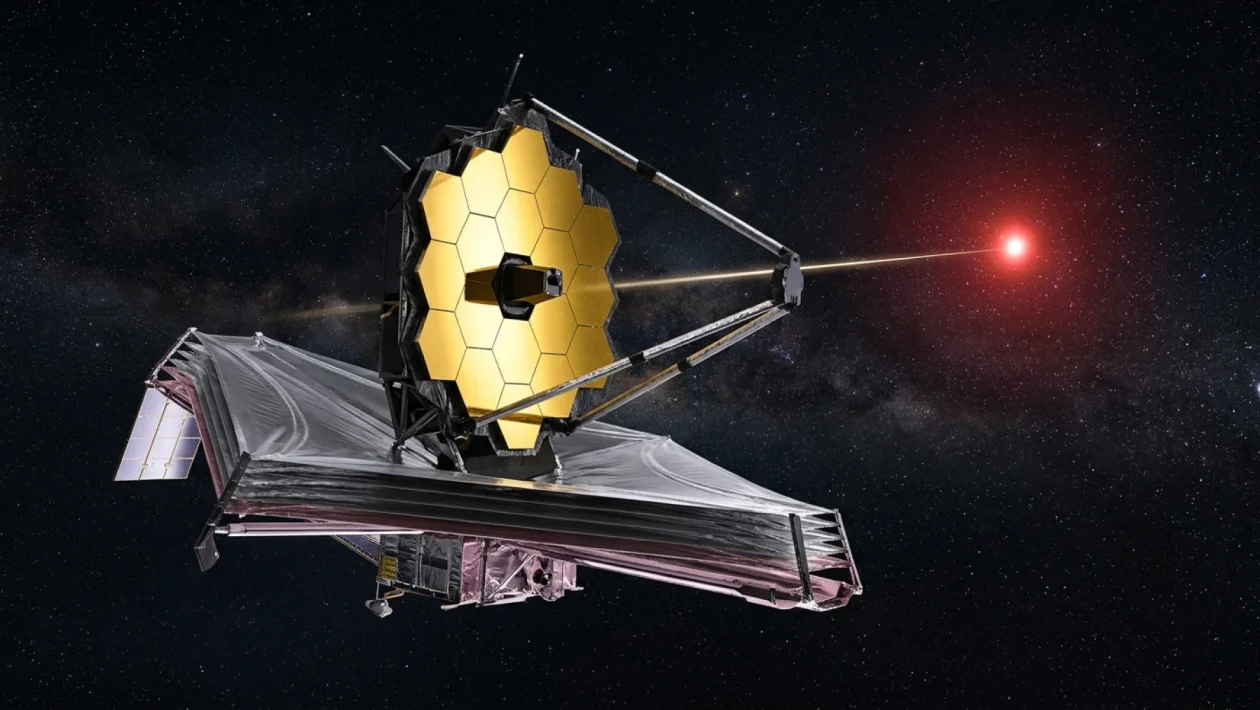
Simultaneously, the mighty James Webb Space Telescope is being prepped to analyze the atmospheric chemistry of Proxima b, an Earth-sized exoplanet residing in that star’s habitable zone.
Why Astronomers Are Scrambling
You cannot just announce to the globe that you have found an alien broadcast. The scientific method demands ruthless, exhausting skepticism.
Astronomers are scrambling because they are racing against the clock to rule out every possible Earthly explanation before the signal fades. The Canadian Space Agency (CSA) has even tasked the revolutionary CHIME radio telescope in British Columbia to cross-reference the data.
When a potential techno-signature hits the dish, researchers follow a strict, grueling protocol:
- The Nod Test: Telescopes are moved off the target and then pointed back. If the signal remains when looking away, it is just Earthly interference. If it disappears and returns only when looking at the star, the panic sets in.
- The Terrestrial Veto: Scientists scour the exact frequency against known human satellites, deep-space probes, and military radar systems.
- Independent Verification: The data is secretly handed over to rival observatories halfway across the world to see if they can catch the exact same whisper.
Decoding the Cosmic Math
Right now, supercomputers are crunching petabytes of radio waves, desperately searching for a pattern. Is it prime numbers? Is it a basic greeting? Or is it a complex data packet zipped up in an alien format?
“We’ve chased ghosts and false alarms for decades, but the sheer structural integrity of the 2026 anomaly is keeping me awake at night. If this is nature, it’s a physics-breaking phenomenon. If it’s not nature… well, our universe just got a lot more crowded.” — Dr. Aris Thorne, Radio Astronomy Director.
Unlike previous alerts that fizzled out into disappointment, this current detection is holding up against aggressive peer review.
| Famous SETI Alerts | The Verdict |
|---|---|
| The “Wow!” Signal (1977) | Never repeated, likely natural or a comet. |
| BLC1 (2020) | Traced to broken human technology. |
| The 2026 Anomaly | Currently repeating. Passed the Nod Test. |
Frequently Asked Questions
Is this undeniable proof of alien life?
Not yet. While the signal looks heavily artificial and has passed initial vetting, the global astrophysical community requires multiple independent observatories to confirm the data before declaring a historic discovery.
If we sent a reply today, when would they hear it?
Radio waves travel at the speed of light. If humanity beamed a message back to Proxima Centauri today, it would take just over 4.2 years to arrive, and another 4.2 years for us to hear their response.
What is the public’s role in this?
Citizen scientists are actually helping! Organizations like SETI@home allow everyday people to donate their computer’s background processing power to help sift through the massive mountains of cosmic static being collected.
🚀 Keep looking up, because the night sky has never felt so alive.
🔭 We are living in an era where the answers to our greatest existential questions are finally within reach.
🌌 Whether this turns out to be a bizarre new astrophysical weather event or the ultimate cosmic “hello,” science wins either way.
👇 Be sure to share your thoughts below—if it is a message, what do you think they are trying to tell us?