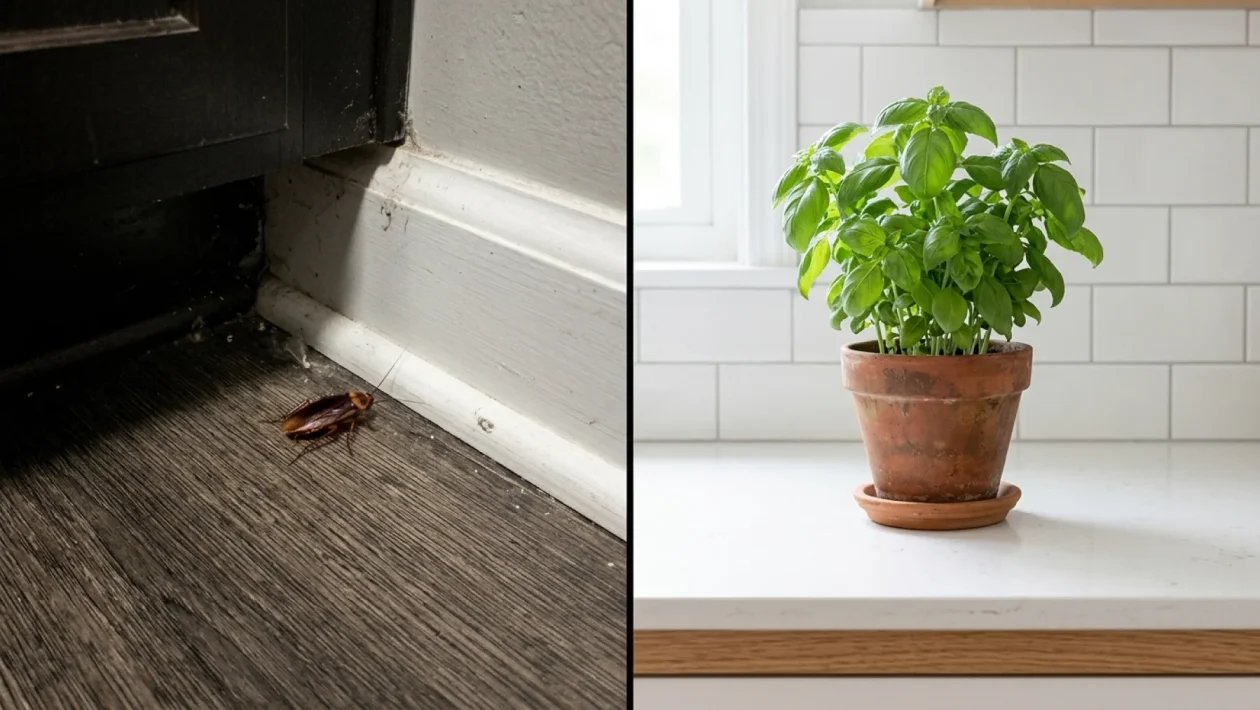
You flip on the kitchen light at 2 AM, and there it is—a greasy, fast-moving shadow darting under the baseboard. Cockroaches do not just gross us out; they contaminate food prep zones and effortlessly dodge the plastic traps we set out.
Before you tear apart your kitchen cabinets or blast the space with toxic fumes, there is a highly effective, biological roadblock you can deploy right now. To repel cockroaches naturally, we are going to weaponize your indoor herb garden.
Forget the old wives’ tales about lavender. There is one specific culinary powerhouse that shuts down a roach’s nervous system without putting a single drop of poison near your countertops.
Repel Cockroaches Naturally: The Biological Blackout
To beat a pest, you have to understand how it navigates your home. Cockroaches have incredibly poor eyesight.
According to entomological studies, a cockroach relies on its dual antennae for over 90% of its spatial awareness, chemical detection, and foraging capabilities. Their antennae act as highly sensitive radar dishes.
This is exactly where basil comes in to blind them. Basil contains massive concentrations of volatile chemical compounds like methyl cinnamate, linalool, estragole, and eugenol.
While this smells like a delicious Italian dinner to us, these compounds act as a sensory flashbang to a roach. It completely oversaturates their receptors, preventing them from smelling food, garbage, or the pheromones of other roaches.
Why Potted Basil Replaces Useless Lavender
For years, people have tried putting geraniums or dried lavender near their windowsills. The harsh truth? Those plants simply do not pack the chemical punch required for heavy-duty pest control.
When a cockroach enters a zone heavily scented by fresh basil, it experiences total disorientation. Stripped of their primary navigational tool, they panic and immediately retreat outdoors to find a safer environment.
You do not need a massive greenhouse to pull this off. I have seen countless homeowners solve their pantry pest issues just by grabbing a few inexpensive starter pots from the garden center at Canadian Tire or RONA.
- Select the right plant: Buy a healthy, mature sweet basil plant. Seedlings do not emit enough oils yet.
- Strategic placement: Position the pots near common entry points like under-sink plumbing, ground-level windows, or beside the refrigerator.
- Activate the oils: Once a week, gently rub the leaves between your fingers. This physically ruptures the microscopic plant cells, releasing a fresh wave of insect-blinding compounds into the air.
- Keep it thriving: Water the soil deeply but let it dry out between waterings to prevent root rot. A healthy plant equals maximum defensive odor.
Beats Chemical Sprays: The Cost And Safety Breakdown
It is mid-2026, and modern home maintenance shouldn’t mean spraying synthetic poisons in the exact same spot you chop vegetables for your kids.
Industrial sprays might kill the bugs you see, but they leave dangerous residues on your floors and countertops. Let’s look at the hard facts.
| Chemical Bug Sprays | Potted Basil Defense |
|---|---|
| Contains toxic synthetic neurotoxins | 100% organic and food-safe |
| Requires re-purchasing every few months | Grows continuously for a one-time cost |
| Leaves sticky residue on baseboards | Purifies the air and smells fantastic |
| Roaches can build generational immunity | Roaches cannot build immunity to sensory blindness |
The choice is practically made for you. Nature has already engineered the perfect defense mechanism; we just have to utilize it properly indoors.
“Insects adapt rapidly to synthetic neurotoxins in urban environments. However, they cannot evolve an immunity to total sensory overload. High-volatile herbs like basil physically prevent them from navigating your home.” — Dr. Aris P., Urban Pest Biologist
Frequently Asked Questions
Does dried basil from the spice rack work?
No. Dried basil has lost the majority of its highly volatile essential oils. You need a living, breathing plant to continuously pump linalool and eugenol into the kitchen air.
Will this kill the cockroaches?
Basil is a repellent, not an insecticide. It will not kill them, but it creates an invisible barrier that makes your kitchen completely uninhabitable for them. They will simply pack up and leave to find a house that does not overload their senses.
How many plants do I need?
For an average-sized kitchen, two healthy potted basil plants are usually enough. Keep one near the primary food prep area and another near the garbage or compost bin.
🤝 Good luck defending your home! There is nothing more satisfying than fixing a household problem with a solution that actually improves your living space.
💡 Ditch the expensive poisons and let nature do the heavy lifting for you. Plus, your homemade pizza is about to get a serious flavor upgrade.
📱 Share your thoughts and let me know how this setup works for you! Have you tried any other indoor plants that keep the creepy crawlies at bay?
👇 Drop a comment below or share this guide with a neighbor who is tired of dealing with unwelcome six-legged guests.