You are standing in the middle of a grocery aisle this beautiful May 2026, staring at a $9 bag of exotic seeds and wondering if they will save your heart or just drain your wallet. Yesterday, eggs were a heart attack on a plate; today, they are the ultimate protein source. The constant whiplash is enough to make anyone throw their hands up and order a pizza. Let’s cut through the noise, decode the madness, and figure out exactly why the “experts” keep changing their minds about what belongs on your dinner plate.
Grasping The Realities Of Nutritional Science
Here is the frustrating reality about nutritional science: studying human diets is an absolute logistical nightmare. You cannot lock humans in a cage for twenty years and feed them standardized kibble to see what happens.
When researchers conduct observational studies, they rely on massive groups of people to self-report what they eat over time. The problem? People lie. A staggering industry fact is that up to 60% of adults significantly underreport their junk food intake during dietary surveys. This massive margin of human error completely skews the data.
Conversely, intervention studies try to isolate specific nutrients by controlling exactly what a smaller group eats. But genetics, lifestyle, and your highly unique gut microbiota alter how your body processes that food. This is exactly why a diet that makes your neighbor look like a fitness model leaves you feeling sluggish and bloated.
“Nutrition is highly varied, making it incredibly difficult to isolate the effect of a single component. You have to consider the impact of genetics, lifestyle, and the intestinal microbiota of each individual, which can completely alter the effects of a diet.” — Elena Dogliotti, Biologist & Nutrition Researcher
Why Dark Chocolate Is Back On The Menu
Remember when chocolate was the ultimate dietary villain, blamed for everything from weight gain to adolescent acne breakouts? Well, the science has officially flipped the script, provided you are eating the right kind.
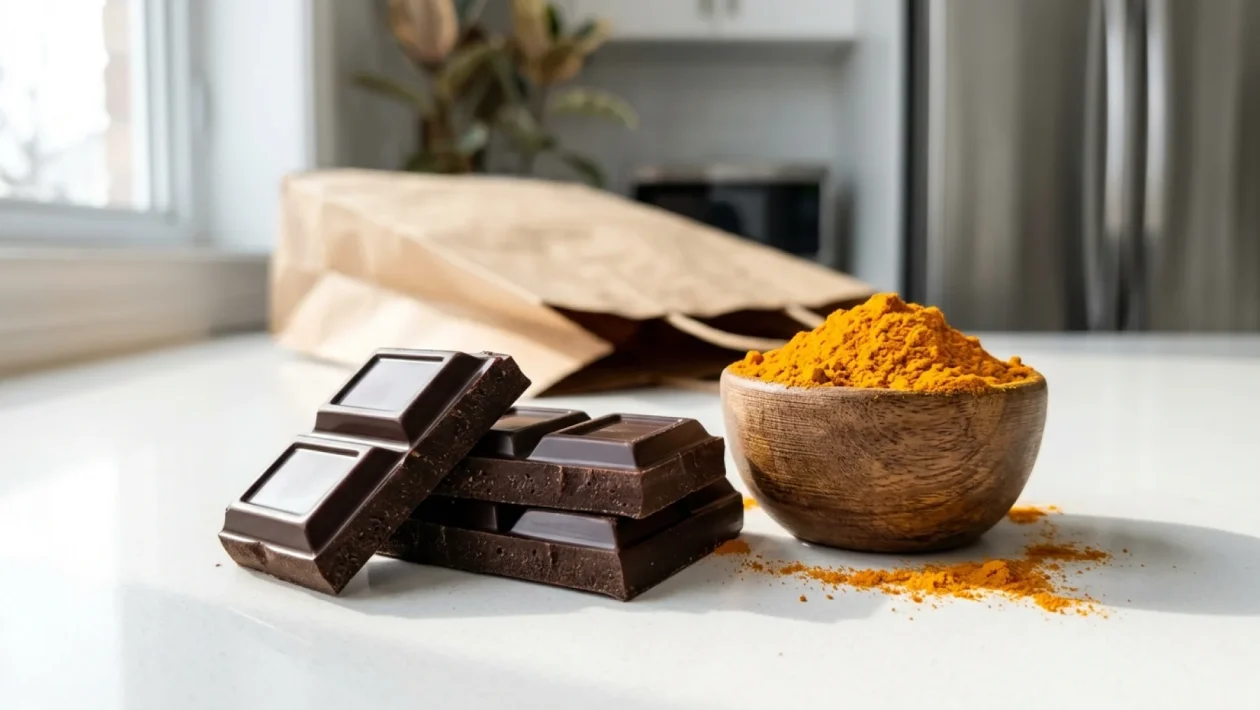
Today, high-quality dark chocolate (packing at least 70% cacao) has been completely rehabilitated by researchers. It turns out that raw cacao is absolutely loaded with powerful antioxidants that actually protect your cellular health.
If you are grabbing a bar of President’s Choice Organics dark chocolate off the shelf, you are actually doing your cardiovascular system a solid favor. Just remember that the sugar content is the real enemy, not the cocoa itself.
| 70%+ Dark Chocolate | Standard Milk Chocolate |
|---|---|
| High in cellular antioxidants | High in processed refined sugars |
| Promotes good gut microbiota | Spikes blood insulin rapidly |
| Slightly bitter, rich flavor profile | Engineered for sugar addiction |
The Hard Truth: Turmeric Is Overrated
If you have read a health blog in the last five years, you have been told that turmeric is a magical, disease-curing miracle powder. The reality of nutritional science paints a much less glamorous picture.
The active compound in turmeric is called curcumin. In isolated laboratory tests in a petri dish, curcumin is genuinely a world-class anti-inflammatory and antioxidant agent. It looks like magic under a microscope.
However, curcumin has terrible bioavailability. This means when you swallow a spoonful of turmeric, your digestive system breaks it down and flushes it out before those active molecules ever reach your cells. Unless it is heavily concentrated and paired with absorption enhancers like black pepper, that expensive turmeric latte is doing very little for your joints.
How To Spot Food Fads Like A Pro
You do not need a Ph.D. to separate a genuine nutritional breakthrough from a clever marketing gimmick. You just need a healthy dose of skepticism and a basic system to evaluate the claims.
Next time a new “superfood” hits the morning news cycle, run it through this simple checklist to see if it is actually worth your hard-earned cash.
- Check the test subjects: Was this study actually conducted on thousands of diverse humans, or just a dozen genetically identical lab mice? Mice metabolisms are not human metabolisms.
- Look for bioavailability: Just because a food contains a “miracle” molecule doesn’t mean your body can actually absorb and use it (remember the turmeric trap).
- Evaluate the extraction method: Are you eating the whole food, or an ultra-processed extract? Eating a whole blueberry is infinitely better than swallowing a “blueberry flavored” supplement pill.
Frequently Asked Questions
Are there any genuine “superfoods” backed by real science?
Yes! Foods rich in anthocyanins—the molecules responsible for the deep blue and purple colors in blueberries and eggplants—have incredibly strong scientific backing. They offer high antioxidant power, improve your gut microbiome, and strongly support cardiovascular health.
Why do North American dietary guidelines seem to contradict European ones?
It comes down to wildly different baseline food cultures. Translating research results from populations with completely different baseline diets (like the Mediterranean diet versus the standard North American diet) often leads to confusing, contradictory public health advice.
Should I stop following diet trends altogether?
You shouldn’t ignore science, but you should absolutely ignore fads. Focus on a varied diet of whole, unprocessed foods. Nutritional science constantly evolves, but the benefits of eating diverse, natural whole foods have never once been disproven.
🤝 Thank you for reading! Figuring out what to eat shouldn’t require a master’s degree in biochemistry.
💡 The next time someone tries to sell you a miracle powder, just remember that a balanced plate of whole foods will always beat an expensive fad.
📱 Share your thoughts with me—what is the craziest diet trend you have ever fallen for? Let’s keep the conversation going!
👇 Good luck out there in the grocery aisles, and enjoy that piece of dark chocolate tonight completely guilt-free!