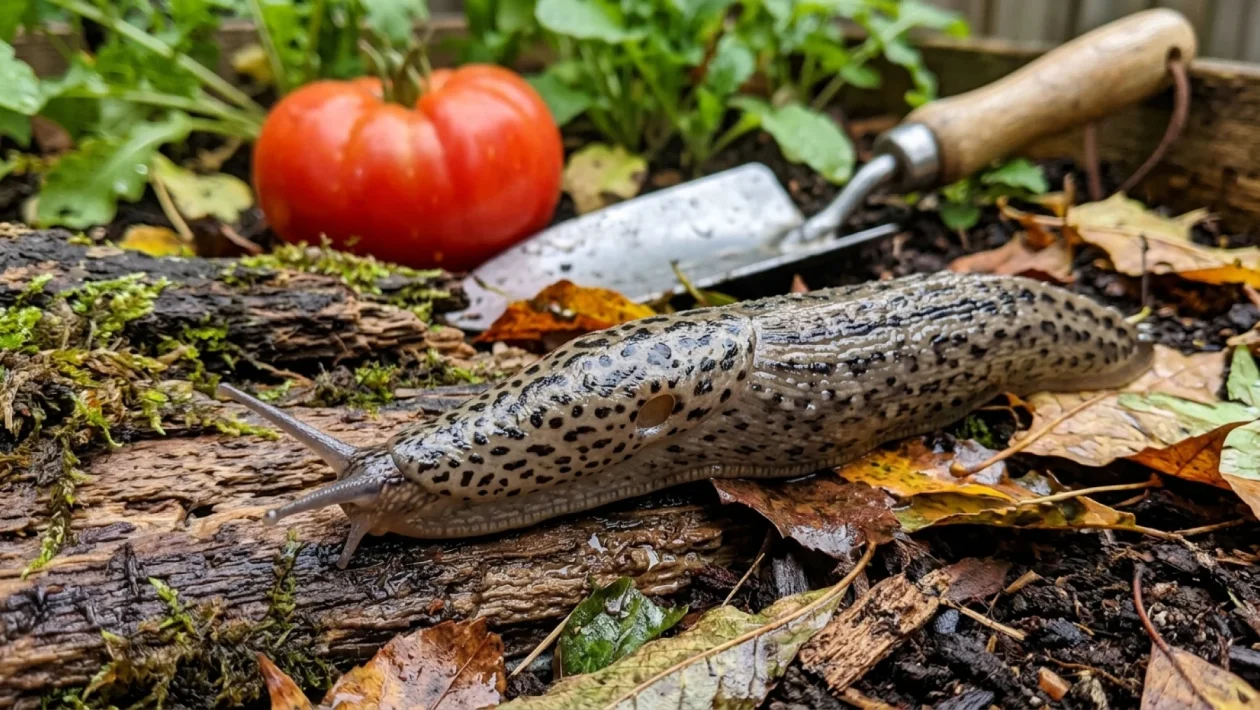
You spend hours babying your heirloom tomatoes and leafy greens, only to wake up and find them chewed to shreds by invasive slugs. You immediately reach for the salt or the pellet traps, determined to eradicate anything without legs that crosses your lawn. But before you go on a backyard rampage this July, put down the bucket. You are likely squishing the exact creature sent to save your harvest.
Meet the leopard slug—a massive, spotted garden gladiator that looks like a monster but fights fiercely on your side. If you want to protect your beds without chemical warfare, learning to love this misunderstood creature is absolutely mandatory.
Leopard Slugs: Identifying the Backyard Beast
Let’s get one thing straight: these guys are absolute units. A mature leopard slug can stretch out to a whopping six inches (15 centimeters) long.
They sport a distinct grayish-brown body covered in dark, leopard-like spots and stripes. Because of their sheer size and striking pattern, most folks assume they are the ultimate garden villain. The immediate instinct is to toss them in the green bin or squash them on sight.
That is a massive mistake. Not all slugs are created equal, and this specific breed is the apex predator of the undergrowth.
The Terrifying-Looking Garden Ally
Unlike the notoriously destructive brown slugs (often called Spanish slugs) that treat your vegetable patch like an all-you-can-eat buffet, the leopard slug has a completely different palate.
These gentle giants prefer a diet of dead plant material, fungi, and rotting organic matter. They are nature’s tiny trash compactors. They rarely, if ever, touch living, healthy plants.
But their real value lies in their appetite for the enemy. Leopard slugs are highly territorial and carnivorous when they need to be. They actively hunt down and eat the eggs and young of plant-destroying slugs. In fact, a single invasive brown slug can lay up to 400 eggs in a single season. Having a leopard slug on patrol stops that invasion before it even hatches.
Why You Should Never Kill Them (And How to Invite Them In)
If you want to turn the tide in the war against garden pests, you need to recruit these spotted mercenaries. Creating a welcoming environment for them is entirely free and requires less work than your current pest control routine.
They need damp, cool, and dark places to hide during the sweltering heat of the summer day. If your yard is manicured like a sterile golf course, they won’t stick around.
- Leave a wild corner: Dedicate a small patch of your yard to nature. Leave a pile of autumn leaves, some thick branches, or overgrown grass.
- Stack old logs: A few decaying logs or flat stones offer the perfect daytime bunker for these nocturnal hunters.
- Rethink your compost: A standard wooden compost bin from Canadian Tire or a DIY wood pallet setup is a five-star hotel for leopard slugs. Keep it moist!
- Ditch the broad-spectrum bait: Stop using generic slug pellets. They kill the good guys right alongside the bad ones.
To help you tell friend from foe, here is a quick cheat sheet for your next evening garden patrol.
| The Leopard Slug (Friend) | The Brown Slug (Foe) |
|---|---|
| Up to 6 inches long, grey with black spots. | Usually 2 to 4 inches, solid brown or rust-colored. |
| Eats decaying matter, fungi, and pest eggs. | Devours living plants, seedlings, and crops. |
| Territorial and solitary protector. | Swarms in large, destructive groups. |
“We’ve been conditioned to view every bug and slug as a threat, but a balanced garden relies on natural predators. The leopard slug is essentially the wolf of the micro-jungle—remove it, and the herbivores will eat you out of house and home.”
Frequently Asked Questions
Will leopard slugs bite me or my pets?
Not at all. While they have a tiny, raspy tongue (radula) for scraping food, they cannot bite humans or pets. However, like all slugs, they can carry parasites, so always wash your hands if you handle them and don’t let your dog eat them.
Can I buy leopard slugs for my garden?
Commercial availability is practically zero. Your best bet is to build the right habitat using the steps above. If you build a hospitable environment, they will naturally migrate in from surrounding areas.
What if they start multiplying out of control?
You don’t need to worry about a leopard slug infestation. Because they are highly territorial, they self-regulate their population based on the available food source and territory space. They will never swarm your garden the way invasive pests do.
🤝 Working with nature is always easier, cheaper, and smarter than fighting against it. The next time you’re out by the compost pile with your flashlight and spot one of these spotted giants, give it a little nod of respect.
💡 Good luck with the rest of your summer harvest! By letting the leopard slug handle the heavy lifting, you’ll have way more time to sit back on the patio and actually enjoy the fruits of your labor.
📱 Share your thoughts or let me know if you’ve spotted one of these beasts in your own backyard. Be sure to send this guide to a neighbor before they accidentally evict their best garden helper!
👇 Drop a comment below with your biggest garden pest struggle right now.