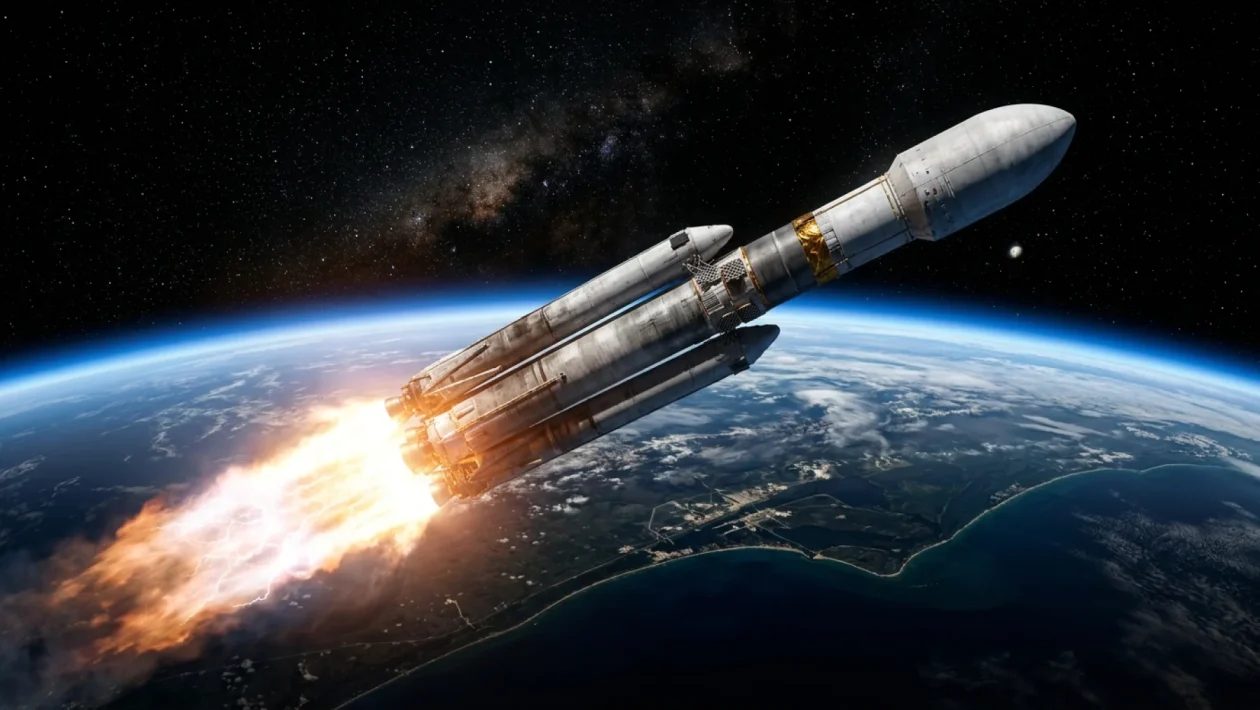
You see the blinding flash of ignition first. For a few surreal seconds, the massive metal silo rises from the Florida coastline in absolute, eerie silence. Then, the sound hits you.
A crackling, chest-thumping shockwave born from millions of pounds of thrust tears across the water, vibrating your ribs and rattling your teeth. This isn’t a sci-fi movie theater. This is the visceral, unfiltered reality of a heavy-lift rocket launch at NASA’s Kennedy Space Center.
As we move deeper into May 2026, the modern space race is burning hotter than ever. Commercial giants like SpaceX and international powerhouses like the Canadian Space Agency (CSA) are collaborating on unprecedented payloads heading to the Moon and beyond. But if you want to stand on the shores of Cape Canaveral and witness this history firsthand, you need the right launch viewing tickets. Here is exactly how to score them, where you need to stand, and what to expect when the countdown hits zero.
Securing Your Launch Viewing Tickets
Scoring access to the main visitor complex on a launch day has become a highly competitive sport. When a high-profile mission is announced—like an Artemis lunar gateway module or a massive commercial lander—passes vanish faster than a meteor entering the upper atmosphere.
Ticketing tiers are strictly dictated by the specific launch pad being used and the mathematical blast radius of the rocket. Getting your hands on them requires a strategy.
- Monitor the manifest: Track the official launch schedule apps or KSC’s direct alerts daily. Aerospace timelines shift frequently due to upper-level wind shear or sudden technical aborts.
- Choose your tier: Decide between standard admission (usually about 7 miles away) or premium “Feel the Heat” packages that get you as close as 3.9 miles from the pad.
- Book instantly: Premium packages drop approximately two weeks before a targeted launch date. When the portal goes live, buy them immediately—they will sell out in minutes.
Finding the Best Spot at Kennedy Space Center
Not all concrete bleachers are created equal. Where you stand dictates exactly how much of that thunderous vibration your body will absorb during liftoff.
The acoustic shockwave of a modern megarocket travels at roughly 767 miles per hour. If you snag a seat at the Apollo/Saturn V Center during a Pad 39A launch, that deafening roar slams into you a mere 18 seconds after you see the visual flash of the engines.
| Viewing Location | Distance to Launch Pad 39A |
|---|---|
| Apollo/Saturn V Center (Premium) | 3.9 miles (Unobstructed views) |
| Feel the Heat Bleachers (Premium) | Varies (Closest designated safe zone) |
| KSC Main Visitor Complex (Standard) | 7.1 miles (Trees may partially obscure pad) |
| Playalinda Beach (Public/Off-site) | 5 miles (Must arrive 6+ hours early) |
The Megarocket Blastoff Experience
What does it actually feel like to watch a skyscraper defy gravity? When a beast like the Space Launch System (SLS) or a Starship-class vehicle clears the tower, it unleashes energy equivalent to a small nuclear detonation, channeled entirely into controlled upward momentum.
The sky turns a brilliant, unnatural shade of orange. Birds scatter for miles, and the air crackles like tearing paper.
“Watching a launch on a digital screen is just gathering data. Feeling it on your skin at the Cape is a spiritual awakening. The sheer violence of the engines reminds you exactly how hard we have to fight to leave this rock.” — Dr. Sarah Vance, Aerospace Engineer & Former Launch Director
Whether the payload is a weather satellite or a deep-space probe hunting for exoplanets, the sensory overload remains unmatched. You are watching humanity reach up and punch a hole through the sky.
Frequently Asked Questions
Do launch viewing tickets guarantee I will see a rocket launch?
No. Aerospace is an incredibly fickle, unforgiving business. A rogue boat entering the Atlantic drop zone or a sticky valve can scrub a launch with zero seconds on the clock. If a launch is scrubbed, your tickets are usually valid for the next immediate attempt, but always read the fine print.
Can I bring my own telescope or binoculars?
Absolutely! While a massive telescope might be too bulky for the crowded grandstands, a pair of high-quality, image-stabilized binoculars is the greatest tool you can bring. It allows you to track the rocket high into the stratosphere and actually witness the booster separation.
Is the sound dangerous for young children?
At the closest premium viewing sites, the engine noise can easily peak over 115 decibels. It is highly recommended to bring noise-canceling earmuffs for toddlers and young kids to protect their hearing during the loudest phase of the ascent.
🚀 Keep looking up. The golden age of space exploration isn’t buried in our history books; it is happening right now, roaring off the Florida coast every single week.
🔭 Securing your spot to witness these leviathans of engineering is an investment in a memory you will never forget. It’s a rare chance to literally feel the future vibrating through the soles of your shoes.
🌌 Have you ever experienced the chest-rattling thunder of a live rocket launch? Share your thoughts and your favorite launch-chasing tips in the comments below.
👇 Don’t miss out on the next big blastoff. Grab your gear, book those passes, and we’ll see you on the bleachers!