Your thermostat is creeping up faster than the price of premium lumber, and that AC unit is whining like a heavy-duty drill on a rusted bolt. You are bleeding cash just to keep your living room from turning into a sauna. Leaning entirely on mechanical cooling is a losing game when the local electrical grid is already gasping for air. Researchers have finally proven a structural, foolproof method to crush your indoor temperatures without jacking up your hydro bill.
Keep Home Cool: The Science-Backed Truth About Dropping Indoor Temps
We have all tried the desperate bowl of ice water in front of a box fan. It is a classic move, but let’s be real—it barely dents the humidity. If you want to genuinely keep home cool this July, you need to think like a structural engineer, not just someone standing in front of an open fridge.
Recent thermal experiments on identical semi-detached houses revealed a staggering hard fact: modifying a house’s exterior can slash indoor temperatures by a massive 6 degrees Celsius (about 11°F). During this year’s brutal 33°C (91°F) heatwaves, the modified home sat comfortably at 29°C (84°F) without a single AC compressor kicking on.
This is not magic. It is basic building science. You have to stop the heat before it penetrates the thermal envelope of your house.
The Exterior Awning System: Why External Shading Is Your Ultimate Shield
Most guys think closing the indoor curtains is enough. That is a rookie mistake. Once the sun’s rays hit your windowpane, the heat has already entered your house. It gets trapped between the glass and your blinds, acting like a greenhouse radiator.
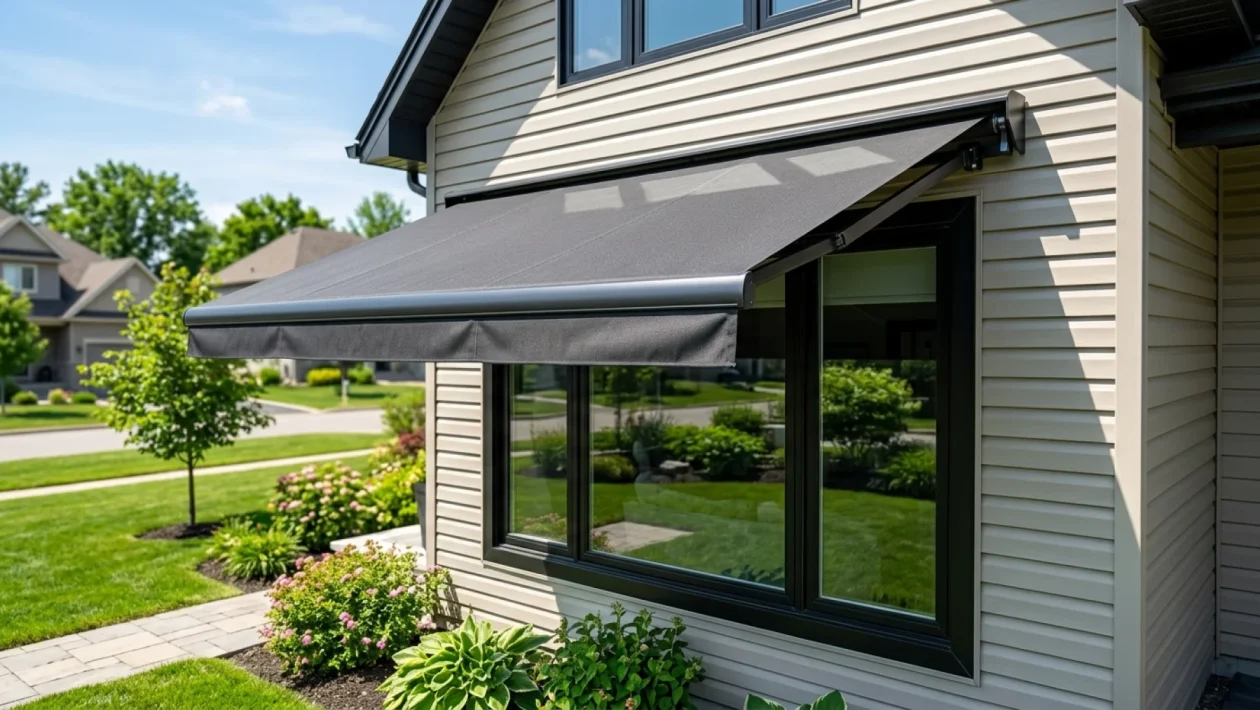
The ultimate thermal shield is external shading. Dutch canopies, roll-down exterior screens, or permanent metal awnings physically block the solar radiation before it ever touches your glass. You can easily source heavy-duty exterior weather shades from your local Home Depot or pick up permanent aluminum canopy kits from RONA.
| Shading Method | Thermal Impact & Efficiency |
|---|---|
| Interior Blinds & Curtains | Low (Heat has already breached the glass) |
| Exterior Awnings & Canopies | High (Blocks solar radiation at the source) |
Putting up external shades is a weekend DIY project that pays dividends for decades. It physically intercepts the solar load, taking an immense amount of pressure off your home’s insulation.
The Ventilation Strategy: Shutting Your Windows to Win the Thermal War
Now let’s talk airflow. There is a deeply ingrained, completely backward instinct to throw every window wide open the second the house feels stuffy. When you do that during a daytime heatwave, you are literally inviting a blast furnace into your living space.
Researchers studying these identical test houses proved that the ultimate ventilation strategy is entirely counterintuitive. You have to lock down the house during peak hours. Here is the exact daily process you need to follow:
- The Morning Lockdown: Close all windows and doors the exact moment the outdoor temperature exceeds the indoor temperature (usually around 9:00 AM).
- The Solar Blockade: Deploy all exterior awnings and pull down any secondary interior shades on the south and west-facing windows.
- The Nighttime Flush: Once the sun sets and the outside air cools down, throw open the windows to create a cross-breeze, flushing out the trapped thermal mass.
It feels strange to lock your house up tight on a sunny day. But by treating your home like an insulated cooler, you keep the stagnant hot air where it belongs—outside.
How It Outperforms AC: Saving the Grid and Your Wallet
Let’s face it, our power grids are aging. Running a central AC unit at full tilt every single afternoon is not sustainable, and brownouts are becoming a standard summer feature across North America. Building experts are sounding the alarm that housing developers and homeowners must adapt immediately.
“Air conditioning is going to be a bit of a problem for us at the moment because the electricity grid is not able to cope with that amount of electricity demand. We will need to reinforce our electricity grid if we see the widespread uptake of air conditioning.” — Dr. Ben Roberts, Healthy Buildings Researcher
By investing in exterior physical barriers and disciplined ventilation, you are significantly outperforming the efficiency of an AC unit. You are solving the root cause of the heat problem rather than just throwing expensive electricity at the symptom.
Frequently Asked Questions
Should I leave interior doors open or closed during the day?
Leave them open. While your exterior windows should be locked down tight, keeping interior doors open allows your central HVAC fan (if you are just circulating air) to move stale air around, preventing humid micro-climates from forming in closed-off bedrooms.
Are motorized exterior shades worth the extra money?
If you have the budget, absolutely. High-end exterior screens can be wired to smart home sensors that automatically drop the shades when UV index peaks. However, a manual hand-crank awning will give you the exact same thermal protection for a fraction of the cost.
Does planting trees count as external shading?
100 percent. Deciduous trees planted on the south and west sides of your property are nature’s awnings. They block the brutal summer sun with their leaves, but shed them in the winter to allow free solar heating when you actually need it.
🤝 Good luck out there this summer, and remember that fighting the heat starts at the exterior walls, not the thermostat.
💡 Sometimes the oldest tricks in the builder’s handbook—like a solid physical barrier and smart airflow—beat modern mechanical fixes every single time.
📱 If you have tried rigging up your own shading system or testing this window strategy, share your thoughts below or send this to a buddy who is currently melting in their own living room.
👇 Now grab your ladder, get those exterior shades mounted, and take back your comfort!