Living in a shoebox isn’t a life sentence to clutter, but most of us treat it like one. You buy bulky plastic bins, cram your gear into tight corners, and wonder why the walls feel like they’re actively closing in on you. Stop negotiating with a terrible floor plan. The absolute secret to breathing room isn’t magically acquiring more square footage—it’s demanding that every single object in your home actively earns its keep.
I see it all the time on job sites and in modern builds: people try to stuff a four-bedroom lifestyle into a one-bedroom footprint. It never works. Instead, we need to steal a masterclass from a culture that perfected this art decades ago. We are going to strip away the noise, upgrade your daily tools, and make your small layout feel incredibly deliberate.
Japanese Space Design: The “Space-Earner” Philosophy
When you look at traditional Japanese Space Design, you realize quickly that they don’t do “space-saving” in the cheap, infomercial sense of the word. They focus on “space-earning.” This means a product justifies every square inch it occupies through raw beauty, absolute purpose, or perfectly, both.
Right now, as we sweat through another incredibly hot July in 2026, the average new condo size in Toronto has shrunk to a laughable 568 square feet. You simply don’t have the luxury of wasted space. If you bring something into your home, it needs to punch way above its weight class.
That subtle shift in mindset changes everything. Instead of hiding your ugly necessities behind cabinet doors, you invest in items that look like high-end decor. It’s the difference between settling for constraint and actively curating your environment.
Why Minimalist Accessories Beat Bulky Furniture
You don’t need a massive credenza to anchor a room when your everyday items do the heavy lifting visually. Minimalist accessories take the friction out of small-scale living because they replace the need for larger, redundant pieces of furniture.
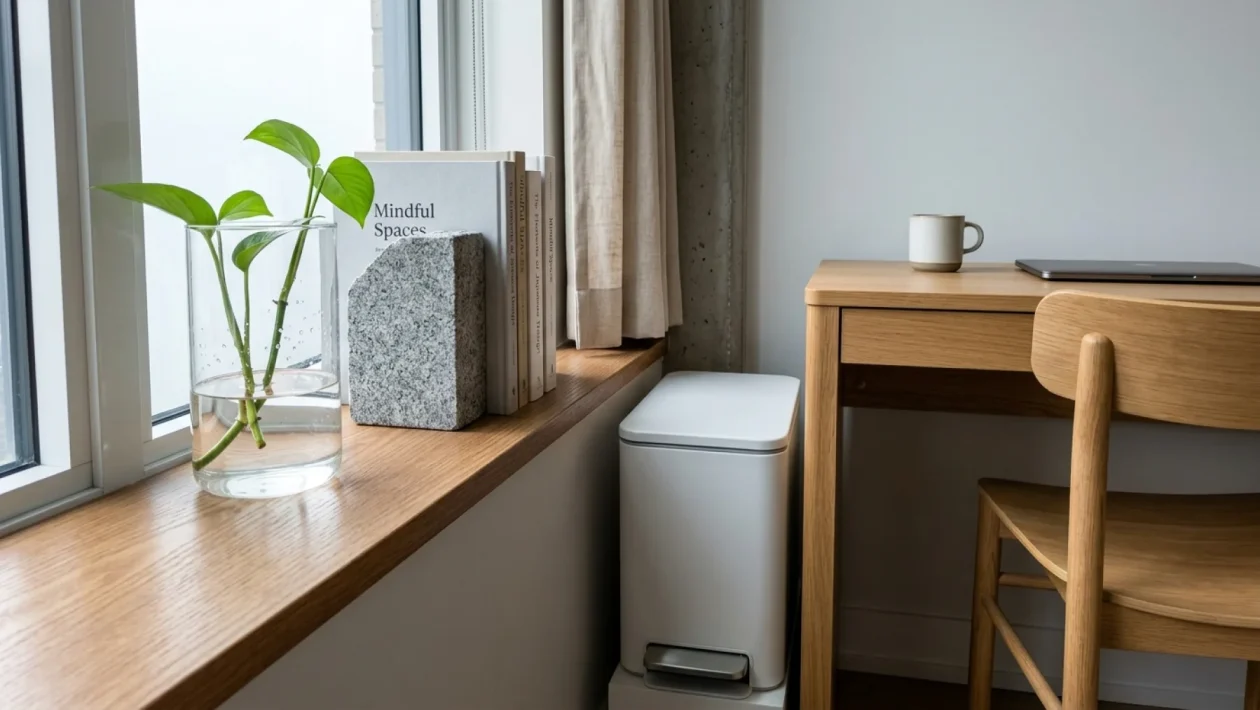
Take the brilliant Kinto Aqua Culture Vase, for example. It strips plant propagation down to a clean borosilicate glass vessel that fits on a windowsill. Or look at the Yamazaki Home Tower Step Trash Can. It’s slim enough to slide next to a toilet, yet so well-designed you don’t actually want to hide it.
When curating your own tiny space, follow this simple process to weed out the junk:
- Audit the surface clutter: Identify every item currently sitting on your counters, desks, and tables.
- Consolidate functions: Swap out single-use items for multi-functional heroes (like a 3-in-1 luminous diffuser that replaces a lamp, a nightlight, and a scent vessel).
- Upgrade the visible necessities: If a household item must remain visible, upgrade its materials. Swap cheap plastic bookends for a solid Aji granite split-stone block.
- Adapt, don’t replace: Lean into modular items like Corcelain cups that accept 3D-printed attachments as your needs change.
| Standard North American Approach | Japanese Minimalist Approach |
|---|---|
| Buy bulky storage to hide ugly, cheap daily items. | Invest in beautiful daily items that can live out in the open. |
| Decorate with single-purpose trinkets. | Decorate with functional tools (clocks, vases, audio gear). |
| Focus on buying “miniature” furniture. | Focus on buying high-quality, high-impact accessories. |
Completely Transform Cramped Condos Without Renovating
You don’t need to tear down walls to completely transform cramped condos. You just need to change the visual register of your shelving and surfaces. While Canadian staples like EQ3 make phenomenal compact furniture, the real magic happens in the micro-details you interact with daily.
Think about a portable CD player designed to sit perfectly upright on a shelf, matching the width of the discs themselves. It doesn’t scream “electronics gear.” It acts as a deliberate design choice. When every single piece in your home looks intentional, the entire apartment feels like a customized sanctuary rather than a holding cell.
“A small space only feels limiting when the objects inside it aren’t doing enough. True design doesn’t ask you to reshape your life around what you own; it finds the form that fits the space you already have.”
Ultimately, a small footprint forces your hand. It demands quality over quantity. Start with just one corner, upgrade the items that live there, and watch how quickly the room tells you what needs to be fixed next.
Frequently Asked Questions
Are these high-end Japanese accessories actually durable?
Absolutely. Pieces made from Aji stone, borosilicate glass, and Mino Province stoneware are rooted in centuries of craft tradition. They are built to last a lifetime, far outperforming cheap plastic alternatives.
How do I start applying this if my condo is already full of clutter?
Start with your most highly trafficked surface—usually the kitchen counter or entryway table. Remove everything. Only put back items that are either fiercely functional or genuinely beautiful. If it’s neither, it gets donated or tossed.
Does minimalism mean my home will feel cold or empty?
Not at all. Japanese minimalism is about warmth and intention, not sterility. By keeping only objects that have presence and character, your home will actually feel much more personal and inviting.
🤝 It’s time to stop fighting your floor plan and start elevating it. Embracing this level of intentional design isn’t just about making things look pretty; it’s about reclaiming your mental bandwidth.
💡 Good luck tackling your own layout this weekend! I highly recommend starting small—maybe swap out that battered waste bin or upgrade your desk clock, and feel the vibe shift instantly.
📱 Share your thoughts and let me know how you’re maximizing your square footage this summer. Drop your favorite space-earning upgrades in the comments below!
👇 Don’t forget to bookmark this page for the next time you’re tempted to buy a massive, clunky piece of storage furniture you definitely don’t need.