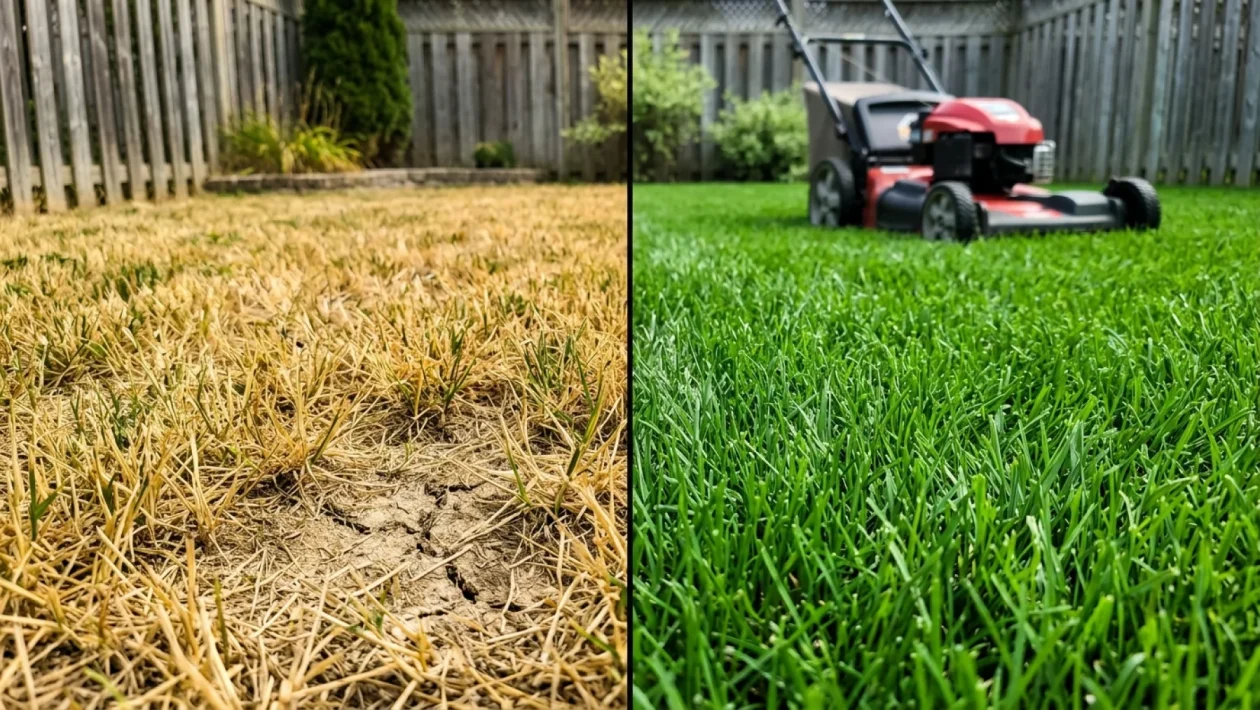
You’re out there sweating behind the mower, trying to achieve that perfect neighborhood curb appeal. But instead of a lush, emerald carpet, your yard is looking like a crispy, yellow disaster. You’re not alone, and it’s certainly not a lack of effort. In fact, your sheer dedication is exactly what’s killing your grass. If you want a thick, green yard this summer, you need to put the mower back in the shed.
July lawn care
Summer 2026 is officially here, and the heat index is taking absolutely no prisoners. When temperatures soar into the thirties, your turf immediately enters survival mode.
You can dump an entire bag of premium seed from Canadian Tire on that dirt, but it won’t matter if your fundamental maintenance habits are wrong. July lawn care requires a massive shift in how you handle your equipment.
Here is a brutal fact: Research shows that cutting your grass too short during peak summer reduces its root system depth by up to 60%. Shallow roots make it physically impossible for the turf to absorb deep soil moisture.
Why your grass is turning yellow
Think of grass blades as tiny solar panels that also double as a sunshade for the topsoil. They regulate the ground temperature and keep moisture locked in.
When you scalp the lawn during the hottest month of the year, you brutally strip away its natural canopy. The sun bakes the exposed soil, water evaporates instantly, and the plant literally starves.
That yellow tint creeping across your property isn’t a disease. It’s a massive stress signal from a plant begging for a break.
“The biggest mistake homeowners make in July is sticking to their rigorous spring mowing schedule. Summer turf needs height to regulate temperature and retain water. Put simply: tall grass is tough grass.” – David Tremblay, Senior Agronomist at Turfology Canada.
And the exact mowing schedule you need
It’s time to rewrite your weekend chores. To save your yard, you have to back off and let the grass build its defenses.
Here is exactly how you should be handling your yard right now:
- Stretch your timeline: Drop the weekly habit immediately. Mow every 10 to 14 days maximum to let the blades recover.
- Raise the mower deck: Set your blade to a minimum of 3 inches, though 3.5 inches is ideal for mid-summer.
- Leave the clippings: Ditch the bagger. Those grass clippings are free mulch that returns essential nitrogen directly to the soil.
- Only cut dry grass: Never mow after a summer storm, as wet cuts tear the blades and invite aggressive fungal infections.
| Season | Lawn Strategy |
|---|---|
| Spring | Mow every 5-7 days, set deck to 2.5 inches. |
| July (Peak Summer) | Mow every 10-14 days, set deck to 3.5 inches. |
Frequently Asked Questions
Should I water more if it’s yellow?
Not necessarily. Deep, infrequent watering—about an inch a week—is infinitely better than a light daily sprinkle. Overwatering shallow roots just creates weak turf that burns faster.
What is the best time of day to mow?
Wait for the late afternoon or early evening. The grass is dry by then, and you won’t expose fresh, vulnerable cuts to the blistering midday sun.
Will weeds take over if I don’t mow weekly?
Actually, the opposite happens! Keeping your grass thick and tall blocks sunlight from reaching weed seeds dormant in the soil, naturally preventing them from sprouting.
🤝 Good luck out there in the yard this season. Remember, sometimes doing absolutely less is exactly what your property needs to thrive.
💡 Your mower is a tool, not a daily obligation. Give it a rest, grab a cold drink, and let your grass do its natural thing.
📱 If this new schedule saves your lawn from turning into a crispy desert, I want to hear about it. Please share your thoughts and your own yard rescue stories in the comments!
👇 Hit that share button to save a neighbor’s lawn today.