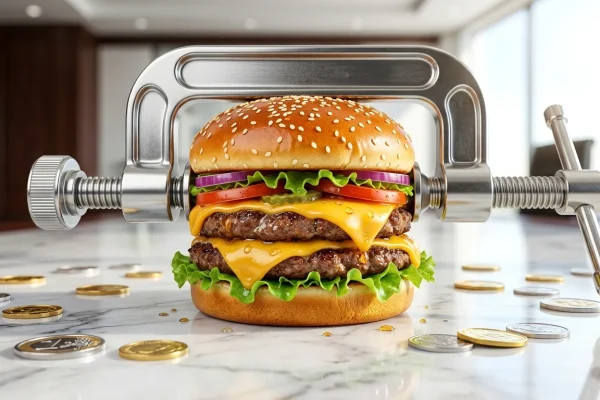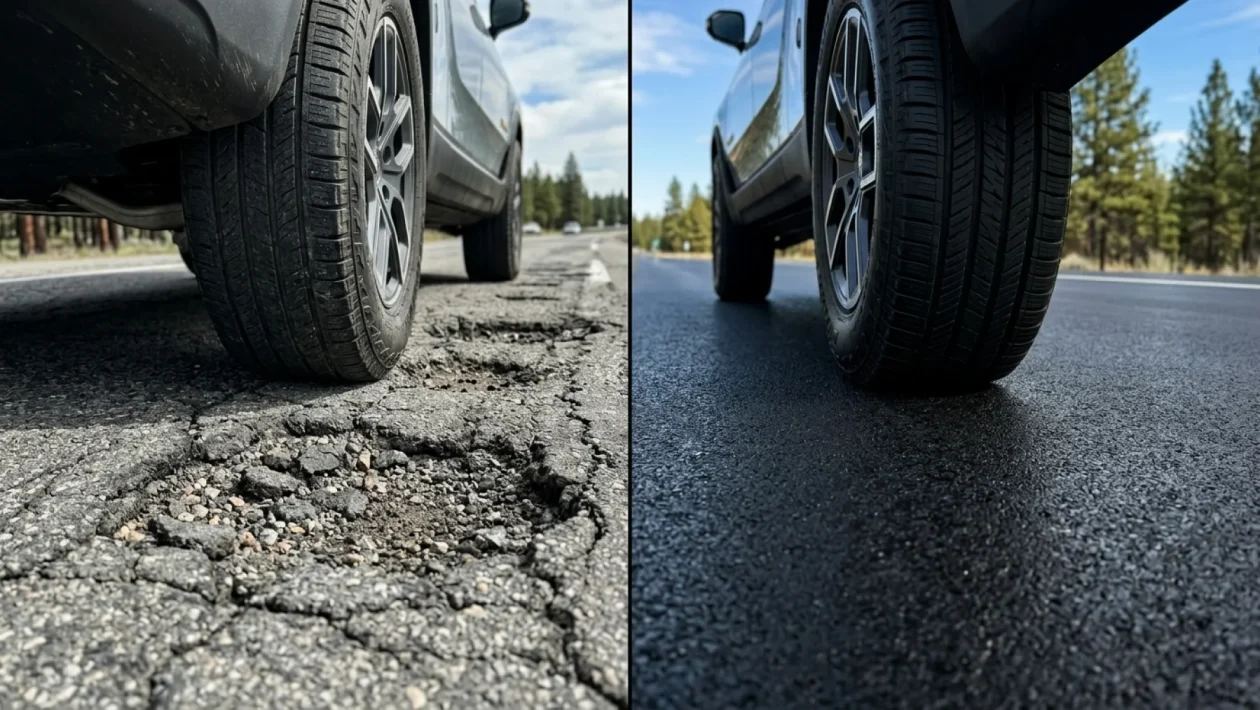
If you drive an electric vehicle, politicians are currently trying to reach straight into your wallet to the tune of $250 a year. Their core argument is simple: modern EVs are heavy, and that extra weight is chewing up our aging highways.
But they are pointing the finger at the completely wrong suspect. The real problem isn’t what we are driving—it’s what we are paving our streets with.
Over in Europe, engineers have quietly solved the road degradation problem using a revolutionary additive that makes traditional pavement last an astonishing 165 percent longer. Instead of penalizing drivers, it’s time North America upgraded its incredibly outdated infrastructure.
Graphene Asphalt Roads: The Science Behind The Pavement
At first glance, a freshly poured road looks exactly the same whether it’s standard blacktop or high-tech composite. The magic happens at the microscopic level.
European engineers have been adding a graphene-enhanced polymer called Gipave directly into the bitumen—the sticky black sludge that holds standard road gravel together. Graphene is roughly 100 to 300 times stronger than steel, meaning it reinforces the entire structural grid of the asphalt.
This isn’t some futuristic theory, either. This super-pavement is already under the tires of F1 race cars at Imola and handling massive commercial jets at Edinburgh and Rome Fiumicino airports.
Here in North America, we are finally waking up to the potential. As of early 2026, Argo Graphene Solutions has been running intensive cold-weather tests in a Saskatchewan lab. They want to see if this European miracle can survive the brutal freeze-thaw cycles that routinely destroy Canadian infrastructure.
How Super-Pavement Outlasts Heavy EVs And Brutal Weather
There is no denying that the modern light-duty fleet has packed on the pounds. A 2026 GMC Hummer EV weighs a staggering 9,000 pounds, while popular electric trucks from Ford and Chevy are in a similar heavyweight class.
When you put that kind of mass on standard asphalt designed in the 1960s, you get microscopic cracks that eventually turn into suspension-destroying potholes. But graphene totally changes the structural math through a very specific reinforcement cycle:
- The Polymer Blend: Unrecyclable waste plastics are combined with raw graphene to create highly concentrated, highly durable pellets.
- The Hot Mix: These composite pellets are melted directly into the liquid bitumen at the local asphalt plant, raising its heat resistance and stiffness.
- The Grid Lock: When laid by the paving crew, the graphene matrix locks the rock aggregate together tightly, drastically slowing down the propagation of fatigue cracks.
The result is a surface that shrugs off heavy battery packs and commercial transport trucks alike. In fact, Italian independent labs recorded a 35 percent reduction in road rutting at 60°C.
Ending The $250 Tax Debate Once And For All
While European engineers are stretching road lifespans to nearly three decades, U.S. lawmakers at the House Transportation and Infrastructure Committee have been pushing a $250 annual federal fee on EV owners. Their logic? You drive a heavy battery, so you pay for the potholes.
But the data simply doesn’t back up the political outrage. Passenger vehicles, even the heavy electric ones, sit well below the structural fatigue threshold.
“Load-related damage to pavement and bridges is caused almost exclusively by heavy trucks,” states Mark Gottlieb, an engineer at the Institute for Physical Infrastructure and Transportation.
If we want to fix our massive infrastructure backlog, we need to stop bickering over $250 commuter taxes and start looking at whole-life material costs. Graphene asphalt roads are the obvious financial winner.
| Standard Hot-Mix Asphalt | Graphene-Enhanced Pavement |
|---|---|
| Requires resurfacing every 12 to 15 years. | Forecasted to last 25 to 30 years without major repairs. |
| Prone to deep rutting from heavy commercial loads. | Reduces fatigue cracking and heat rutting by over 35%. |
| Lower initial upfront material cost. | Costs 10-15% more upfront, but saves billions long-term. |
By investing slightly more on the day the road is paved, highway authorities cut lane closures, reduce asphalt manufacturing emissions, and completely invalidate the need for an EV weight tax.
Frequently Asked Questions
Is graphene asphalt safe for the environment?
Yes. The Gipave additive actually incorporates hard-to-recycle waste plastics, keeping them out of landfills. Furthermore, the graphene-enhanced asphalt is fully recyclable when the road eventually needs to be resurfaced decades later.
Why aren’t all North American roads made with graphene yet?
We are currently waiting on standardized testing. Until the American Society for Testing and Materials (ASTM) or Canadian transportation ministries publish official standards for graphene-modified binders, local municipalities can only use it in one-off research projects.
Will this actually stop EV taxes?
If fully adopted, it absolutely ruins the political argument that light-duty EVs are destroying the roads. When pavement is designed to easily withstand massive freight trucks for 30 years, taxing a commuter for driving a 6,000-pound electric SUV becomes entirely unjustifiable.
Wrapping It Up
🤝 It’s time we demand better from our infrastructure. We have the technology to build roads that last generations, and we shouldn’t settle for crumbling asphalt that requires constant tax hikes to patch.
💡 Innovation is the only way forward. Europe has already proven that adding graphene to our streets is a massive long-term win for both taxpayers and drivers alike.
📱 I’d love to hear your take on this. Do you think your local municipality would be willing to pay 15 percent more upfront to fix your worst local roads for good?
👇 Share your thoughts in the comments below, or send this article to that one friend who is always complaining about the potholes on their morning commute. Good luck out there on the roads!