Let’s cut right to the chase: guarding the world’s longest coastline is a massive headache if you don’t have the right tools in your shed.
For decades, Canada has reflexively reached into the American toolbox whenever we needed heavy-duty military hardware.
But as of May 2026, Prime Minister Mark Carney is shaking up the status quo by aggressively pushing a new GlobalEye Procurement deal with Sweden.
We are officially looking past our southern neighbors to secure a faster, smarter, and highly independent aerial surveillance system.
Ditching US Tech: A Declaration of Independence
When you hire the exact same contractor for every single home renovation, they eventually start taking your business for granted.
That is exactly how Canada’s relationship with massive American defence giants like Boeing and Lockheed Martin has felt over the last several years.
By opening up serious negotiations with Sweden’s SAAB, the federal government is making a bold statement about trade diversity and national sovereignty.
It’s a clear, calculated message to Washington that our multibillion-dollar defense budget is no longer a guaranteed monopoly.
“This new defence deal with Sweden tells the U.S., ‘Keep your stuff, we’ve been through enough.’ It is a massive step toward a stronger, more independent Canada on the global stage.”
Why Swedish Surveillance Dominates The Skies
If you are going to switch tool brands, the new gear better seriously outperform the old stuff.
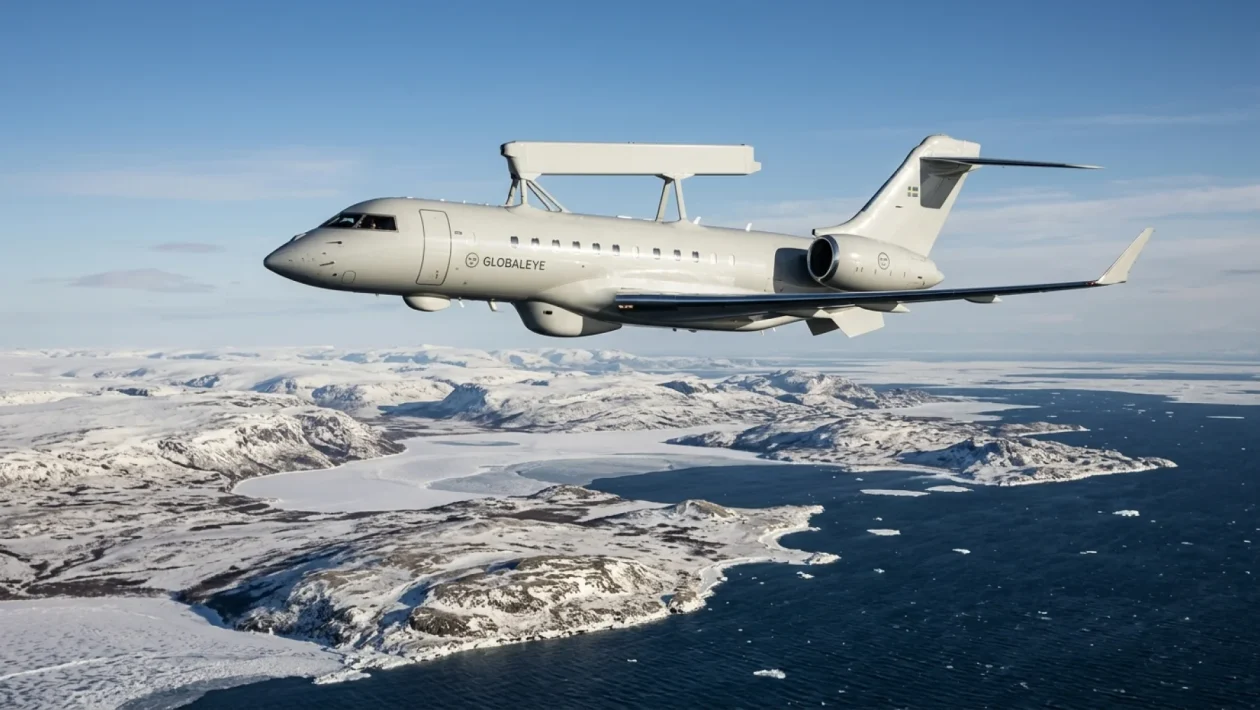
The SAAB GlobalEye isn’t just a standard airplane; it is an incredibly advanced multi-domain airborne early warning and control (AEW&C) solution.
Here is a staggering reality check: Canada has over 243,000 kilometers of coastline to monitor, making it the longest in the world.
We absolutely require a radar system that can simultaneously track microscopic threats in the air, on rough seas, and over frozen land.
Let’s break down exactly why this Swedish platform makes total sense for our military:
| System Feature | Why Canada Needs It |
|---|---|
| Erieye ER Radar | Provides vastly extended detection range to spot tiny targets across the Arctic. |
| Bombardier Airframe | Mounted on Canadian-made Global 6000 jets, keeping domestic aviation jobs secure. |
| Multi-Domain Tracking | Scans air, land, and sea simultaneously without needing separate specialized aircraft. |
The GlobalEye Procurement Process Unpacked
You don’t just walk into a civilian dealership, kick the tires, and drive off with a fleet of military-grade surveillance jets.
Here is how a massive GlobalEye Procurement actually moves from a political talking point to actual boots on the tarmac.
- The Needs Assessment: The Department of National Defence publicly outlines exactly what current gaps exist in our aging aerial fleet.
- Strategic Bidding: Instead of defaulting to American bids, Canada officially invites international players like Sweden to showcase their tech.
- Industrial Offset Negotiations: The government ensures the foreign company agrees to invest money back into the Canadian economy—like using homegrown Bombardier jets.
- Finalizing The Contract: Both nations sign the dotted line, establishing delivery timelines, maintenance training, and long-term tech support.
Frequently Asked Questions
Why are we pivoting away from American defense tech right now?
It boils down to trade diversity and leverage. Relying on a single nation for all our defense tech puts Canada in a vulnerable negotiating position.
Partnering with European allies builds a more resilient, independent defense network.
Does the GlobalEye support the Canadian economy?
Absolutely. Even though SAAB is a Swedish company, the GlobalEye system is typically mounted on high-performance business jets manufactured right here in Canada.
This means a significant portion of the manufacturing process still supports our local aerospace workers.
🤝 Share your thoughts down below, because this is a massive shift in how our country handles its defense budget.
💡 Whether you love the pivot to European partners or worry about straining ties with the States, there is no denying that the geopolitical skies are changing this spring.
📱 Keep an eye on the news, as this historic negotiation will likely lock into place before the end of the year.
👇 Good luck to the folks mapping out our national security, and stay safe out there!