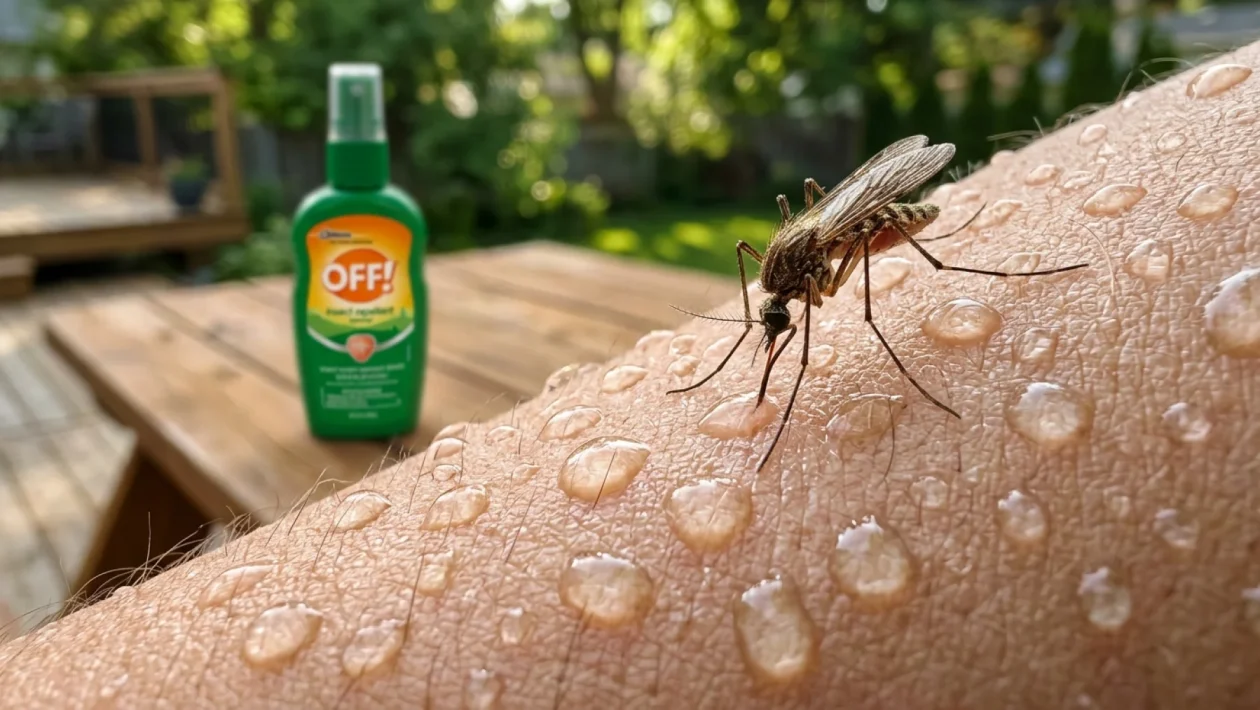
You just soaked yourself in heavy-duty bug spray, stepped onto the patio, and within three minutes, you’re slapping your ankle. The frustrating reality is that the traditional chemical forcefield we’ve relied on for decades is crumbling. DEET mosquito resistance is no longer just a theoretical fear in a lab—it is happening right now in our backyards.
If you’re wondering why you are still getting eaten alive at the cottage despite bathing in repellent, you aren’t crazy. We need to completely rethink our approach to bite prevention this season. Let’s break down exactly what has changed and the modern tactics you need to reclaim your outdoor space.
DEET Mosquito Resistance
For years, DEET was the undisputed king of keeping biters at bay. But recent studies confirm a highly disturbing trend: mosquitoes are actively learning to outsmart it. The insects aren’t just building a physical immunity; they are demonstrating behavioral adaptation.
In simple terms, a mosquito that encounters DEET and survives learns to ignore the smell on her next hunt. And considering a female mosquito can aggressively consume up to three times her own body weight in blood in a single sitting, she is highly motivated to bypass your defenses.
This localized evolution means the chemical deterrent that worked flawlessly five years ago is essentially just expensive cologne to a growing percentage of the mosquito population today.
Why Your Bug Spray Is Failing
We all have that crusty bottle of classic Muskol rolling around in the glovebox or camping bin. You probably assume that slathering on a high-percentage DEET product guarantees a bite-free evening. Unfortunately, more chemical doesn’t equal more protection anymore.
The failure isn’t necessarily in the manufacturing of the spray; it is in the insect’s rapidly mutating olfactory receptors. They are literally rewiring how they smell you.
“We are watching rapid sensory adaptation in real-time. Mosquitoes are essentially turning off the specific smell receptors that traditionally warned them away from DEET, allowing them to land directly on treated skin without hesitation.” — Dr. Aris Bowman, Vector Biology Researcher.
When you rely on an outdated single-chemical strategy, you are basically leaving the front door wide open. If they don’t register the smell as a threat, they will land, bite, and leave you itching.
And What Actually Works
Since the old-school methods are dropping in effectiveness, we need to upgrade our toolkit. The secret to a bite-free summer is layering your defenses and pivoting to newer, highly effective chemical alternatives that mosquitoes haven’t adapted to yet.
Top outdoor retailers like MEC have already started heavily stocking alternative repellents and treated apparel for a good reason: they work. Here is how you properly bulletproof yourself for an evening outdoors:
- Apply sunscreen first: Always let your sunscreen absorb into your skin for at least 15 minutes before applying any repellent.
- Pivot to Picaridin: Swap your old spray for a 20% Picaridin lotion. It provides up to 12 hours of protection, doesn’t melt your plastic sunglasses, and mosquitoes haven’t built a widespread tolerance to it.
- Treat your clothing: Spray your hiking pants and socks with Permethrin. This doesn’t just repel bugs; it kills them on contact when they land on the fabric.
- Create wind: Mosquitoes are incredibly weak flyers. A simple, inexpensive box fan aimed at ankle-level on your deck is more effective than any citronella candle money can buy.
If you prefer to weigh your alternative chemical options before heading to the store, here is a quick breakdown of the two best modern substitutes:
| Alternative Repellent | The Verdict |
|---|---|
| 20% Picaridin | The ultimate modern upgrade. Odorless, non-greasy, and incredibly effective against DEET-resistant swarms. |
| Oil of Lemon Eucalyptus (OLE) | The best plant-based option. Protects for up to 6 hours, but has a very strong, lingering botanical smell. |
Frequently Asked Questions
Can mosquitoes bite through my clothes?
Absolutely. Thin, tight-fitting fabrics like yoga pants or lightweight cotton t-shirts are easy targets for a mosquito’s proboscis. To stop bites, wear loose-fitting, tightly woven fabrics, or treat your clothing with a fabric-safe repellent like Permethrin.
Does eating garlic or taking Vitamin B stop mosquito bites?
No. Despite the popular backyard myths, there is zero scientific evidence showing that dietary changes, including eating massive amounts of garlic or taking Vitamin B supplements, will alter your skin’s scent enough to deter a hungry mosquito.
🤝 Listen, giving up your patio isn’t an option. Now that you know the science behind why the old methods are failing, you can easily outsmart the bugs.
💡 Upgrade your spray, treat your gear, and plug in a fan. A few simple tweaks to your routine will drastically cut down on those frustrating bites.
📱 Share your thoughts or your own backyard success stories with us online. Have you noticed your old bug spray failing this season?
👇 Good luck out there, and enjoy a well-deserved, bite-free summer evening!