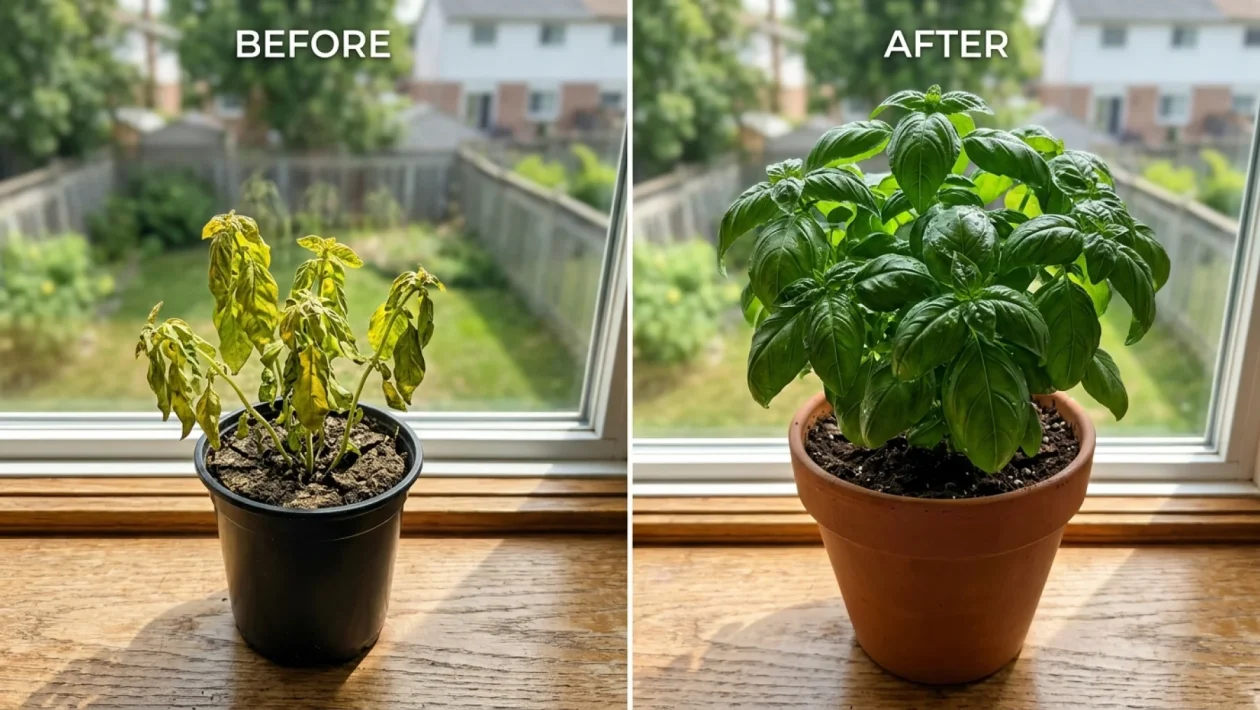
You buy a lush, gorgeous basil plant from the grocery store, set it on your windowsill, and two weeks later, it is a yellowing, wilted disaster. It is a frustrating cycle that makes most of us feel like we have a black thumb. The truth is, those store-bought plants are set up to fail from the moment they hit the shelf.
I am going to show you exactly how to stop the rot and turn that fragile seedling into a massive, bushy powerhouse. By tweaking how you pot, prune, and harvest, you will have a nonstop supply of fresh, aromatic leaves well into the fall.
Basil Plant Care: The Ultimate Guide To Bushier Leaves
The biggest mistake happens before you even leave the store. Those little plastic pots usually contain five to ten individual basil stalks crammed tightly together. They are literally choking each other to death in a fierce competition for light, water, and nutrients.
To fix this, you need to ruthlessly divide them. Gently pull the root ball apart and plant a maximum of three to four stalks into a larger pot. A standard eight-inch terracotta pot from Canadian Tire or your local hardware store is the perfect upgrade to give those roots room to breathe.
Basil loves warmth and light, but the scorching midday sun can actually burn delicate leaves. Aim for a spot with bright morning sun and afternoon shade. Keep the soil consistently moist, but never swampy.
Always water directly at the base of the stem. Splashing water on the leaves is a fast track to fungal diseases like downy mildew.
Whether you are keeping your plant on an apartment balcony or moving it to the backyard, here is a quick breakdown of what you need for a solid growing setup:
| Growing Setup | Best Practices & Requirements |
|---|---|
| Container / Pot | Needs minimum 8-inch width. Add an inch of expanded clay at the bottom for drainage. Apply liquid fertilizer every 15 days. |
| Outdoor Garden | Space plants 10 to 12 inches apart for airflow. Apply organic mulch around the base to retain moisture and block weeds. |
Stopping Early Flowers
The single most important rule of Basil Plant Care is understanding its life cycle. The ultimate goal of the plant is to reproduce by growing flowers and dropping seeds. Once that happens, the party is over.
Here is a hard fact that surprises most backyard gardeners: the moment a basil plant begins to flower, it redirects up to 80 percent of its energy away from leaf production. The stems turn tough, and the remaining leaves become incredibly bitter.
To keep the plant strictly focused on growing those delicious, tender leaves, you have to intercept the flowers. The second you see a little green spike forming at the top of a stem, pinch it off immediately with your fingers.
You also need to harvest correctly to encourage new growth. Never just rip single leaves off the side of the stem. Here is the foolproof method for harvesting that actually forces the plant to grow wider and bushier:
- Locate a healthy stem that has grown at least six inches tall.
- Follow the stem down from the top until you find a node where two tiny new leaves are sprouting from the sides.
- Take clean scissors and snip the main stem about a quarter-inch above those two tiny lateral leaves.
- Watch as those two small leaves grow into entirely new, robust branches over the next week.
“The biggest breakthrough for home growers is realizing that basil thrives on tough love. The more aggressively you pinch back the top growth, the more aggressively it rewards you with dense, lateral branching.” — Mark Cullen, Canadian Gardening Expert
Freezing The Harvest
If you follow the pruning method above, you are going to end up with more basil than you can reasonably eat in one sitting. Storing it in the fridge is a rookie mistake, as the cold temperatures will turn the leaves black and slimy almost overnight.
For short-term storage, treat your fresh cuttings exactly like a bouquet of flowers. Place the stems in a glass of room-temperature water on your kitchen counter, and they will stay crisp for days.
For long-term preservation, the freezer is your best friend. Wash and thoroughly dry the leaves, then pack them into airtight freezer bags. Do not crush them; let them freeze whole.
My absolute favorite method is to finely chop the fresh leaves, pack them into ice cube trays, and top them off with a high-quality olive oil. Once frozen solid, pop the cubes out into a bag. You now have instant, flavor-packed bombs ready to drop into winter soups or pasta sauces.
Frequently Asked Questions
When is it safe to plant basil outside?
Basil is incredibly sensitive to the cold. Wait until late May or early June when nighttime temperatures consistently stay above 15 degrees Celsius. If you sourced your seeds from a Canadian supplier like West Coast Seeds, follow their specific regional timing, but never rush the spring planting.
Why are my basil leaves turning yellow?
Yellowing leaves usually point to two main culprits: overwatering or a lack of nitrogen. Ensure your pot has drainage holes, and let the top inch of soil dry out between waterings. If the soil moisture is fine, hit the plant with a mild organic liquid fertilizer to boost its nitrogen levels.
Can I grow basil indoors year-round?
Yes, but you will need supplemental lighting. Winter sunlight coming through a window is rarely strong enough to sustain vigorous growth. A basic LED grow light positioned a few inches above the plant will keep it producing through the dark winter months.
🤝 You are fully equipped to grow the most impressive herbs on the block this season. No more sad, wilted grocery store cast-offs taking up space on your windowsill.
💡 Remember the golden rules: give the roots plenty of space, water the soil instead of the leaves, and pinch those flower buds the exact second they appear.
📱 Share your thoughts and let me know how your garden is shaping up this May. Have you tried the olive oil ice-cube freezing method yet?
👇 Good luck getting your hands dirty this weekend, and drop a comment below if you have any questions about keeping your plants thriving!