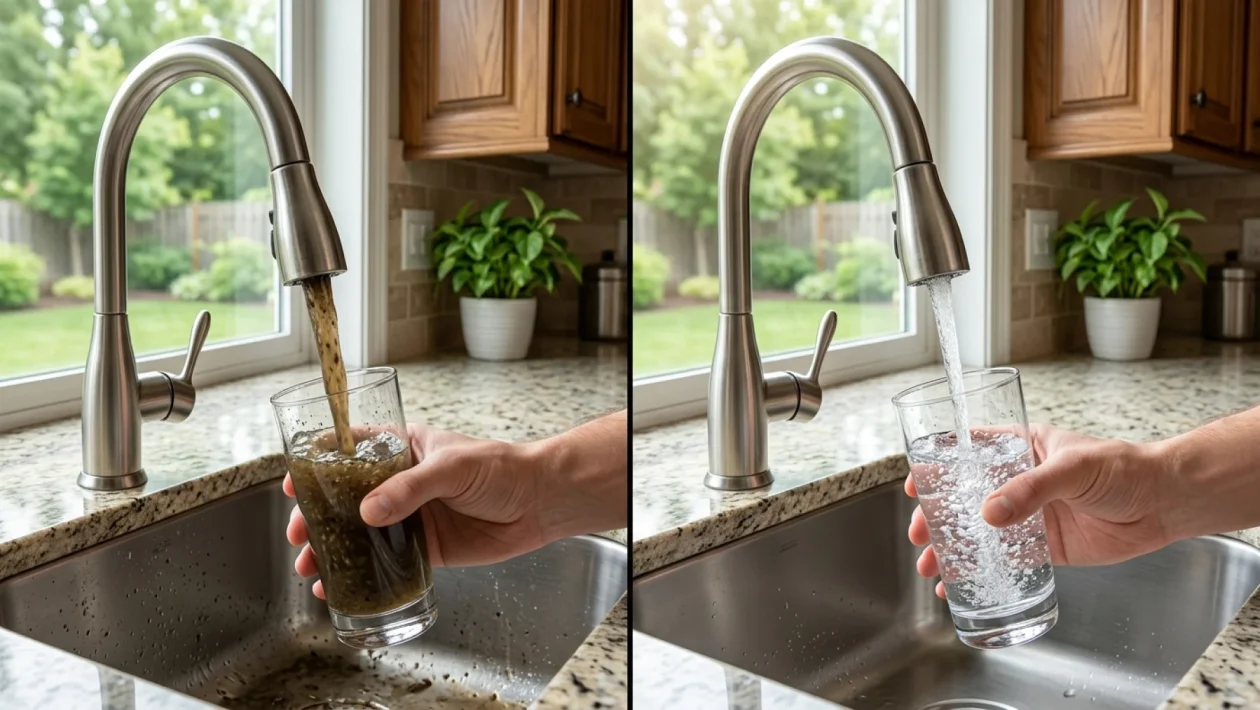
Imagine waking up, lacing up your work boots, and realizing you need to cough up $200,000 just to make sure the water coming out of your tap doesn’t turn into toxic sludge. That is exactly the reality for a group of residents just west of Cochrane right now. Alberta gravel mines are expanding rapidly, and a massive provincial loophole is leaving local landowners to foot the bill for environmental protection.
Let’s call a spade a spade. When an industrial aggregate pit the size of 100 football fields wants to expand directly uphill from the Bow River, you would think rigorous environmental testing is a guarantee. It is not. I have spent years covering infrastructure and resource management, and the nuts and bolts of this Cochrane West gravel pit dispute expose a glaring flaw in how we protect our backyard.
If you live anywhere near a proposed resource project in North America, you need to pay attention. We are going to tear down exactly how this expansion was green-lit, why locals are emptying their wallets to stop it, and what it means for the future of your drinking water.
Alberta Gravel Mines: The Scale Of The Cochrane Expansion
To understand the sheer magnitude of this issue, we need to look at the dirt being moved. BURNCO Rock Products Ltd. opened the Cochrane West pit back in 2016. Fast forward to today, and the province has rubber-stamped a plan to multiply the site’s footprint by five.
This is not just a modest backyard digging operation. We are talking about heavy industrial excavation sitting a mere 100 metres from the Bow River at its closest point. The company insists they will only mine a sixth of the site at a time and eventually return it to pasture.
But locals living downhill are not buying the corporate promises. The Stoney Nakoda Nations, the Town of Cochrane, and everyday families are raising major red flags. Their primary concern is the integrity of local creeks, natural springs, and the broader groundwater network that sustains the region.
The Hidden $200K Water Threat: Why Alberta Groundwater Is At Risk
Here is the hard, uncomfortable statistic that most Albertans do not know: gravel pits have been entirely exempt from mandatory Environmental Impact Assessments (EIAs) since 2020. You read that right. While an oilsands mine or a steel mill requires rigorous, government-mandated ecological audits, a massive gravel pit next to a major watershed gets a regulatory fast-pass.
Because the government does not force the aggregate companies to pay for an independent EIA, the burden falls completely on the community. Everyday Albertans are currently out of pocket to the tune of $200,000 just to hire their own hydrologists, lawyers, and soil experts. It is a classic David versus Goliath scenario, except David had to mortgage his house to buy the slingshot.
| The Corporate Advantage | The Citizen’s Burden |
|---|---|
| Exempt from mandatory EIA audits since 2020. | Must crowd-fund $200,000+ to hire independent experts. |
| Provincial water use approvals granted quickly. | Forced to navigate complex, delayed environmental appeals. |
When you are dealing with subsurface water flows, guessing is not an option. If the aquifer gets compromised by heavy machinery, fuel runoff, or altered drainage, you cannot just patch it with duct tape and hope for the best. The damage is permanent.
How Locals Are Fighting Back: The Blueprint To Challenge The Province
Despite the stacked deck, these Cochrane residents are putting on their Carhartt jackets and pushing back hard. They are currently dragging the water use approval in front of the provincial Environmental Appeals Board (EAB). It is a gruelling, bureaucratic slog, but they are laying down a masterclass in grassroots resistance.
If your community ever faces a similar industrial threat, here is the exact step-by-step playbook you will be forced to follow under the current provincial rules:
- Identify The Loophole: Recognize that the province can grant water use approvals without demanding an independent, audited environmental assessment.
- Form A Coalition: Pool your resources. Neighbouring landowners, Indigenous nations, and municipal councils must band together to apply for EAB intervenor status.
- Hire Your Own Guns: Since the government will not mandate a corporate EIA, you must hire your own private environmental experts to prove the groundwater risk.
- File The Appeal: Submit your independent data to the Environmental Appeals Board and demand the minister pause the corporate water license until the hearing concludes.
The system is fundamentally exhausting. It is designed to wear down the little guy.
“The problem becomes: an applicant comes in, and then residents are forced to kind of scramble to hire people and to address these things. Whereas a proper planned system where things are kind of zoned for these things, and the broader discussion as a community can enable a clear process moving forward.” – Jason Unger, Environmental Law Centre
Right now, the EAB has declined to pause BURNCO’s operations while the legal tape gets sorted out. The hearing is indefinitely postponed, leaving the residents in a brutal state of expensive limbo.
Frequently Asked Questions
Why aren’t gravel mines required to do environmental assessments?
In 2020, the Alberta government changed the Environmental Protection and Enhancement Act regulations. This specific amendment exempted gravel pits from the mandatory Environmental Impact Assessment list, categorizing them as lower risk compared to projects like massive dams or power plants.
Can the provincial environment minister step in?
Yes. Even though an EIA is not automatically mandatory for a gravel pit anymore, the environment minister holds the discretionary power to order one. To date, the minister has chosen not to exercise this power for the Cochrane West project.
What happens if groundwater is actually contaminated?
If the water table is altered or polluted, the costs of mitigation and providing alternative water sources are astronomical. That is exactly why appellants argue preventative, independent audits should be paid for by the aggregate companies before a single shovel hits the dirt.
🤝 We are all in this together. When the burden of protecting our natural resources shifts from the corporation profiting to the guy living down the street, the system is broken.
💡 Do not take your water for granted. These Cochrane residents are proving that fighting for your backyard requires serious grit, deep pockets, and a refusal to back down.
📱 Share your thoughts with your local representatives before the next massive excavation project gets approved in your municipality.
👇 Good luck out there, stay sharp, and never stop questioning what is happening right beneath your boots.