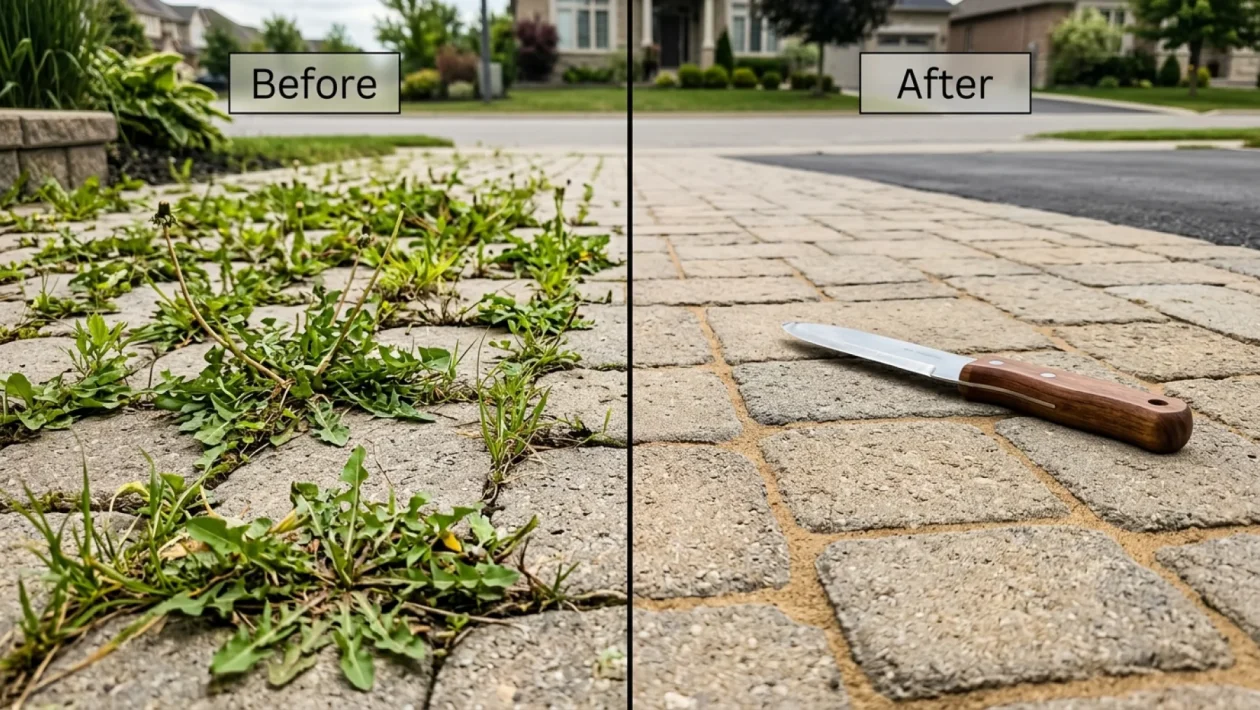
You just spent a small fortune having a beautiful driveway installed, and now it looks like an abandoned parking lot. Interlock weed removal is the ultimate test of a homeowner’s patience.
Those little green invaders pushing through your polymeric sand aren’t just an eyesore—they are actively destroying the structural integrity of your pavers. But put down the toxic jug.
I am going to show you exactly how to obliterate these persistent roots for good, using proven methods that won’t poison your local watershed or cost you a weekend of backbreaking labor.
The Reality of Interlock Weed Removal
Let’s get one thing straight: pulling the tops off weeds does absolutely nothing.
A recent landscaping study revealed a staggering fact: a single dandelion taproot left behind in a driveway crevice can regenerate up to four new shoots within just 14 days.
If you aren’t extracting the entire root system, you are just giving the plant a haircut. The key to successful interlock weed removal lies in targeting the hidden life source beneath the stones.
Winning the Battle Without Toxic Chemicals
Reaching for synthetic herbicides might seem like the easy way out, but it’s terrible for your pets, the groundwater, and frankly, the longevity of your driveway materials.
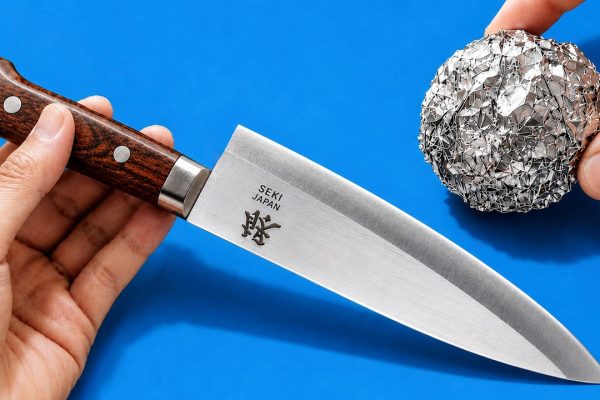
Instead, grab a quality crevice weeding knife. Personally, I swear by the Japanese hori-hori knives you can pick up at Lee Valley Tools—they slice through compacted sand like butter.
For the stubborn stuff, heat is your best friend. A standard landscaping torch can boil the moisture right out of the plant cells in seconds.
“When you use thermal weed control on interlocking stone, you instantly destroy the cellular structure of the crown. The weed simply cannot recover, and you leave zero chemical residue behind,” says Mark Jenkins, a senior hardscape engineer based in Toronto.
How to Destroy Driveway Roots Permanently
To ensure those unsightly green patches never return to your driveway, you need a systematic approach.
Here is the exact battle plan I use every single time to achieve a flawless, weed-free surface:
- Saturate the joints: Soak the affected area with water. Wet soil releases roots significantly easier than dry, compacted sand.
- Slice and extract: Insert your L-shaped weeding tool or hori-hori knife deep into the crack, angling it under the root crown, and gently lever it upward.
- Apply the vinegar strike: For any microscopic root hairs left behind, spray a mixture of 20% horticultural vinegar and a dash of dish soap directly into the crevice.
- Seal the breach: Once dry, sweep fresh polymeric sand into the gaps and mist it with a hose to lock it down.
If you skip that last step, you are just leaving an open door for new seeds to blow in on the next breeze.
Not sure which extraction method fits your weekend schedule? Here is a quick breakdown to help you decide.
| Removal Method | Effectiveness & Effort |
|---|---|
| Manual Crevice Tool | High effort, but removes 100% of the root structure. |
| Horticultural Vinegar | Low effort, great for young shoots, requires reapplication. |
| Weed Torch / Heat | Medium effort, instantly kills crowns, highly satisfying. |
| Boiling Water | Zero cost, highly effective on taproots, kills instantly. |
My personal go-to? A kettle full of boiling water poured directly on the crown followed by a quick scrape.
FAQ: Mastering Driveway Maintenance
Does regular table salt work for killing driveway weeds?
Yes, but you should never use it. Salt will inevitably wash into your surrounding soil and permanently sterilize it, killing your lawn and garden. It can also cause spalling and deterioration on certain concrete pavers.
How often should I replace the polymeric sand?
If you notice the sand washing out or frequent weed growth, it is time for a top-up. Generally, a high-quality jointing sand should be replenished every three to five years to maintain a solid defense against weed seeds.
Can I use a pressure washer to blast the weeds out?
Absolutely not! Pressure washing will certainly blow the weeds away, but it will also blast out all your jointing sand and completely undermine the foundation of your driveway.
🤝 Maintaining a pristine driveway doesn’t have to be a miserable chore when you have the right tactics in your back pocket.
💡 Remember, the secret is all about attacking the root system directly and sealing up those joints so the next generation of seeds has nowhere to land.
📱 Share your thoughts or your own weekend landscaping victories with me in the comments below.
👇 Good luck out there on the driveway, and keep those pavers looking sharp all season long!