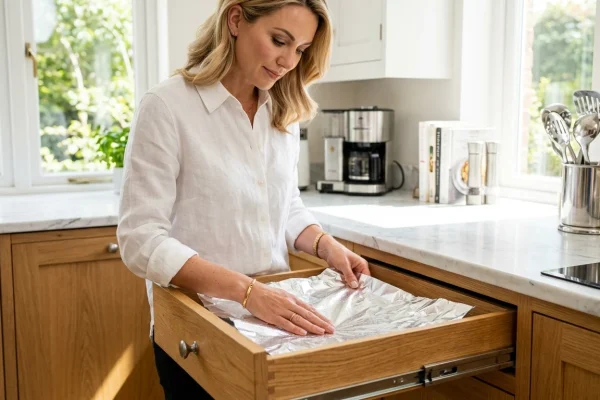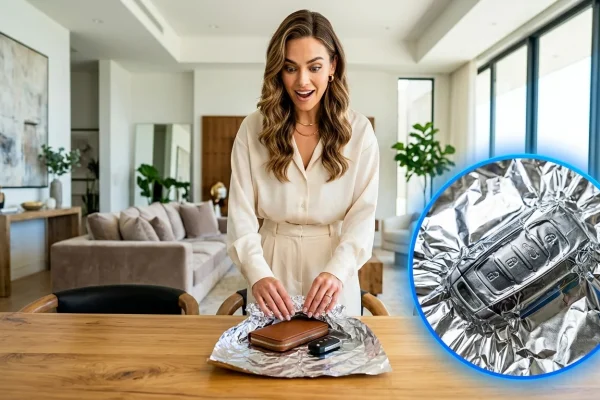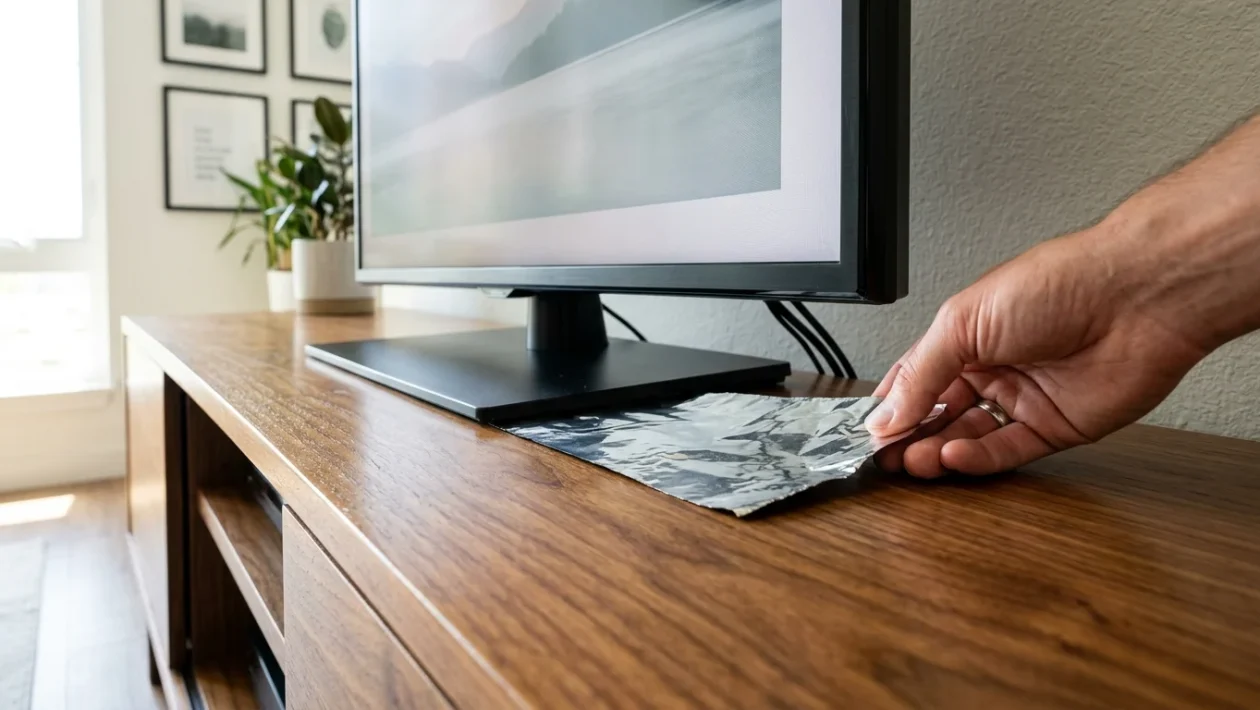
A flat-screen television resting on a stand in a modern living room
A simple piece of aluminum foil is becoming an unexpectedly common sight in living rooms across the country. Many households have started placing cut sheets of foil directly underneath their televisions.
While it might look like an eccentric tech hack, the practice is rooted in basic furniture protection and cleanliness rather than complex electronics.
The Real Reason Behind the Trend
The primary function of the aluminum foil is to serve as a physical barrier. Dust and small particles notoriously accumulate under and behind heavy electronic displays.
Placing foil beneath the base creates a smooth, easy-to-clean layer that catches falling debris. It also helps organize tangled cables, keeping the immediate area tidier.
More importantly, televisions generate residual heat over long hours of continuous use. For homeowners with delicate wood or glass media consoles, the foil acts as a shield to prevent the underlying surface from degrading, warping, or discoloring over time.
Aluminum foil being applied as a protective layer behind an electronic device
What Electronics Specialists Say
Tech experts are quick to clear up a common misconception: sliding aluminum foil under your screen will not boost your TV signal or enhance your image quality. It is strictly a physical barrier.
Specialists agree the foil can be a useful protective tool, provided it is placed carefully. Modern televisions require adequate airflow to keep internal components from overheating.
If the foil obstructs the device’s ventilation system or touches active electrical components, a harmless cleaning hack can quickly become a serious fire hazard.
Strict Safety Guidelines
If you decide to try this at home, extreme caution is necessary. Using highly conductive materials near high-voltage electronics carries inherent risks.
Industry professionals strongly recommend following these safety protocols:
- Never block ventilation: Ensure the foil does not cover or sit too close to the TV’s cooling slots.
- Keep away from power sources: Never allow the foil to touch outlets, surge protectors, or electrical connections.
- Watch for exposed wiring: Keep the metal strictly away from frayed, damaged, or bare cables.
- Limit its use: Use the foil exclusively as an external surface protector for the furniture beneath the stand.
- Check the manual: Always defer to the television manufacturer’s official safety guidelines.
Standard Maintenance Alternatives
For those hesitant to introduce metal foil to their entertainment center, standard maintenance practices remain the best way to extend the lifespan of a television.
Routine dusting with a dry microfiber cloth prevents buildup without scratching the screen. Additionally, positioning the television away from direct sunlight, moisture, and high-heat sources keeps the hardware operating efficiently.
To protect the device from internal electrical damage, experts continue to emphasize the importance of plugging units into dedicated voltage stabilizers or surge protectors to guard against sudden power spikes.