
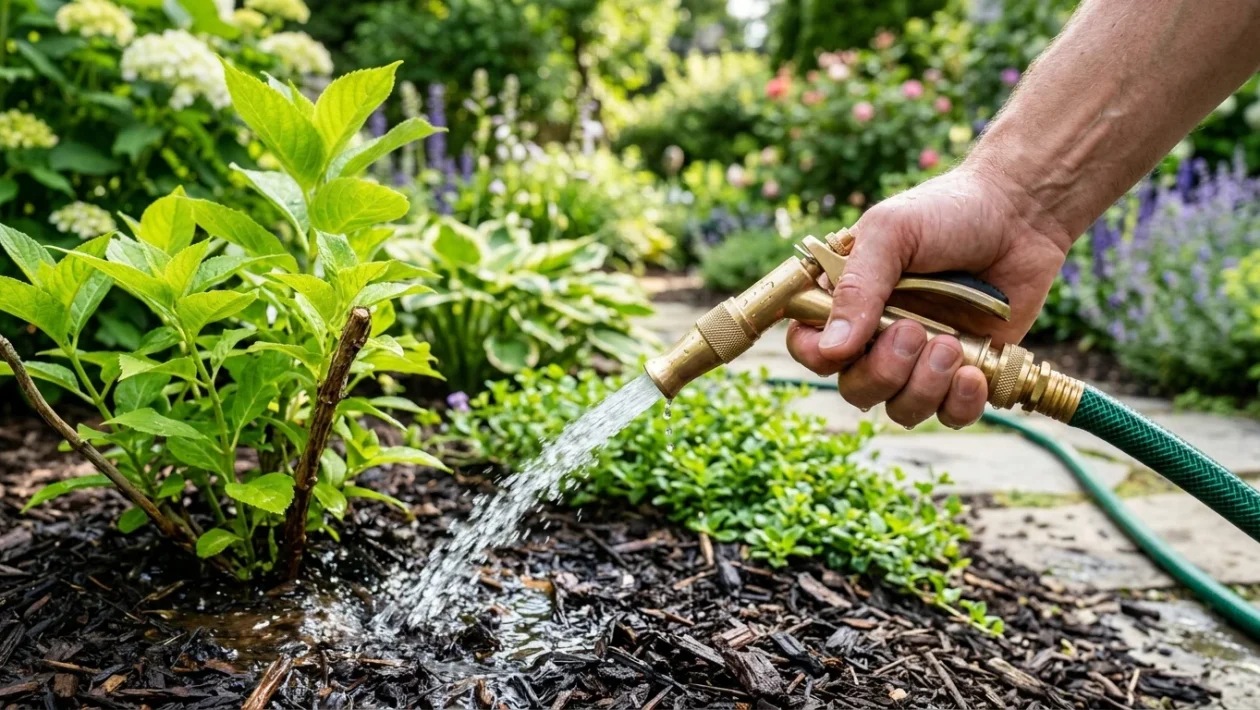
Most gardeners swear by the early morning watering routine. You grab your hose with your morning coffee, soak the tomatoes, and assume your garden is safe for the day.
But relying strictly on a morning schedule might be putting your plants at severe risk. If you want to prevent irreversible heat damage, morning is not the optimal time to hydrate your garden.
The Morning Myth
Morning watering has a major flaw during peak summer heat. As the sun climbs, temperatures spike rapidly, turning your garden beds into ovens.
Water applied at 7:00 AM often evaporates from the topsoil by noon. The moisture never reaches the deep root systems where it is needed most to help plants survive afternoon heatwaves.
The Sweet Spot: Late Afternoon
The optimal time to water your garden falls between 4:00 PM and 7:00 PM. By this time, the intense midday sun has passed, significantly dropping the evaporation rate.
Watering in the late afternoon gives the soil time to absorb moisture deeply. Roots have several hours to soak up the water before nightfall, properly fortifying the plant’s cellular structure.
Avoiding Irreversible Damage
When plants are deprived of deep moisture, they reach a stage botanists call the permanent wilting point. Once this happens, the cellular damage cannot be undone, even if you flood the plant with water later.
Leaves turn crispy, stems collapse, and the plant sacrifices its fruit and flowers just to stay alive. Late afternoon watering provides a necessary buffer, ensuring the soil remains consistently moist through the most dangerous parts of the following day.
Best Practices for Deep Root Hydration
Timing is only half the battle. How you deliver the water dictates how well your plants will weather the heat.
- Target the base: Keep the foliage completely dry. Wet leaves lingering overnight invite devastating fungal diseases like powdery mildew.
- Water deeply and slowly: A quick surface spray does nothing but encourage weak, shallow roots. Let the water seep down at least six inches into the soil.
- Mulch heavily: Add a two-inch layer of organic mulch around the base of your plants to lock in that crucial late afternoon moisture.
Adjusting your watering schedule requires a simple shift in habits. In return, your garden will build deeper roots, produce higher yields, and easily survive brutal temperature spikes.

