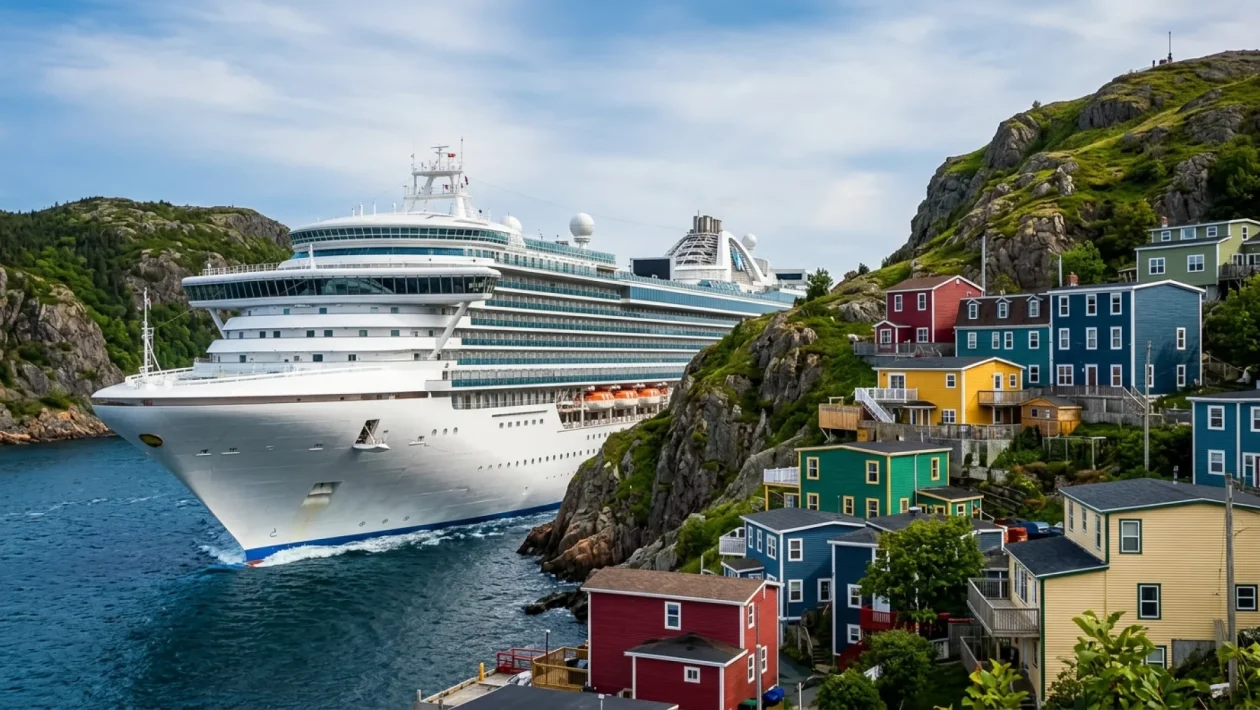
The St. John’s cruise season for 2026 has officially launched, bringing a massive wave of tourism and a highly anticipated economic boost to Newfoundland and Labrador. The historic arrival of the SH Vega this Thursday morning marks the beginning of a rigorous May-to-October schedule. Despite a slight reduction in the total number of vessels docking this year, the city is preparing for a staggering surge in foot traffic. Official projections confirm that over 36,000 international passengers will arrive in the capital city this season—a dramatic jump of 10,000 people compared to last year’s figures. Local businesses, port authorities, and N.L. Health officials have fully mobilized to manage the influx, ensuring both economic prosperity and public safety.
St. John’s cruise season 2026: Passenger numbers and the complete timeline
The operational landscape of the St. John’s cruise season has shifted significantly for the 2026 tourism window. While the visual of ships passing through the iconic Narrows is a standard sign of summer, the underlying statistics tell a story of strategic industry changes. The St. John’s Port Authority expects exactly 39 cruise ships to drop anchor between the months of May and October. This represents a slight decrease in overall vessel volume compared to previous years, yet the economic potential has never been higher.
The defining characteristic of the 2026 season is the scale of the ships arriving. Cruise lines are deploying larger vessels with higher occupancy rates to Atlantic Canada. As a result, the passenger count has skyrocketed from 26,000 in the previous year to a projected 36,000 this summer. For downtown St. John’s, this means a denser concentration of daily visitors flooding historic areas like Water Street, George Street, and Signal Hill.
To understand the timeline and operational flow of the 2026 season, local residents and tourism operators are tracking several key logistical points:
- Season Inception: The season officially began on a Thursday in May 2026 with the successful docking of the SH Vega.
- Peak Volume Window: The heaviest concentration of massive passenger vessels is scheduled between late July and September, aligning with peak regional weather.
- Season Conclusion: The final port calls are slated for late October, capturing the lucrative autumn foliage tourism market.
- Passenger Demographics: The influx includes international travelers arriving directly from transatlantic routes, as well as North American tourists exploring the eastern seaboard.
The economic ripple effect: Why the 10,000 passenger increase matters
The injection of 36,000 tourists into the local economy is a vital component of the post-pandemic recovery strategy for Newfoundland and Labrador. For municipal leaders, the cruise sector acts as an introductory billboard for the province. Day-trippers who spend eight to twelve hours in the city frequently inject thousands of dollars into local restaurants, artisan shops, and guided tour operations.
Ward 1 Councillor Jill Bruce has been highly vocal about the long-term benefits of this specific demographic of traveler. The immediate cash flow is crucial, but the secondary impact—return tourism—is where the real value lies for the provincial economy.
“It brings people into our city that normally would never come here. Even if it’s just for the day, they’re probably going to come back.”
Local vendors and municipal planners rely heavily on these initial brief encounters. A positive experience navigating the city’s steep, colourful streets or interacting with local hospitality often results in passengers booking extended, multi-day flights or ferry trips back to the province in subsequent years. The local municipal council views the St. John’s cruise season not merely as a temporary seasonal event, but as the cornerstone of their long-term international marketing strategy.
Public health protocols and navigating hantavirus concerns
With global travel comes the necessity of rigorous public health management. As the St. John’s cruise season accelerates, local health officials have been actively addressing concerns stemming from international maritime news. Recently, international health networks reported localized cases of hantavirus connected to a Dutch cruise ship. Given that cruise vessels inherently represent dense, closed environments, citizens of St. John’s naturally raised questions regarding local readiness.
N.L. Health and the provincial government have moved swiftly to reassure the public that comprehensive safety nets are actively in place. Dr. Janice Fitzgerald, the Chief Medical Officer of Health for Newfoundland and Labrador, recently addressed the situation to prevent any unwarranted panic among local residents and port workers. She confirmed that while the Dutch ship incident is something authorities are monitoring closely, the outbreak was highly localized. More importantly, she stressed that the general risk to Canadians remains exceptionally low.
To ensure absolute safety at the docks, a multi-tiered emergency response framework is active:
- City Emergency Preparedness: The municipal emergency team remains on standby, equipped to handle rapid isolation or medical extraction if a vessel reports illness upon approaching the Narrows.
- Chain of Command: In the event of an infectious disease report, the city takes direct operational cues from N.L. Health and the St. John’s Port Authority, ensuring a unified, science-based response.
- Routine Monitoring: Standardized health declarations from incoming vessels are rigorously vetted before docking clearance is granted.
Councillor Bruce emphasized the importance of maintaining the province’s famous hospitality despite these standard public health vigilance measures, noting the massive volume of global travelers entering the city through various transit hubs daily.
“There’s dozens of flights coming into this city every day with people from all over the world. Cruise ships, people are coming from all over the world. This is something that we want to keep an eye to. But I hope people are still very welcoming to our cruise passengers.”
The broader 2026 tourism landscape in Newfoundland and Labrador
The success of the St. John’s cruise season is just one metric in what is shaping up to be a historic year for Atlantic Canadian tourism. The sheer volume of incoming visitors is straining positive pressure on all aspects of provincial infrastructure. Beyond the massive ships docked in the harbour, other transportation sectors are reporting mirrored growth.
Marine Atlantic, the federal Crown corporation operating the vital ferry link between Nova Scotia and Newfoundland, has already signaled expectations for an exceptionally busy summer season. Advanced bookings for commercial and passenger vehicles indicate that domestic tourism is surging parallel to the international cruise market. Furthermore, the daily influx of international and domestic flights into St. John’s International Airport confirms that the appetite for eastern Canadian tourism is at an all-time high.
Ultimately, the arrival of the SH Vega represents much more than a single ship docking in a harbour. It serves as the starting gun for a highly lucrative, meticulously managed, and vibrant 2026 summer economy. With robust health protocols actively protecting the local populace and business owners fully stocked to meet the demands of 36,000 eager tourists, St. John’s is perfectly positioned to solidify its reputation as a premier global maritime destination.