You stare at a dark, damp patch on your drywall, and that familiar sinking feeling hits your stomach. You are suddenly paralyzed by a homeowner’s worst fear: is the roof actively leaking, or is this just trapped indoor humidity?
Guessing wrong could cost you thousands in unnecessary renovations or ignored water damage. Luckily, you don’t need an expensive thermal camera to find the truth today.
I am going to show you a completely free Wall Moisture Test using something that is already sitting in your kitchen drawer.
The Wall Moisture Test: Why You Can’t Ignore Damp Drywall
Ignoring a damp spot is the absolute fastest way to invite mold into your living space. Springtime temperature swings create the perfect storm for sudden indoor humidity problems.
In fact, industry data shows that excess indoor moisture is the leading cause of premature structural deterioration in modern North American homes. Our houses are built incredibly tight to save energy, but that tight seal violently traps moisture inside.
Before you grab a sledgehammer and start tearing down the plaster, you need to properly identify the enemy.
The Aluminum Foil Secret: Your Kitchen Drawer Detective
This is exactly where old-school handyman wisdom shines. Grab a roll of classic Alcan aluminum foil and a roll of green painter’s tape from your local Home Depot or RONA.
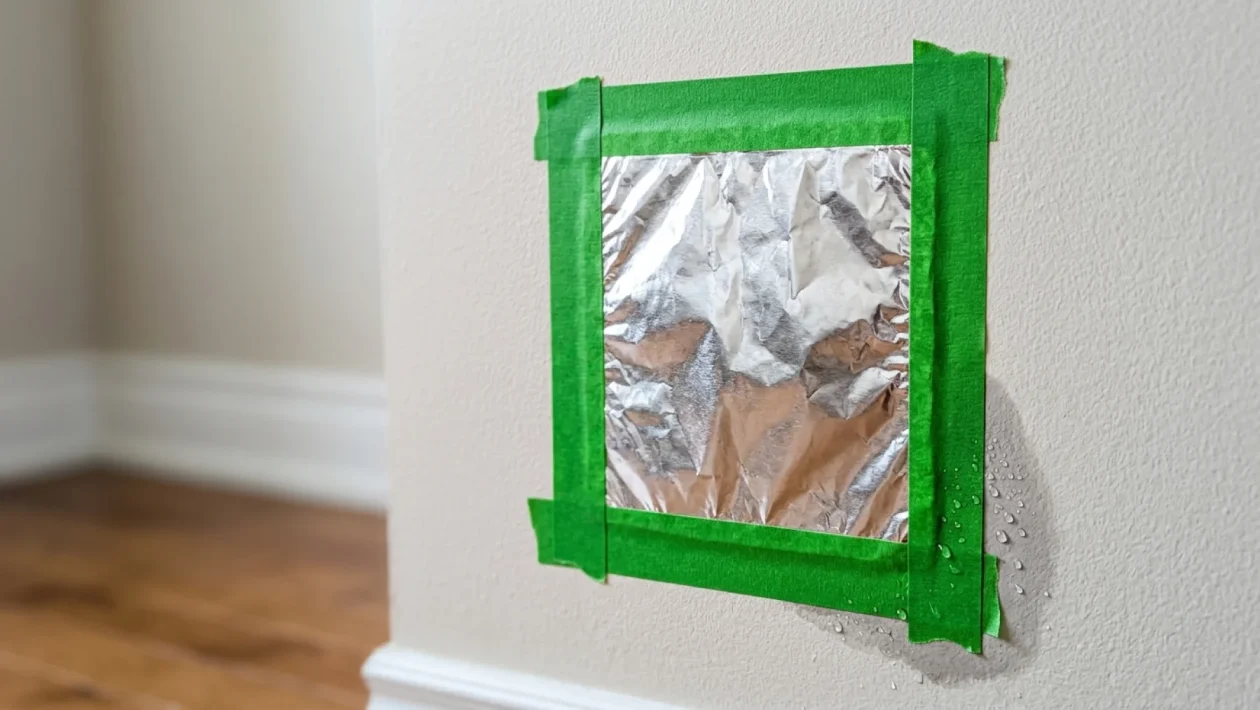
We are going to create a miniature vapor barrier right over the suspect area. Here is exactly how to execute this clever diagnostic test:
- Take a clean towel and firmly pat the affected area of your wall completely dry.
- Tear off a square of aluminum foil large enough to completely cover the damp zone.
- Place the foil flat against the wall and seal all four edges tightly with your painter’s tape.
- Walk away and leave the patch completely undisturbed for 24 to 48 hours.
The tighter your tape seal, the more accurate your results will be. You want to ensure zero air escapes from behind that square of foil.
Finding Hidden Leaks: Diagnosing The Moisture Source
The waiting game is over. Now comes the moment of truth when you carefully peel back the tape.
If the surface of the foil facing the room is wet, but the wall side is dry, you are dealing with condensation. Your home is simply too humid, and the heavy moisture is settling on cool exterior surfaces.
However, if you pull the foil away and find water trapped between the metal and the drywall, you have a physical leak. Liquid water is physically pushing its way through your home’s exterior envelope.
Water takes the path of least resistance. If you don’t identify the exact source of an active leak quickly, a simple sealant job easily turns into a massive structural nightmare behind your drywall.
This Spring: Next Steps For Protecting Your Home
Now that you know exactly what you are dealing with, you can attack the problem with utter confidence.
If condensation is your culprit, running a decent dehumidifier in the affected room is usually a cheap and permanent fix. Simply lowering the ambient humidity solves the issue almost instantly.
If your foil revealed an active leak, it is time to call in a professional contractor. Finding the actual entry point of exterior water requires a trained eye, as water can travel down interior studs from a roof leak far away from the wet spot.
| Diagnostic Result | Action Required |
|---|---|
| Condensation (Wet Outside) | Run a dehumidifier, improve room ventilation, and check your exhaust fans. |
| Active Leak (Wet Inside) | Inspect siding and roof, check interior plumbing, and call a professional contractor. |
Frequently Asked Questions
How long should I leave the foil on the wall?
Patience pays off immensely here. You must wait a minimum of 24 hours, but giving it a full 48 hours provides the most definitive answer. Rushing the test can easily lead to a false negative.
Does the type of tape actually matter?
Absolutely. You need a tape that creates an airtight seal without ripping off your paint when you remove it. Standard blue or green painter’s tape is the only thing you should use for this trick.
What if both sides of the foil are wet?
This means you have a frustrating dual-threat situation. You have an active leak pushing water through the wall, combined with extremely high indoor humidity. You must address the structural leak immediately before tackling the room’s condensation.
Final Thoughts
🤝 Good luck playing detective in your home this season! Catching these small issues early is the ultimate secret to stress-free homeownership.
💡 Remember, knowing is half the battle, and a tiny square of kitchen foil just saved you from making a very expensive blind guess.
📱 If this quick tip saved your drywall, please share your thoughts below or send this article to a neighbor who could use the advice.
👇 Do not wait for the next heavy spring rainstorm to roll in. Go test that suspicious wall spot right now!