Time is the ultimate enemy when someone vanishes from your neighborhood. You don’t wait around, you don’t panic, and you absolutely don’t leave it entirely up to chance. Right now, up in Prince George, B.C., a massive grassroots effort is underway to find 22-year-old Kira Hammerstrom, who disappeared on May 13, 2026. This case is a stark reminder that when a local goes missing, official law enforcement resources are incredible, but it’s the boots-on-the-ground power of the community that covers the most terrain. We are going to break down the exact strategies locals are using right now, and give you the ultimate blueprint for organizing a high-speed, effective community search.
Implementing Missing Person Protocols
There is a dangerous myth out there that you have to wait 24 hours to report someone missing. That is completely false. If someone’s absence is highly uncharacteristic—like Kira failing to contact her family and friends—you act immediately. Implementing fast, standardized missing person protocols is what separates a chaotic scramble from a targeted rescue mission.
In Canada alone, roughly 70,000 individuals are reported missing every single year. That is a staggering statistic. While the vast majority are found within a few days, those crucial first 48 hours dictate the trajectory of the entire investigation.
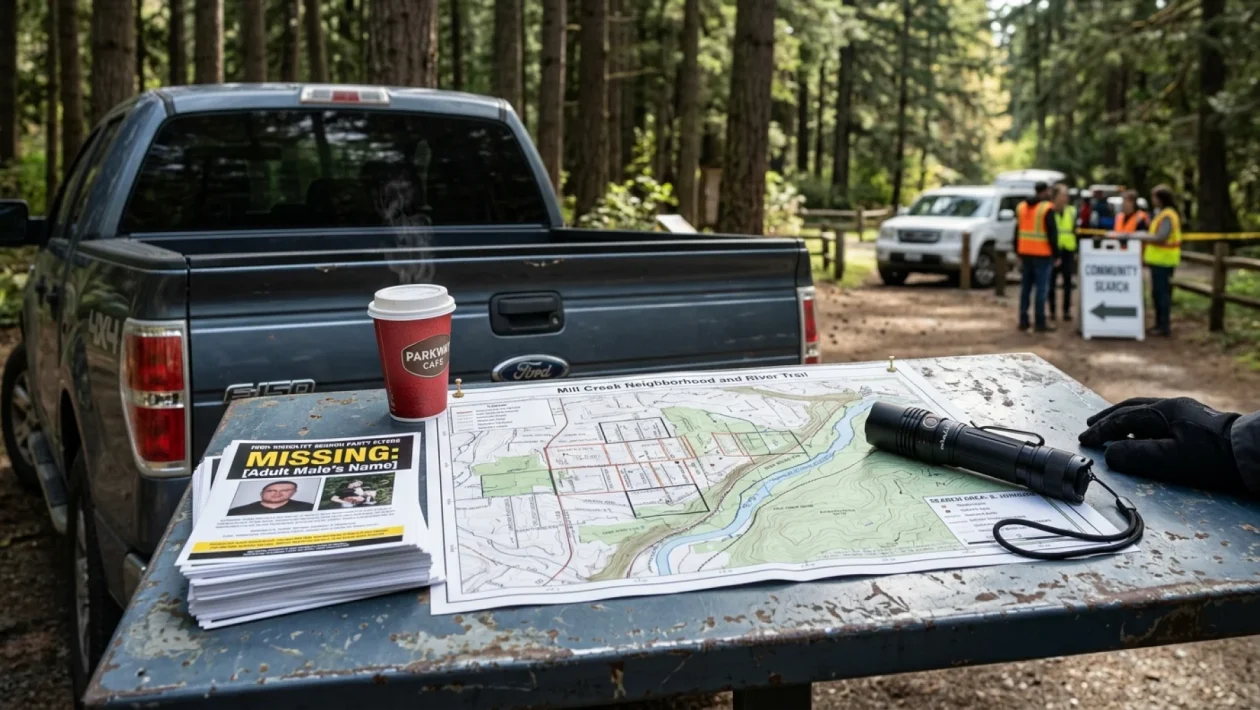
As soon as the RCMP is notified, the parallel community track needs to start. You need to establish a central command post—often just a local community center or a staging area kept fueled by massive carafes of coffee from the local Tim Hortons. From there, every volunteer needs a specific task, a partner, and a defined grid to cover.
How Communities Mobilize in a Crisis
A community on the move is a powerful force, but it needs extreme focus. In Prince George, locals didn’t just wander aimlessly. They set up a dedicated Facebook page, coordinated walks, organized drives, and even launched boat trips down the Fraser River to cover maximum ground.
When you mobilize, you need to understand the division of labor. Amateurs shouldn’t tamper with evidence, and police can’t be everywhere at once. Here is a breakdown of how the workload should be split to ensure maximum efficiency.
| Community Volunteer Actions | Official Law Enforcement (RCMP) |
|---|---|
| Distributing flyers and hanging posters | Pulling and reviewing CCTV surveillance |
| Grid-searching parks, rivers, and trails | Securing discovered personal items for forensics |
| Crowdsourcing local social media sightings | Following up on high-level investigative leads |
If volunteers stumble across something important—like the personal items belonging to Kira found near the Hudson’s Bay Slough—they must stop, back away, and call it in immediately. Never touch potential evidence.
“When the community steps up to handle the grassroots ground game, it allows law enforcement to focus entirely on following up critical investigative leads and tracing final movements.”
Strategies to Find Loved Ones Fast
Speed is everything, but accuracy is what actually brings people home. You need to gather hyper-specific details about the person’s last known movements. For example, police surveillance initially spotted Kira wearing a black T-shirt and grey sweatpants, but later determined she had changed into pink leggings, a white hoodie, and black shoes.
If you are organizing a search party today, you need to follow a strict tactical approach. Here is exactly how you lock down an area and find your loved ones fast.
- Lock down the timeline: Build a minute-by-minute timeline of the person’s last known day. Verify clothing changes, vehicle types, and last known cell phone pings.
- Assign search grids: Use a digital mapping app on your phone. Assign teams of two to specific blocks or trail systems. No one searches alone.
- Canvass for cameras: Volunteers should knock on every door in the target radius asking homeowners to check their Ring or Nest doorbell cameras for the specific time window.
- Amplify the alert: Push the exact physical description and last known clothing to local Facebook groups, subreddits, and regional networks like Northern B.C. Crime Stoppers.
When you give people specific instructions rather than vague pleas for help, the community becomes an unstoppable dragnet.
Frequently Asked Questions
Do I have to wait 24 hours to report a missing person in Canada?
Absolutely not. If the disappearance is completely out of character or the person is vulnerable, contact your local police detachment immediately. The 24-hour rule is a dangerous Hollywood myth.
How can I help a search effort if I can’t physically walk the trails?
Digital searchers are just as vital. You can monitor social media for tips, manage the community Facebook page, print posters, or coordinate food and water drop-offs for the physical search teams.
What should I do if I find an item belonging to the missing person?
Do not touch it. Note the exact GPS location on your smartphone, take a wide-angle photo without stepping closer, and immediately call the police tip line. Touching the item can destroy vital scent trails for K9 units.
🤝 Community is everything when the chips are down and a family is living their worst nightmare. It is the organized, relentless effort of everyday citizens that often breaks a case wide open.
💡 Good luck to everyone out in Prince George right now braving the terrain. If you have any information on Kira Hammerstrom’s whereabouts, do the right thing and contact the RCMP immediately.
📱 If you found this breakdown on missing person protocols useful, bookmark it for your local neighborhood watch or community safety board.
👇 Share your thoughts or your own local search-and-rescue experiences in the comments below. Stay safe, look out for your neighbors, and keep your eyes open.