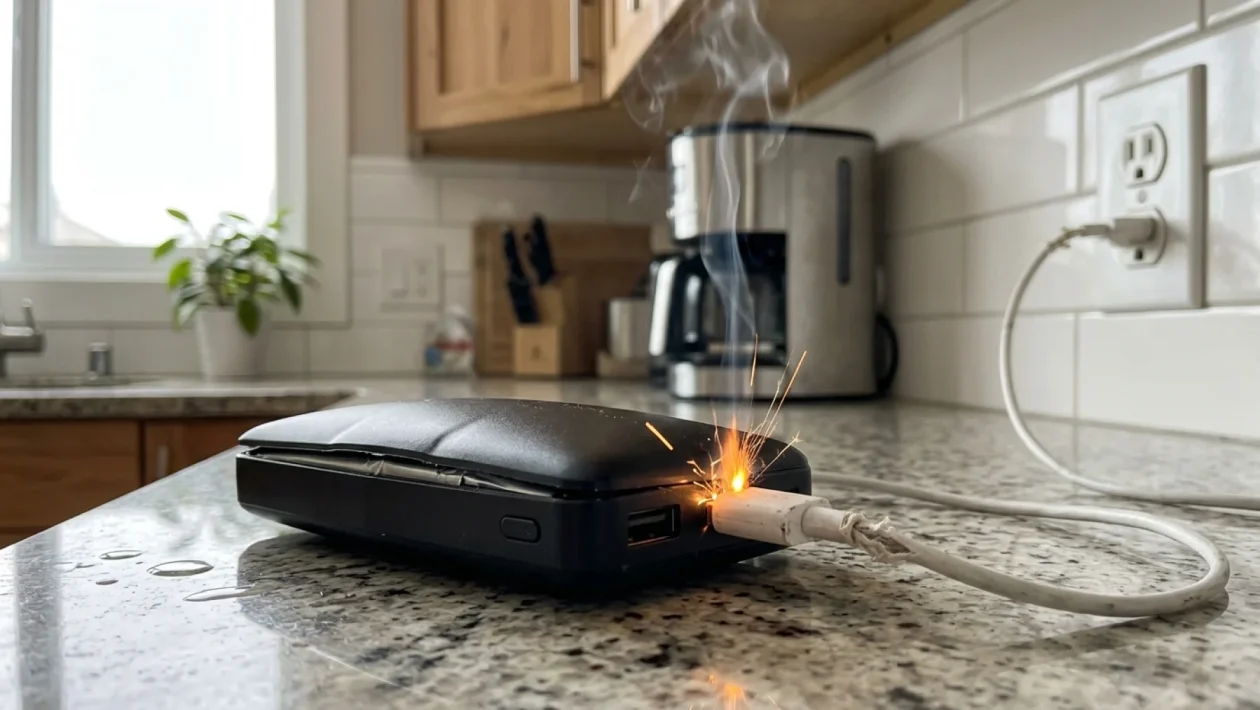
A simple power bank left charging on a kitchen counter recently torched a home in Stittsville, racking up an eye-watering $750,000 in damage. You probably have half a dozen of these exact same batteries scattered around your living room right now. Lithium-ion battery fires aren’t just a freak accident anymore; they are a rapidly growing epidemic right in our own backyards. Today, I’m going to show you exactly why your everyday gadgets are turning into ticking time bombs and, more importantly, the foolproof steps you need to take to safeguard your family and your property.
Lithium-Ion Battery Fires: The Unseen Threat
We love our cordless convenience. From heavy-duty power tools in the garage to the e-bikes we ride to work, lithium-ion tech runs our modern lives.
But here is the hard truth: when these high-energy cells fail, they don’t just spark—they violently explode.
This phenomenon is called thermal runaway. It is an uncontrollable chemical chain reaction where the battery rapidly heats itself up, reaching temperatures over 600 degrees Celsius (1,100°F) in a matter of seconds.
Water barely puts a dent in these infernos. Once a lithium-ion battery decides to let go, it actually creates its own oxygen, making it an absolute nightmare for firefighters to extinguish.
Why Your Everyday Devices Are Suddenly Sparking
You might be wondering why this is suddenly making headlines in the spring of 2026. The answer usually boils down to cheap replacement parts and careless charging habits.
When you buy a knock-off charger online instead of heading down to Canadian Tire for a properly ULC-certified plug, you are playing Russian roulette with your home.
These aftermarket chargers lack the smart-chips required to tell the battery to stop drawing current when it is fully charged.
“A lot of folks don’t realize that dropping a power bank or an e-bike battery can cause microscopic internal damage. Weeks later, you plug it in, and that invisible short circuit causes a catastrophic fire.” — Chief Inspector David R., Fire Safety Authority
Physical damage, extreme temperatures, and overcharging are the holy trinity of battery failure.
The Reality of Ottawa House Blazes in 2026
The numbers do not lie, and they are frankly a little terrifying. Here in Ottawa alone, there have already been 10 fires linked directly to lithium-ion batteries just in the first few months of this year.
It is not just electric vehicles taking the heat. The culprits are often the smaller, unassuming devices we take completely for granted.
Laptops left smothered on beds, cheap electric scooters plugged in by the front door, and generic power banks are the primary offenders.
When a fire blocks your main exit, a damaged scooter in the hallway transforms a bad situation into a potentially fatal one.
And How To Prevent A Disaster In Your Own Home
Enough doom and gloom. You do not need to throw your gadgets in the trash, but you do need to manage them like a pro.
Here is the exact step-by-step routine I use in my own workshop and home to keep things safe:
- Inspect for damage: Look for any swelling, strange odors, or cracked casing on your batteries. If it looks puffed up like a spicy pillow, recycle it immediately at a hazardous waste facility.
- Charge on hard surfaces: Never charge a phone or laptop on a bed or couch. Always place them on a non-combustible surface like a stone countertop or concrete floor.
- Use the original charger: Stick to the manufacturer’s charging cable and brick. If you lose it, buy a certified replacement, not the absolute cheapest one you can find online.
- Unplug when full: Do not leave e-bikes or power tools charging overnight while you sleep. Unplug them the moment they hit 100 percent.
To make it even easier to remember, I have broken down the do’s and don’ts of everyday battery management.
| Safe Charging Habits | Dangerous Mistakes |
|---|---|
| Charging while you are awake and in the room. | Plugging in an e-bike overnight while you sleep. |
| Using ULC/CSA certified chargers. | Buying ultra-cheap, unbranded replacement cables. |
| Keeping devices away from direct sunlight. | Leaving a power bank in a hot car during the summer. |
Frequently Asked Questions
Can I put out a lithium-ion battery fire with a standard extinguisher?
Standard ABC fire extinguishers might knock down the surrounding flames, but they will not stop the chemical reaction happening inside the battery. Your best bet is to evacuate the home instantly and call 911.
How do I safely dispose of a swollen battery?
Never throw a lithium-ion battery in your regular garbage or recycling bin. Take it directly to a municipal hazardous waste depot or a specialized electronics recycling drop-off point in your neighborhood.
Are e-bikes safe to store indoors?
Yes, but with caveats. If you must store an e-bike indoors, remove the battery and store it in a fireproof bag. Never block your primary exit or staircase with a charging mobility device.
🤝 Taking just five minutes to audit the chargers in your house can be the difference between a safe home and a total loss.
💡 Remember, you do not have to be afraid of the tech you use every day. You just have to treat it with the respect it commands.
📱 Good luck out there, stay safe, and do not hesitate to pass this guide along to someone who still leaves their laptop buried under the blankets.
👇 I want to hear from you down below! Share your thoughts in the comments: have you ever had a device get dangerously hot while charging?