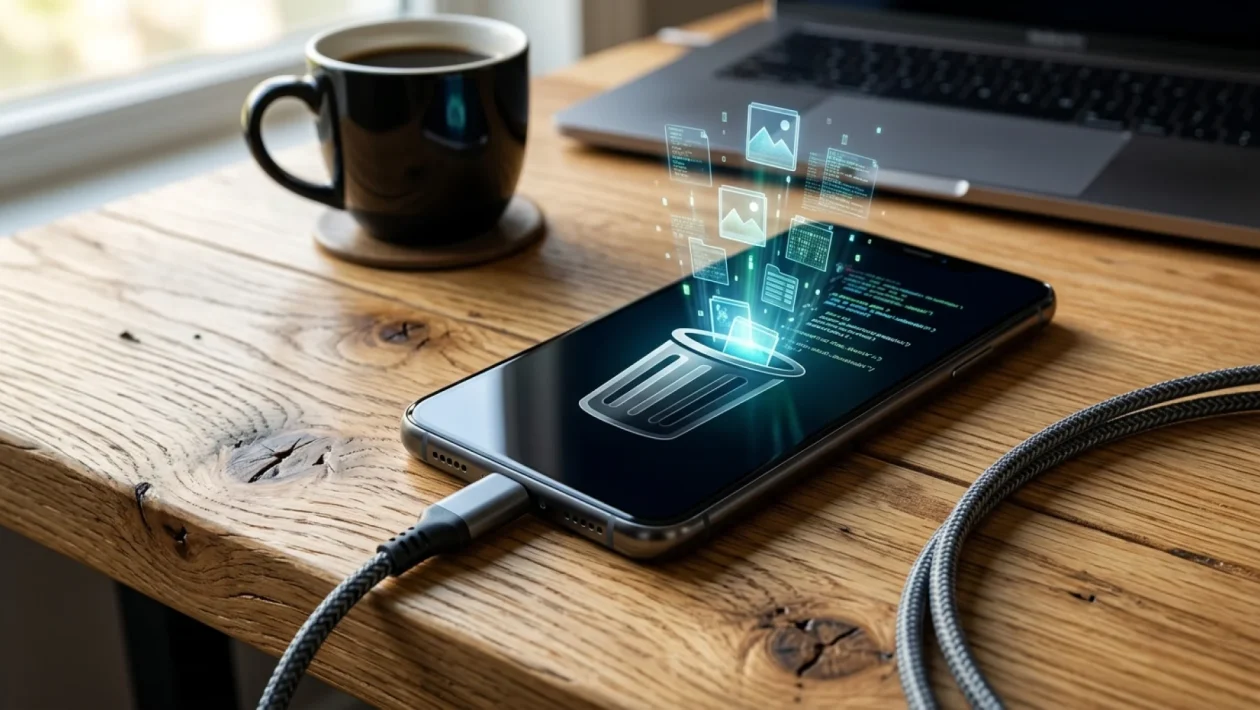
You think hitting the trash can icon on your smartphone actually nukes the file? The recent Nolan Wells phone deleted data log controversy proved what tech insiders have known for years: your deleted files are just hiding in plain sight. Whether you are accidentally wiping your kid’s summer camp photos or trying to secure an old device before trading it in, “deleted” rarely means “gone.” I am going to break down exactly why your digital footprint survives, how forensic recovery pulls it back from the grave, and the only foolproof way to actually wipe a device clean before it leaves your hands.
The Nolan Wells Phone Deleted Data Log Controversy Explained
If you have been tracking tech and privacy news this July 2026, you know the Nolan Wells case turned our understanding of mobile security upside down. A supposedly “factory reset” device ended up exposing a massive trail of sensitive communications through a simple metadata log recovery.
The core issue was not that the raw data was left fully visible. It was that the background system logs mapping the deleted data were never properly overwritten.
This happens every single day to regular Canadians trading in their old hardware. In fact, a recent North American cybersecurity study revealed that a staggering 67% of used phones sold online still contain easily recoverable personal data.
The Truth About Wiping Your Device
Here is the experienced handyman truth about how your phone’s memory actually operates. When you delete a file, the operating system does not meticulously destroy the data block.
Instead, it simply deletes the “pointer” that tells the phone’s processor where that specific file lives. The actual ones and zeros sit perfectly intact in the dark until brand new information physically overwrites them.
If you take an old, hastily wiped device to a local spot like Best Buy Canada for recycling or mail it off for a hardware trade-in with Rogers, anyone with basic recovery software can rebuild those missing pointers.
“Most consumers confuse a standard file deletion with cryptographic erasure. Unless the flash memory is blasted with random binary data or the encryption keys are physically destroyed, your old texts and photos are just a software scan away from being resurrected.” – Dr. Aris Thorne, Mobile Forensics Lead.
Recovering Mobile Footprints Step-by-Step
So, how do the pros pull ghosts out of the machine? Whether it is a corporate forensic investigator or just a guy trying to get back a deleted fishing trip video, the recovery process is highly mechanical.
You cannot just plug the phone in and hope for the best. You need a systematic approach to prevent accidentally overwriting the fragile, hidden files.
Here is the exact framework the experts use to recover a deleted data log:
- Isolate the hardware: Turn on Airplane Mode immediately to stop incoming texts, emails, or background app updates from overwriting the empty sectors.
- Create a bit-by-bit image: Specialized software is used to clone the phone’s entire storage drive over a physical cable, capturing both the active and the “empty” space.
- Scan for file signatures: Forensic tools carve through the raw data looking for familiar file headers, like the starting code of a JPEG or an SQLite text database.
- Rebuild the directory: The software pieces the fragmented files back together and extracts the restored logs to a secure, external computer.
Data Destruction vs. Data Deletion
To keep your own data from becoming the next cautionary tale, you need to fundamentally understand the difference between casual file management and actual data destruction.
| Action | What It Actually Does to Your Phone |
|---|---|
| Standard Swipe Delete | Removes the file path from the directory. Highly recoverable. |
| Modern Factory Reset | Deletes the device’s main decryption key. Mostly secure. |
| Data Shredding Software | Overwrites all empty space with random 0s and 1s. Permanently gone. |
Frequently Asked Questions
Can carrier logs be deleted by the smartphone user?
Absolutely not. Telecom giants like Telus and Bell retain your connection metadata—who you called, when, and for how long—on their secure server networks for compliance and billing purposes. Wiping your physical handset does not erase server-side carrier logs.
How can I ensure my old phone is completely wiped before selling?
The safest route is a simple two-step process. First, ensure your device is fully encrypted, which most modern smartphones do by default. Second, perform a complete system factory reset. This permanently destroys the encryption key, instantly turning any left-behind data into unreadable, useless gibberish.
Can an ordinary person recover their own deleted data log?
Yes, but time is your biggest enemy here. If you realize you deleted something crucial, stop using the phone instantly and run a reputable desktop data recovery software over a direct USB connection to scan the storage drive.
📱 Wrapping your head around mobile data doesn’t have to require an advanced degree in digital forensics. The biggest takeaway from recent tech controversies is simply realizing that your smartphone treats its memory drive like a reusable chalkboard.
💡 You are fully in control as long as you understand the basic mechanics of the digital erase process. Whether you are trying to rescue a lost family photo album or lock down your privacy before a summer hardware upgrade, a little technical knowledge goes a long way.
🤝 Good luck with your next device cleanup, and don’t let those hidden ghost files catch you off guard. If this digital breakdown saved your bacon today, be sure to share your thoughts in the comments below!