As we hit the peak heat of July 2026, the tragic loss of Nolan Wells at Horn Island is a brutal reminder that coastal waters do not care about your weekend plans. One minute you’re dropping anchor off a stunning barrier island in the Gulf, and the next, a hidden tidal shift turns a relaxed swim into a fight for survival. Island water safety isn’t just a manual you read once; it is a living, breathing skillset. Today, we are breaking down exactly how to read dangerous coastal waters, avoid hidden undertows, and prep your vessel so you and your crew always make it home.
Island Water Safety: The Unforgiving Reality Of Barrier Islands
Barrier islands, whether you are down in Mississippi or navigating the rugged coastlines of British Columbia, are constantly shifting environments. The sandbars you confidently anchored near last season might be completely gone today. Understanding this dynamic environment is the foundation of island water safety.
People look at calm surface water and assume the area is a swimming pool. Here is a sobering fact: Over 70% of fatal swimming and wading accidents near islands occur within just 50 feet of a seemingly safe, shallow shoreline. The ocean floor drops out unexpectedly, the tidal pull intensifies, and sheer panic sets in before anyone on the boat realizes what has happened.
“Barrier islands are highly volatile ecological zones; what acts as a calm wading pool at low tide can transform into a deadly flushing rip current in a matter of minutes,” says Dr. Mark Harrison, lead marine safety analyst at the National Water Safety Congress.
Navigating Deadly Currents: Spotting The Danger Zones
You cannot out-muscle the ocean, but you can absolutely outsmart it. Navigating deadly currents starts before you even kill the boat’s engine. You need to read the surface texture and understand what the water is hiding beneath.
Rip currents and hidden undertows often look like the calmest part of the water. If you see a patch of water with no breaking waves, surrounded by white water, that is not a safe swimming lane—that is a fast-moving river pulling straight out to sea. If you or a crew member get caught, you need to rely on mechanics, not muscle.
- Acknowledge the pull: Do not fight the current. Conserve your energy immediately and flip onto your back to keep your airways clear.
- Pick your parallel path: Look at the shoreline and begin swimming parallel to the beach, not directly toward it.
- Ride the breakers: Once you are out of the narrow, fast-moving rip channel, use the natural push of the incoming waves to guide you back to the shallows.
- Signal early: Raise one arm high and yell for the boat operator to deploy a throw bag before you exhaust yourself.
Essential Boating Gear: What Actually Saves Lives
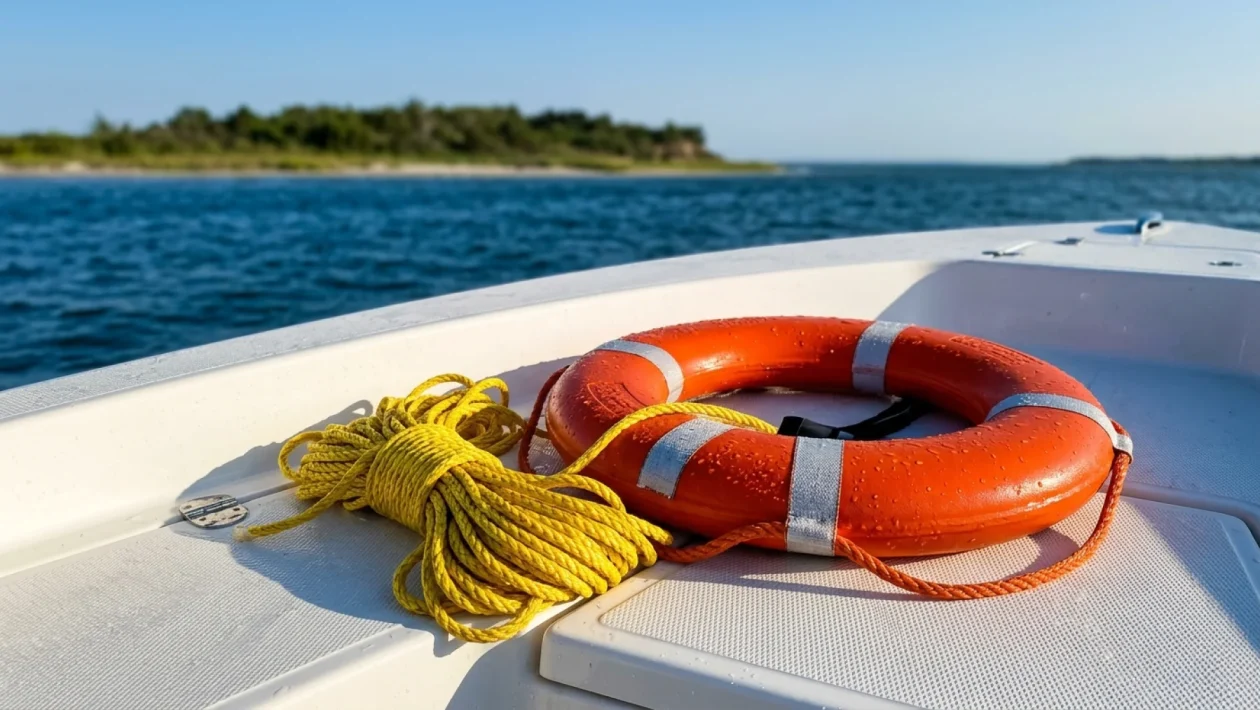
A boat full of cold drinks and good speakers is great, but it will not save you when the tide rips someone away from the swim platform. Essential boating gear is about having accessible, high-quality rescue equipment ready to deploy in under ten seconds.
Forget the cheap foam life jackets tucked away in a plastic bag under the console. I swear by gear from Mustang Survival—their Canadian-engineered inflatable PFDs are so comfortable your crew will actually wear them. Combine that with a high-visibility throw rope from a reliable outfitter like MEC (Mountain Equipment Company), and your boat is suddenly equipped to handle a crisis.
| Must-Have Rescue Gear | Leave It At Home (Or Stowed Away) |
|---|---|
| Auto-inflating PFDs (worn at all times) | Bulky, uncomfortable foam vests (nobody wears them) |
| 75-foot floating rescue throw bag | Standard, heavy dock lines that sink |
| Waterproof handheld VHF Marine Radio | Cell phones in cheap plastic zip-lock bags |
Frequently Asked Questions
How do I anchor safely near an island?
Always drop your anchor from the bow, never the stern, to prevent the boat from swamping. Ensure you have a 5-to-1 scope (rope length to water depth) and double-check that your anchor is firmly set in the sand before letting anyone in the water.
What is the “swim platform rule”?
The golden rule of boat safety is that the engines must be completely turned off and the keys removed from the ignition before anyone is allowed near the swim platform. Propeller strikes are instantaneous and devastating.
🤝 Thank you for reading, and I hope this guide helps you look at coastal waters with a sharper, more prepared eye. The ocean is incredible, but it demands our absolute respect every single time we untie from the dock.
💡 Update your safety kits this weekend before you head out, and make sure every person on your vessel knows exactly where the throw rope is located.
📱 Share your thoughts or your own boating safety tips with your local marina community; passing down knowledge is how we keep each other safe.
👇 Good luck out there, stay sharp, and enjoy the rest of your summer on the water!