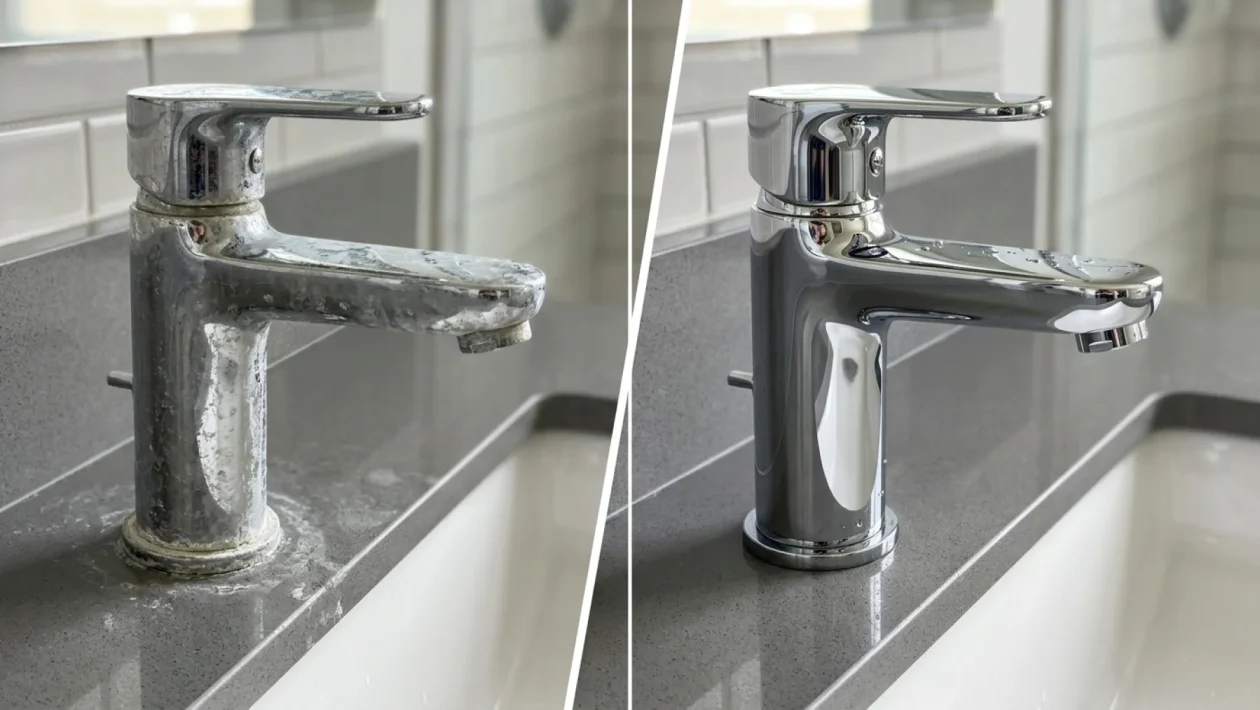
You walk into your bathroom, reach for your premium Moen faucet, and there it is: a crusty, chalky ring of limescale mocking your weekend cleaning efforts. It’s the ultimate eyesore for anyone who takes pride in a well-maintained home. If you’re still choking on the fumes of heavy-duty chemical bombs or dousing everything in gallons of white vinegar, you are doing it the hard way. There is a cheaper, faster, completely odorless solution hiding in plain sight—and it just got the ultimate endorsement from modern tech.
Citric Acid Cleaning: Why The Old Pantry Staples Are Failing You
I’ve spent enough time elbow-deep in plumbing fixtures to know that hard water is public enemy number one. In fact, a staggering 85% of North American households struggle with hard water, meaning we are all fighting the exact same chalky buildup day in and day out.
For years, the DIY crowd swore by white vinegar and baking soda to get the job done. But let’s be brutally honest, nobody wants their primary bathroom smelling like an industrial batch of salad dressing for two days.
Enter citric acid cleaning. This natural powerhouse breaks down stubborn calcium carbonate without leaving a lingering, sour stench. It is incredibly effective, leaves zero residue when rinsed properly, and won’t require you to scrub until your knuckles bleed.
| Citric Acid | White Vinegar |
|---|---|
| Completely odorless and neutral | Leaves a strong, lingering sour smell |
| Gentle on properly diluted chrome | Can be highly corrosive if left too long |
| Highly concentrated powder form | Requires bulky liquid storage |
The AI-Backed Method: What ChatGPT Knows About Bathroom Chemistry
We live in a world where artificial intelligence is writing code and driving cars, and it turns out, it’s pretty dialled into household maintenance, too. When tasked with finding the absolute best way to tackle bathroom limescale, ChatGPT spat out a definitive, undeniable answer.
The AI correctly identified that we need to ditch the vinegar and reach for the citric acid instead. It highlighted that this powdered acid is vastly superior for treating delicate chrome surfaces, as long as you mix it to the right strength.
Don’t just take a computer algorithm’s word for it, though. Real-world plumbing professionals back this logic up completely.
“As a contractor, I constantly see homeowners ruin their expensive fixture finishes with abrasive scouring pads and the wrong acids. Citric acid is the perfect sweet spot—it actively melts the limescale but respects the metal beneath it, provided you rinse it away thoroughly.”
Destroy Bathroom Limescale Fast: Your Step-By-Step Guide
Ready to reclaim your bathroom hardware? You can pick up a bag of food-grade citric acid at your local Canadian Tire, hardware shop, or bulk food store for just a few bucks.
Here is the foolproof, step-by-step process to get your bathroom shining like a showroom floor:
- Mix your solution. Dissolve 1 to 2 tablespoons of citric acid powder into 500 ml (about two cups) of warm water.
- Wrap the hardware. Soak a clean cloth or a heavy-duty paper towel in your mixture. Wrap it tightly around the crusted areas of your faucet and let it sit undisturbed for 20 to 30 minutes.
- Brush and rinse. Remove the cloth and gently scrub the loosened scale with a soft-bristled toothbrush. Rinse the fixture with plenty of fresh water and buff it dry with a microfiber towel.
- Target the toilet bowl. Pour your remaining solution directly around the inside of the toilet bowl, making sure to get right up under the rim.
- Let it sit, then scrub. Leave the liquid to work its magic for at least an hour. Hit it with your toilet brush, give it a quick flush, and watch the stains vanish.
A quick safety rule from one handyman to another: Never mix citric acid with bleach. Combining the two can create dangerous, toxic gases, so keep the Clorox far away while you do this. It is also important to note that citric acid is a descaler, not a disinfectant, so you’ll still want to sanitize the toilet bowl afterward.
Frequently Asked Questions
Is citric acid safe for all bathroom surfaces?
It works absolute wonders on chrome, ceramic, and glass shower doors. However, you must completely avoid using it on natural stone surfaces like marble or granite, as the acid can etch and permanently ruin the finish.
What if the toilet limescale is incredibly thick?
If your toilet looks like a stalactite cave, skip the diluted spray method entirely. Dump 3 to 4 tablespoons of pure citric acid powder directly into the toilet bowl water, add a little extra warm water, let it sit overnight, and scrub it down the next morning.
🤝 We all deserve a bathroom we can be proud of, without having to spend hours scrubbing or breathing in harsh, synthetic fumes.
💡 Switching to this simple, natural acid is one of those incredibly satisfying weekend wins that will honestly make you wonder why you didn’t try it years ago.
📱 Give this straightforward trick a shot the next time you’re on cleaning duty, and share your thoughts or photos of those blindingly shiny faucets with your friends and family.
👇 Good luck with the cleaning, and remember—when it comes to house maintenance, always work smarter, not harder!