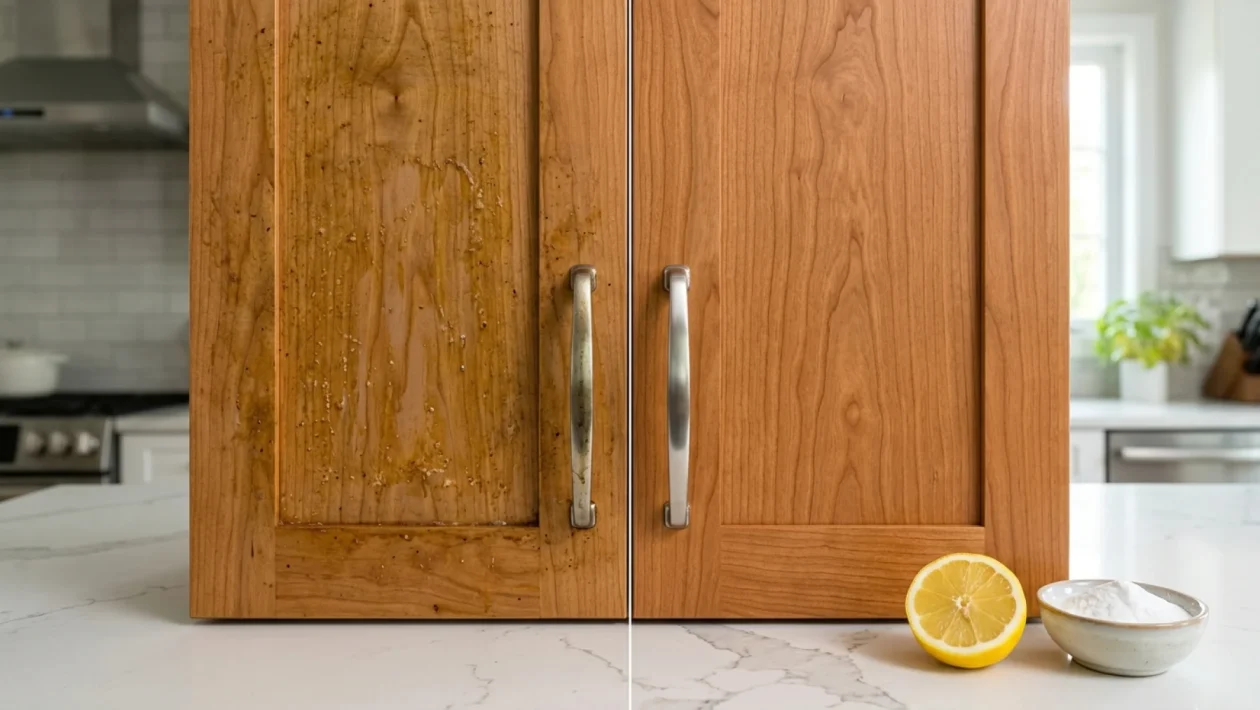
Look at your kitchen right now. If you run a finger along the handles and feel a sticky, tacky resistance, you are dealing with vaporized cooking oil. This airborne grease acts like a magnet for dust, transforming your beautiful wood or matte doors into a dull, grimy mess. But you don’t need to spend this July weekend scrubbing until your shoulders ache. Today, I’m showing you the exact two-ingredient formula that strips away grime in minutes, saving your weekend and your sanity.
Kitchen Cabinets Revival: Why Your Finishes Are Suffering
The kitchen is the workhorse of the home, but that heavy lifting comes at a cost. Whether you are searing steaks or frying up weekend bacon, microscopic oil particles are launched into the air.
Here is a wild fact that surprises most homeowners: studies show that cooking grease vaporizes and can settle on vertical surfaces within a massive 10-foot radius of your stovetop. Over time, that oil oxidizes, creating an impenetrable, sticky resin.
A lot of folks get frustrated, head down to Canadian Tire, and buy the most aggressive industrial cleaner on the shelf. The problem? Those heavy-duty solvents can strip the clear coat right off your matte or glass-front doors. You want a Kitchen Cabinets revival, not a costly resurfacing job.
Melt Away Years Of Stuck-On Grease: The Secret Formula
You don’t need a degree in chemistry to beat stubborn grease. You just need the right alkaline reaction. Clean-tok influencer Chantel Mila recently blew up online by proving that everyday pantry staples can outperform expensive synthetic sprays.
The secret weapon relies on a classic box of Arm & Hammer baking soda and a splash of fresh lemon. It sounds almost too simple, but the science behind it is bulletproof.
“The alkalinity of baking soda naturally neutralizes sticky, acidic cooking fats, while the citric acid in lemon breaks down the hardened outer crust of the grime without damaging the wood’s finish.”
Before we get our hands dirty, let’s look at why this homemade mix is a better bet for your home this summer:
| The DIY Lemon/Soda Mix | Commercial Degreasers |
|---|---|
| Pennies per application | $8 to $15 per bottle |
| Safe on wood, matte, and glass | Can dull finishes over time |
| Fresh, natural citrus scent | Harsh synthetic chemical fumes |
Without Harsh Chemicals: Your 5-Minute Application Masterclass
Ready to see your reflection in your woodwork again? Here is the exact process to melt away the mess without breaking a sweat.
- Mix the Solution: In a medium bowl, measure out exactly one-quarter cup of baking soda. This is your heavy lifter.
- Activate with Acid: Add exactly one teaspoon of fresh lemon juice. You’ll see a slight fizz as the citric acid activates.
- Dilute for Safety: Pour in one cup of warm water and stir until the baking soda is completely dissolved.
- The Wipe Down: Dip a clean microfiber cloth into the liquid. Wring it out so it’s damp, not dripping, and wipe your doors using large, circular motions.
- Let it Cook: Walk away. Let the solution sit on the surface for exactly five minutes so it can break down the lipid bonds in the grease.
- The Wipe Off: Take a fresh, damp cloth and effortlessly wipe the dissolved grease away.
Pro-Tip: Don’t dump the leftover liquid outside. Pour that lemon-soda water straight down your kitchen sink drain to neutralize lingering food odors and clear out minor pipe sludge.
Frequently Asked Questions About Degreasing Cabinets
Can I use bottled lemon juice instead of fresh lemons?
Absolutely. While fresh lemons contain natural rind oils that add a bit of extra shine, bottled lemon juice has the exact same citric acid profile needed to break down the grease crust.
Will baking soda scratch my high-gloss cabinets?
Not if you follow the recipe. If you make a thick, dry paste, baking soda can be mildly abrasive. But by dissolving it fully in a cup of warm water, it becomes a smooth, non-scratching alkaline solution.
How often should I be doing this?
If you cook daily, aim to wipe down the doors directly next to your stove every two weeks. For the rest of the kitchen, a quick pass once a month will keep the grime from ever getting sticky.
Time to Reclaim Your Kitchen
🤝 You work hard, and your home should feel like a clean, relaxing sanctuary, not a sticky mess. Taking five minutes to mix up this natural solution will completely transform the look and feel of your cooking space.
💡 Put the harsh chemicals away and let basic science do the heavy lifting for you. Good luck with the wipe-down—I guarantee you’ll be shocked by how much hidden dirt comes off on that cloth.
📱 If you try this out this weekend, share your thoughts and let me know how it worked for your specific cabinet finish.
👇 Keep the sawdust flying and the kitchen shining, folks. See you on the next project!