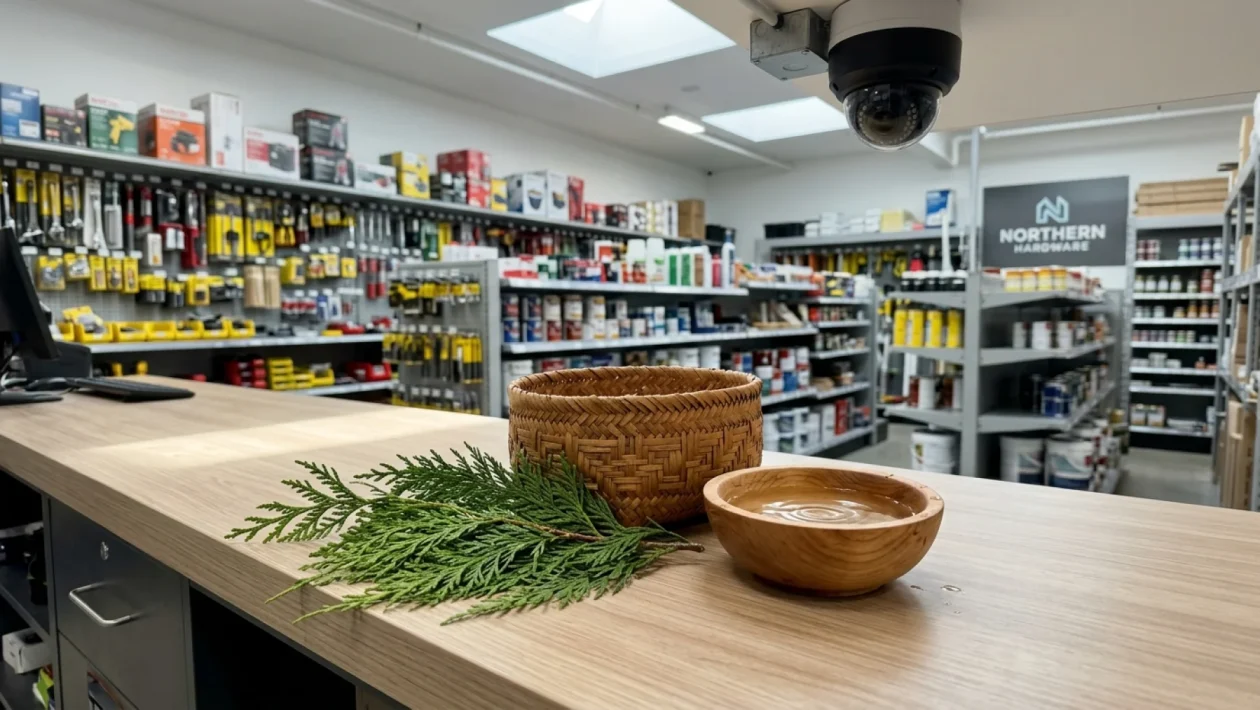
Imagine walking down the aisle of your local hardware store to grab some spring supplies, only to realize a security guard is shadowing your every move. It is an infuriating, humiliating experience that happens far too often to Indigenous and minority shoppers across this country. We are finally seeing a massive shift in how these painful incidents are handled. Instead of sweeping the issue under the rug with a generic corporate press release, major Canadian retailers are starting to face the music in a profoundly traditional way.
This May, a groundbreaking settlement in Vancouver completely flipped the script on retail racial profiling. The Heiltsuk Nation brought representatives from a major retail chain and a private security firm into a traditional washing ceremony to make things right. It is a bold, deeply human approach to justice that actually holds decision-makers accountable.
Retail Racial Profiling: The Ugly Reality We Need To Fix
Let us not sugarcoat it—getting targeted simply because of how you look is a massive failure of store policy and human decency. Retail racial profiling has been a toxic rot in the retail loss-prevention industry for decades. Shoppers are wrongly detained, publicly humiliated, and stripped of their dignity all because of flawed, biased training.
The numbers are frankly embarrassing for the industry. According to recent North American human rights data, Indigenous and Black shoppers are up to three times more likely to be stopped, searched, or followed by loss prevention officers than white shoppers. That is not just a training error; that is a systemic failure.
When an incident involving Dawn Wilson and the Heiltsuk Nation escalated, the usual corporate playbook dictated a quick settlement and a quiet non-disclosure agreement. But this time, Canadian Tire and Blackbird Security stepped out of the boardroom and into a deeply personal, culturally significant accountability process.
How A Traditional Washing Ceremony Replaces Hollow PR Apologies
If you have ever read a corporate apology on social media, you know they usually sound like they were written by a robot programmed by nervous lawyers. A traditional Indigenous washing ceremony is the exact opposite of that corporate double-speak. It is a powerful, restorative justice practice designed to cleanse the shame, trauma, and negative energy caused by a severe wrong.
During the ceremony in Vancouver, corporate representatives didn’t just sign a cheque. They had to physically show up, stand before the community, and participate in a deeply spiritual cleansing process. It forces leaders to look their victims in the eye and acknowledge the human cost of their corporate policies.
“We are finally moving past hollow PR apologies. When a massive retailer steps into a traditional healing space, it completely rewrites the playbook on corporate accountability and humanizes the victims.”
Reshaping Corporate Accountability From The Ground Up
Fixing this broken system requires more than just firing one rogue security guard. It demands a complete overhaul of how we approach loss prevention and customer service. By embracing restorative practices, companies are setting a new standard for how to handle discrimination complaints.
If a business truly wants to stamp out racial profiling and build a safer shopping environment, they need to follow a clear, actionable path. Here is how modern corporate accountability should actually look:
- Acknowledge the Harm Immediately: Stop hiding behind legal jargon. Issue a direct, human apology that names the specific wrong that occurred.
- Engage in Restorative Justice: Step outside the corporate comfort zone. Participate in cultural ceremonies or community-led healing circles when requested by the victims.
- Overhaul Security Training: Rip up the old loss-prevention manuals. Bring in third-party, culturally competent experts to retrain every single employee, from the floor staff to the CEO.
- Implement Transparent Reporting: Create a clear, public system for tracking and reporting customer profiling complaints so the community can hold you to your promises.
To really see the difference, let us look at a quick breakdown of the old way of doing things versus this new, restorative approach.
| The Old Corporate Playbook | The New Restorative Approach |
|---|---|
| Hidden Non-Disclosure Agreements | Public Accountability & Ceremonies |
| Generic PR Statements | Face-to-Face Apologies |
| Blaming “Rogue Employees” | Systemic Training Overhauls |
| Zero Community Healing | Restoring Dignity to the Victim |
Frequently Asked Questions
What exactly is a washing ceremony?
In many coastal Indigenous cultures, like the Heiltsuk Nation, a washing ceremony is a traditional practice used to cleanse individuals of trauma, shame, or bad feelings. It is a powerful tool for restorative justice, allowing both the victim and the offender to heal and move forward with mutual respect.
Can this approach work for other retail stores?
Absolutely. While the specific ceremony may vary depending on the local Indigenous territory, the core principle of face-to-face, restorative accountability can be adopted by any brand. It requires corporate leaders to swallow their pride, listen to the community, and commit to genuine change.
How do I report retail racial profiling if it happens to me?
Document everything immediately, including the time, location, and employee descriptions. Escalate the issue to the store manager, file a formal complaint with the corporate head office, and do not hesitate to contact your provincial Human Rights Tribunal for legal backing.
Moving Forward Together
🤝 It is time to demand better from the stores where we spend our hard-earned money. Real change doesn’t happen in a sterile boardroom; it happens when people are brave enough to sit down together, acknowledge the hurt, and commit to a better way forward.
💡 This Vancouver settlement is proof that we can handle our worst moments with dignity and respect. If massive national brands can embrace traditional healing, your local businesses have absolutely no excuse to stick to the old, broken ways.
📱 I would love to share your thoughts on this shift in corporate accountability. Have you ever noticed unfair security practices in your neighborhood, and how do you think stores should handle it?
👇 Drop a comment below or share this article with your community. Good luck out there, stay observant, and never be afraid to speak up when you see something wrong.