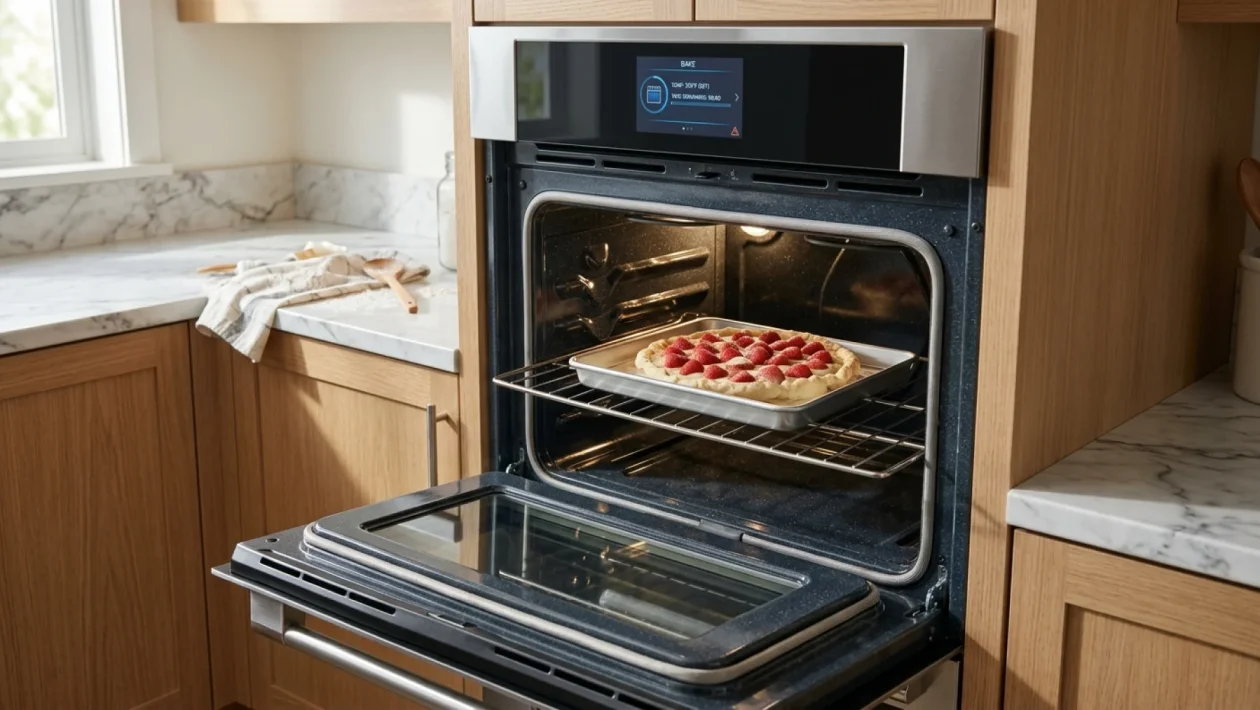
You drop two grand on a sleek, stainless steel kitchen range, fire it up for a summer strawberry tart, and pull out a soggy, sad disaster. When you call the manufacturer, they tell you the oven is “operating within normal parameters.” It is the ultimate modern frustration. We now live in an era where you literally have to ask the salesperson if a brand-new oven can actually cook food. Today, I am going to show you exactly how to navigate this appliance minefield so you never bring home a dud again.
Oven Shopping Survival
Navigating the showroom floor at Canadian Appliance Source feels like stepping onto a spaceship. Everything has a touchscreen, Wi-Fi connectivity, and a sleek black-stainless finish. But beneath the flash, the core mechanics of heating elements are being compromised.
We are so blinded by flashy features that we completely forget the primary function. If your new range can text your phone but cannot hold a steady 350 degrees, it is nothing more than an incredibly expensive nightlight.
Here is a sobering reality check for your wallet. A recent 2025 North American consumer report revealed that major appliance lifespans have dropped by 30% over the last decade. Worse, warranty claims specifically for uneven heating and wild temperature fluctuations have hit an all-time high this summer.
How To Avoid Modern Appliances
You need to stop shopping with your eyes and start shopping like a technician. The secret to dodging a dud is knowing exactly where the manufacturers cut corners to save a buck on the assembly line.
They hide cheap sensors behind massive LCD screens. They swap out robust metal convection fans for flimsy plastic ones that warp over time. To avoid these traps, you need a bulletproof vetting process before you ever swipe your credit card.
- Check the door seal and hinges: Open the oven door right there on the showroom floor. If it feels exceptionally light or does not slam shut with a satisfying, heavy thud, walk away. You will lose massive amounts of heat through a cheap door.
- Inspect the heating elements: Look for thick, exposed bottom elements or a heavily shielded hidden bake element. Thin, spindly wires mean weak, pulsing heat that ruins baked goods.
- Demand the specs on the convection fan: True European convection uses a third heating element wrapped directly around the fan. If the salesperson cannot confirm this, you are just getting a basic fan blowing cold air onto your food.
- Read the 1-star reviews: Ignore the 5-star unboxing videos. Filter online reviews specifically for “temperature swings” and “motherboard failure.” That is where the unvarnished truth lives.
That Can’t Actually Cook Your Food
The tragic reality of the modern kitchen is the ruined meals left behind. The ultimate betrayal is spending all afternoon prepping a perfect pastry, only to be defeated by an oven that simply refuses to bake.
This happens because modern ovens rely on digital thermostats programmed with massive “dead bands.” This means the oven intentionally lets the temperature drop by up to 40 degrees before the heating element kicks back on, just so the manufacturer can pass strict energy ratings.
“People buy these smart ranges thinking they are getting a professional kitchen experience. But the internal relays are so cheap, the oven spends half the baking time completely turned off to save power. It is an absolute disaster for anyone trying to bake.” – Mike H., 20-year Master Appliance Technician.
Let’s break down the reality of what you are actually paying for when you upgrade to a modern unit.
| Smart Ovens (Digital) | Old-School Ovens (Analog) |
|---|---|
| Massive temperature swings | Consistent, heavy-duty heating |
| Expensive motherboard repairs | Cheap, DIY-friendly mechanical parts |
| Looks great on social media | Actually bakes a perfect pie |
Frequently Asked Questions
Can an oven be defective even if the company says it’s normal?
Absolutely. Manufacturers define “normal” very loosely to avoid paying out warranty claims. If your oven fluctuates more than 25 degrees from the set temperature, it is failing at its primary job, regardless of what the customer service rep claims.
Is it worth fixing my old stove instead of buying new?
If your old stove has a solid metal frame and simple rotary dials, fix it. Replacing a $150 heating element on a 15-year-old range is almost always a better investment than gambling on a modern, sensor-heavy unit.
🤝 Good luck out there on the showroom floor, because buying a reliable appliance in 2026 requires a bit of grit and a lot of healthy skepticism.
💡 Do not let a fast-talking salesperson distract you with smartphone apps when all you really want is a perfectly cooked family dinner.
📱 If this guide saved you from making a massive kitchen mistake, share your thoughts with me online and pass this along to a buddy who is currently remodeling.
👇 Keep your standards high, your tools sharp, and never settle for an oven that can’t actually do its job.