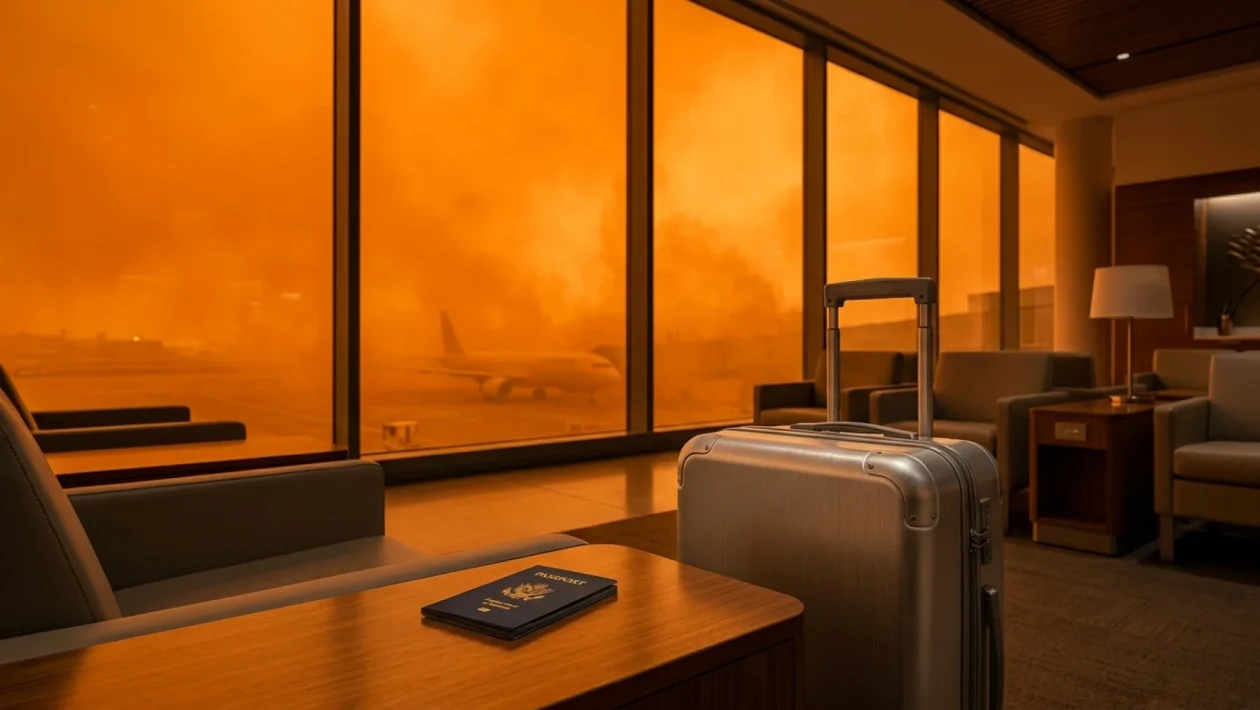
Paris wildfires aren’t just a distant news headline this July 2026—they are an unprecedented catastrophe rewriting the rules of summer travel and global climate response. If you thought the skies over Europe were immune to the kind of apocalyptic orange haze we’ve seen out West, think again. Right now, a historic inferno is chewing through the ancient forests just south of the French capital, and the human toll is staggering. We’re going to break down exactly why thousands of excess fatalities are being reported, how this impacts your immediate travel plans, and what practical steps you need to take if you’re caught in the crossfire.
The Reality of the Paris Wildfires
Look, I’ve covered natural disasters from the sprawling forests of Kelowna to the rugged coasts of Nova Scotia. A fire is a fire, but when it’s knocking on the doors of one of the world’s most densely populated tourist hubs, the game completely changes. The Paris wildfires are feeding off an unprecedented summer heat dome, turning dry brush into absolute tinder.
Fire needs three things to thrive: heat, fuel, and oxygen. Right now, the region south of the city has all three in deadly abundance. This isn’t just a remote wilderness issue anymore; the smoke is blanketing urban centers, choking out the summer sun, and creating hazardous breathing conditions for millions.
Here is a brutal hard fact: wildfire smoke can travel up to 5,000 kilometers in a matter of days, carrying microscopic PM2.5 particles that bypass our natural biological filters and enter the bloodstream directly. It’s a logistical nightmare for emergency responders trying to keep the grid online.
How Authorities Confirmed Thousands of Excess Deaths
When we talk about excess deaths, we aren’t just talking about people caught in the physical flames. The staggering numbers confirmed by European health authorities this week include a brutal combination of secondary factors. Extreme heat exhaustion and severe respiratory failures are claiming lives at a terrifying rate.
The local hospitals are operating at absolute capacity. When the air quality plummets, the elderly and those with pre-existing conditions are the first to suffer. The prolonged exposure to toxic smoke, combined with rolling blackouts that knock out air conditioning units, creates a perfect storm for public health.
“We are seeing a multi-layered disaster. The flames destroy the infrastructure, but the lingering toxic smoke and unrelenting heat are the silent killers driving these tragic mortality rates,” says Dr. Aris Voulgaris, a leading European climatologist and public health expert.
Navigating the Danger Zone Raging South of the Capital
If you have a European vacation booked this summer, you need to pivot your strategy immediately. Major carriers like Air Canada are already issuing travel advisories and waiving rebooking fees for flights heading into Charles de Gaulle. You cannot treat this like a standard weather delay.
Before you even think about packing your bags, you need to be prepared for sudden gridlock. I always tell folks to pack a high-quality N95 mask and a portable air purifier in their carry-on—stuff you can easily grab at a local retailer like MEC before heading to the airport.
To help you gauge the risk, here is a quick breakdown of how to read the Air Quality Index (AQI) if you are anywhere near the affected zones:
| AQI Level | What It Means For You |
|---|---|
| 0 – 50 (Good) | Normal outdoor activities are perfectly fine. |
| 51 – 100 (Moderate) | Sensitive groups should limit prolonged exertion. |
| 101 – 150 (Unhealthy for Sensitive Groups) | Masks recommended for the elderly and children. |
| 151+ (Hazardous) | Stay indoors. Keep all windows sealed tight. |
Your Step-by-Step Evacuation and Safety Plan
If you find yourself south of Paris—or anywhere near a rapidly spreading wildfire—panic is your worst enemy. You need a systematic approach to getting out safely. Here is how you handle a sudden evacuation order like a pro:
- Secure your documents: Keep your passport, travel insurance, and emergency cash in a single, waterproof grab-bag.
- Monitor local alerts: Do not rely on social media rumors. Download the official emergency broadcast apps for the region you are visiting.
- Seal your environment: If you are ordered to shelter in place, close all windows, shut off exterior vents, and run an air purifier if available.
- Map multiple exit routes: Wildfires move unpredictably. Always have a Plan B and Plan C for getting to the nearest safe transit hub.
Frequently Asked Questions
Are flights to Paris currently grounded?
While the airports remain open as of late July 2026, visibility issues and thick smoke are causing massive delays. Always check directly with your airline before heading to the terminal.
Is it safe to travel to northern France instead?
Northern France is currently experiencing better air quality, but wind patterns can shift daily. Keep a close eye on live AQI maps to ensure you aren’t walking into a newly affected zone.
How can I help those affected by the fires?
The best way to help is through financial donations to verified international Red Cross organizations or local French emergency response funds. Avoid sending physical goods, as they often clog up vital supply chains.
🤝 Stay safe out there, folks. Whether you’re traveling abroad or dealing with smoke drifting into your own backyard, preparation is everything.
💡 Knowledge is your best defense against natural disasters. Keep those emergency kits stocked, stay updated on the latest travel advisories, and never underestimate the speed of a wildfire.
📱 Share your thoughts or your own travel experiences in the comments below. We’re all navigating this crazy climate together, and your insights might just help someone else out of a jam.
👇 Good luck with your summer plans, and remember to always keep your head on a swivel when Mother Nature throws a curveball.