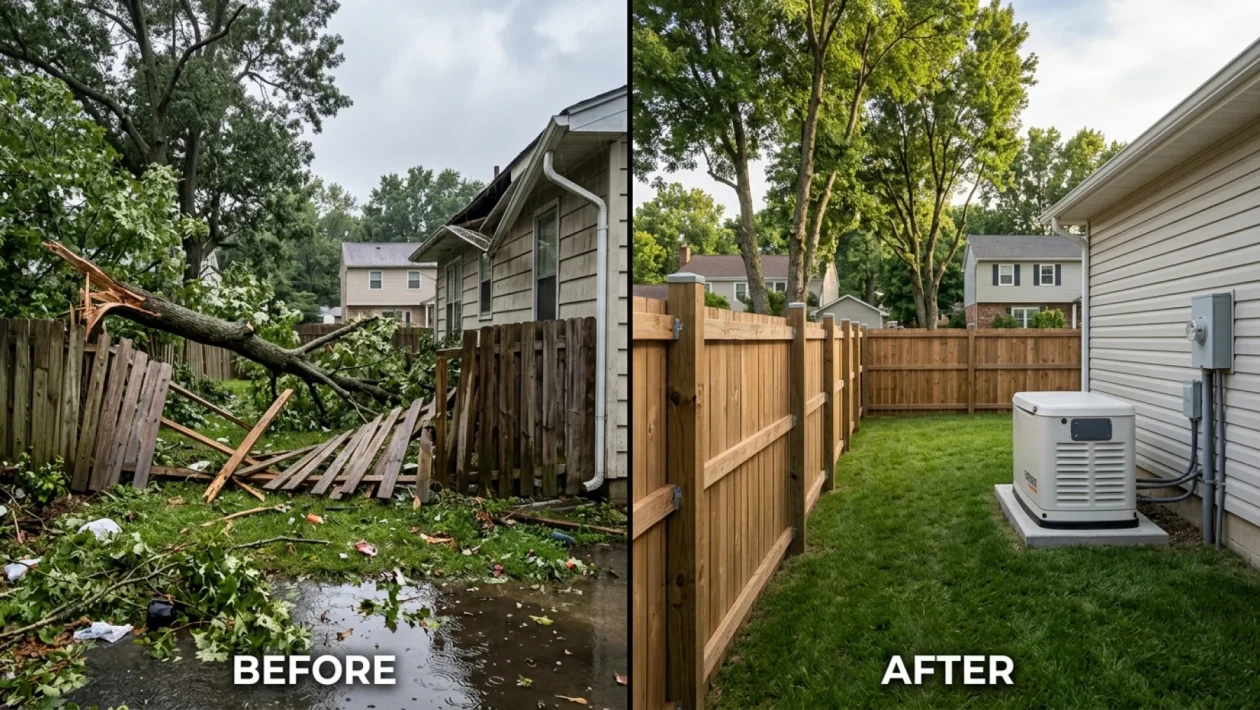
Summer 2026 is officially turning out to be a battlefield for homeowners. Just this past weekend, a cluster of hyper-localized storms absolutely shredded parts of the North American east coast—with Philadelphia taking a massive hit from back-to-back atmospheric gut punches. We are talking about snapped mature oaks, flattened utility grids, and flash floods swallowing entire neighborhoods in minutes. If you think your standard summer thunderstorm is no big deal, you haven’t faced a microburst yet. Here is exactly how these invisible wrecking balls operate and the non-negotiable steps you must take to protect your home before the next one hits.
Microburst Storm Damage: The Invisible Threat Explained
A microburst isn’t a tornado, but it perfectly mimics the sheer destruction of one. Microburst storm damage happens when a thunderstorm’s massive updraft rapidly sucks up moisture and air, stalls out, and violently collapses back to earth. Imagine dropping a gigantic water balloon onto a concrete driveway; the water hits the ground and explodes outward in all directions.
That is exactly what this cold, dense air does. When it hits the ground, it creates straight-line winds that rip through communities with terrifying speed. In fact, National Weather Service data shows that microburst downdrafts can generate localized wind speeds of up to 150 mph—packing the exact same destructive force as an EF-3 tornado.
This past weekend in Philly, four distinct microbursts touched down in rapid succession. They unleashed 70-mph winds that toppled hundreds of trees onto homes and vehicles, leaving thousands relying on emergency crews to restore power. It is a stark reminder that localized downdrafts don’t care about your ZIP code.
How To Bulletproof Your Property
Hope is not a strategy when the sky falls. You need to harden your property’s defenses while the sun is shining. The absolute first thing you should assess is the health of the trees surrounding your roofline.
Dying or shallow-rooted trees are just unguided missiles waiting for a downdraft to launch them through your living room. Hire a certified arborist to trim away dead wood and remove compromised trees immediately. Next, you need to lock down your home’s envelope. A quick weekend trip to Home Depot to upgrade to heavy-duty lag bolts for your fence posts and high-wind rated hinges for your exterior doors can save you thousands in insurance deductibles.
Because microbursts always bring sudden, severe rain and inevitable power grid failures, you must guarantee your home’s ability to pump out water. Relying on grid power during a storm is a rookie mistake.
| Property Defense Upgrade | Average Cost (CAD/USD) |
|---|---|
| Standby Generac Power System | $4,500 – $10,000+ |
| Professional Arborist Tree Thinning | $350 – $900 per tree |
| Battery Backup Sump Pump | $300 – $600 |
Against Sudden 70-MPH Downdrafts
When the downdraft finally hits, the rules of engagement change in a split second. You will not get a siren warning like you do with a tornado. The sky will just instantly drop on you.
“A microburst gives you zero warning. One second you are watching heavy rain, and the next, it feels like a commercial jet engine is firing downward directly onto your roof. The lateral pressure on residential structures is staggering.”
To survive the initial blast of a 70-mph downdraft without sustaining injury or letting your home get torn apart from the inside, you need a rigid protocol.
- Stay away from windows: Straight-line winds will turn patio furniture and yard debris into lethal shrapnel. Move to an interior room immediately.
- Kill the main breakers: If you see powerlines snapping in your neighborhood, shut off your main electrical panel to prevent devastating power surges when the grid flickers.
- Listen to the structure: Pay attention to cracking sounds in your roof trusses. If a massive tree falls onto your home, evacuate the immediate impact zone to avoid secondary structural collapses.
Frequently Asked Questions
Are microbursts becoming more common?
Yes. As summer temperatures continue to break records globally in 2026, the atmosphere holds more moisture and heat energy. This creates the exact volatile breeding ground required for intense, sudden thunderstorm updrafts and subsequent microbursts.
Will my homeowner’s insurance cover microburst damage?
Generally, standard policies cover wind and falling tree damage caused by microbursts. However, the flash flooding that often accompanies them is rarely covered unless you have a specific, separate flood insurance policy. Always double-check your wind and hail deductibles!
How can I tell if a storm has microburst potential?
Look for a “rain foot” on the horizon. If you see a dark, heavy thunderstorm cloud with a visible, dense shaft of rain that seems to hit the ground and curl outward in a harsh wave, a microburst has just touched down. Take cover immediately.
🤝 Share your thoughts in the comments below! Have you ever experienced the sudden wrath of a microburst in your neighborhood, or are you currently dealing with storm cleanup?
💡 Remember this basic rule: an ounce of prevention on a sunny Tuesday is worth ten pounds of cure on a stormy Saturday night. Don’t wait for the power grid to fail before you test that backup pump.
📱 Send this article to a neighbor or family member who has giant, questionable trees leaning toward their roof. A gentle nudge today could save their home tomorrow.
👇 Good luck out there this storm season, stay safe, and keep those chainsaws fueled and ready just in case!