Every parent’s worst nightmare just played out in real life, and it’s forcing all of us to seriously rethink how we lock our doors at night. The heartbreaking news out of the Midwest has completely shattered the illusion that our kids are safe simply because we tucked them into bed. We are going to tackle exactly how a tragedy like this happens, and more importantly, how you can physically secure your home right now to ensure your kids never slip out unnoticed.
The Missouri sleepwalking tragedy
It’s the exact kind of news that makes your blood run cold. This summer of 2026, authorities confirmed a devastating end to a local search effort when a young boy wandered out of his house in the middle of the night, entirely asleep.
As a dad and a guy who spends his life fixing and securing houses, this hits incredibly close to home. We often laugh off sleepwalking as a quirky, harmless habit where a kid ends up in the kitchen or standing in a hallway.
The Missouri sleepwalking tragedy is a brutal reminder of the raw danger involved. A startling clinical study from the American Academy of Sleep Medicine reveals that a massive 29% of children will experience sleepwalking between the ages of 2 and 13. They aren’t just pacing their bedrooms; they are interacting with their environment.
A missing 10-year-old’s fatal night
When we hear about a missing child, our brains naturally jump to external threats or daytime wanderings. But a missing 10-year-old who vanishes in their sleep presents a terrifyingly unique challenge.
At ten years old, a child is not a toddler you can corral with a flimsy plastic doorknob cover. They have the height, the dexterity, and the muscle memory to operate standard deadbolts and lever handles.
“A sleepwalking child is operating on pure autopilot. They can effortlessly bypass standard residential locks with their eyes closed because their brain has rehearsed the physical movement a thousand times.” – Dr. Aris Thomas, Pediatric Sleep Specialist
During a fatal night like this, the child’s brain is asleep, but their motor skills are wide awake. They can unlock a door, walk down the street, and wander into hazardous terrain without ever waking up.
Securing your home
Look, standard residential locks are meant to keep bad guys out, not to keep sleepwalking kids in. To protect your family, you need to introduce layers of friction that break a sleepwalker’s autopilot routine.
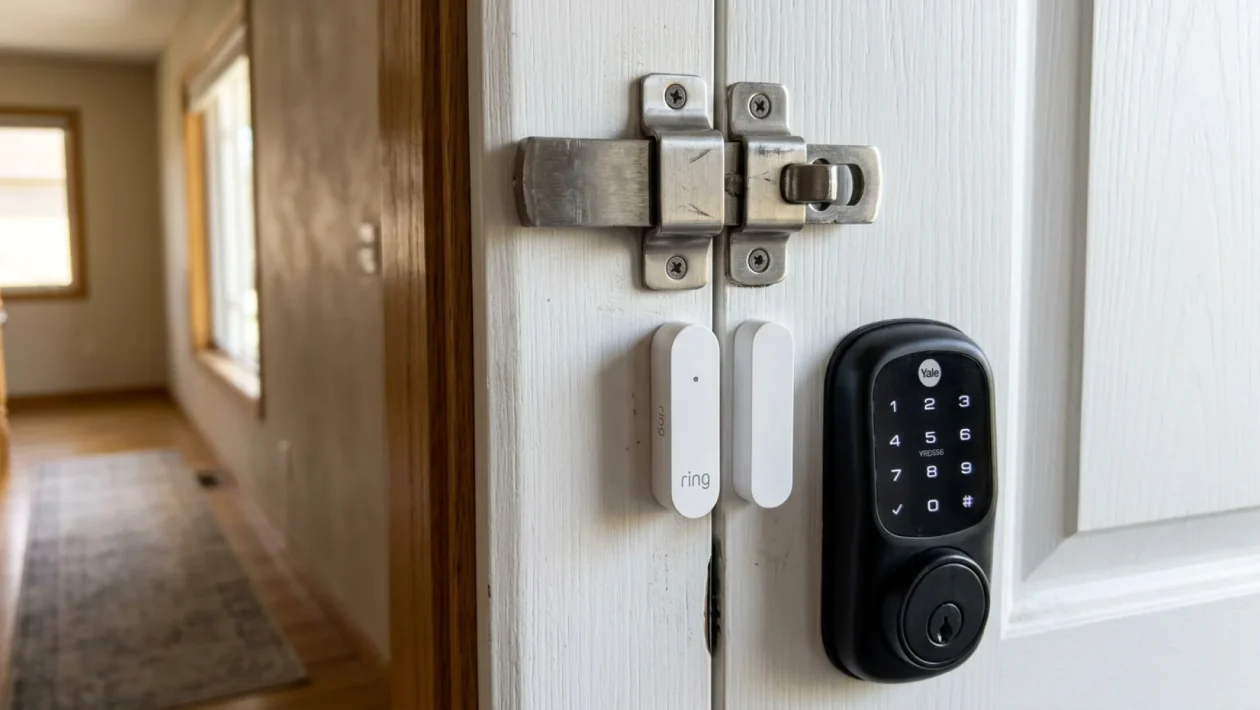
I always recommend reliable North American hardware brands for this. Upgrading to a Schlage heavy-duty keypad deadbolt with an auto-lock feature adds a great primary layer. Pairing that with a Ring contact sensor that chimes aggressively at the base station when a door opens is an absolute game-changer.
Here is my foolproof, step-by-step method to lock down your exterior doors today:
- Install a high-mounted latch: Mount a heavy-duty chain lock or a flip-action door latch at the very top of your front and back doors, completely out of your child’s physical reach.
- Activate door chimes: Program your existing home security system to emit a loud chime every time an exterior door is opened, even when the alarm is disarmed.
- Secure the windows: Install aftermarket window track locks on first-floor bedroom windows. Tighten them down so the window cannot slide open more than two inches.
- Change the hardware: Swap out easy-to-pull lever handles for traditional, round doorknobs on all exterior doors to make it harder for uncoordinated sleepwalkers to get a grip.
If you are wondering where to put your money, here is a quick breakdown of the most effective upgrades:
| Security Upgrade | Effectiveness Level |
|---|---|
| High-Mounted Flip Latch | Maximum (Physically prevents exit) |
| Smart Door Contact Chime | High (Instantly wakes the parents) |
| Child-Proof Knob Covers | Low (Easily defeated by older kids) |
Frequently Asked Questions
Can a 10-year-old sleepwalker really bypass a deadbolt?
Absolutely. If they have unlocked that door while awake, their muscle memory can easily replicate the action while sleepwalking. This is why standard thumb-turn deadbolts are not enough to keep them inside.
Are smart alarms better than physical locks for sleepwalkers?
They serve different purposes, but you really need both. A physical high-mounted lock physically stops the child from leaving, while a smart alarm chime wakes you up so you can guide them safely back to bed.
Should I wake my child up if I catch them sleepwalking?
No, try not to startle them. The safest approach is to gently guide them by the shoulders back to their bedroom. Speak in a low, soothing voice to keep them calm.
🤝 It’s time to take action. Hardware is cheap, but peace of mind is absolutely priceless, especially when you have sleepwalkers in the house.
💡 Head to your local hardware store today. Pick up a couple of high-mounted latches and take twenty minutes this weekend to install them.
📱 Share your thoughts and your own home security tips in the comments below. Have you ever caught your kid sleepwalking?
👇 Good luck with your home upgrades, stay safe out there, and I’ll see you on the next project!