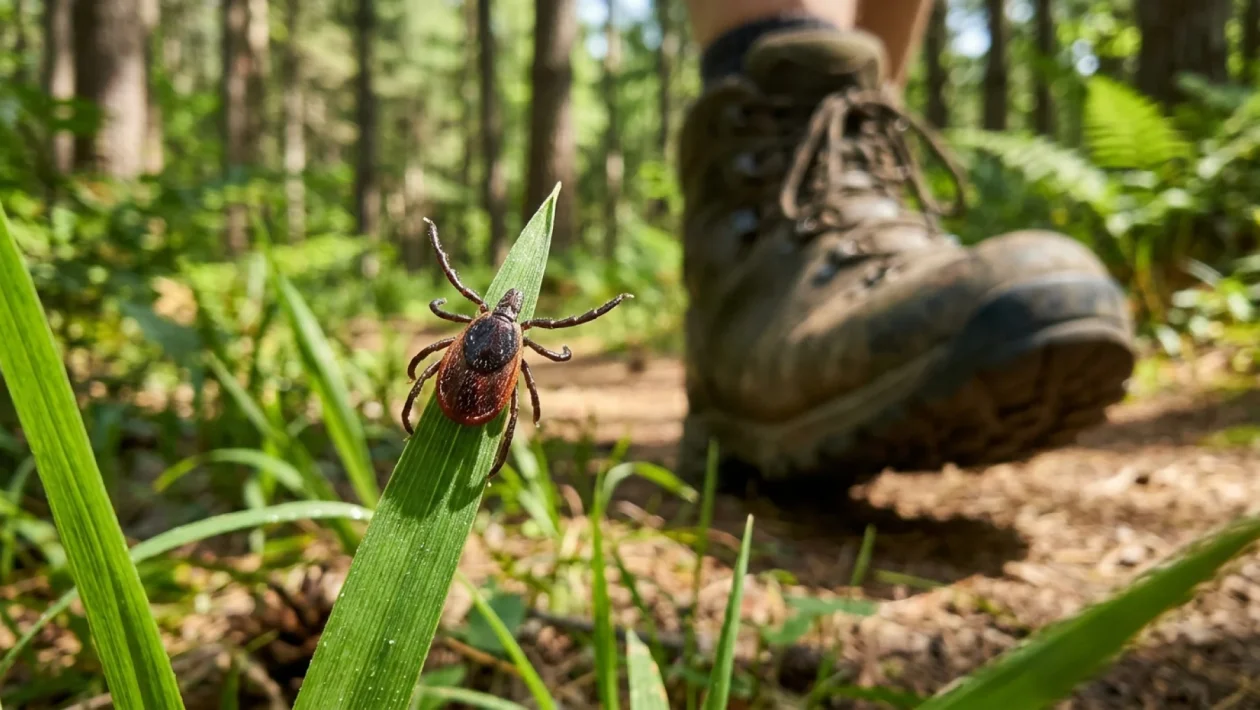
You just pulled a tiny, stubborn speck off your leg after a weekend hike, and now your mind is racing. We’re deep into July 2026, and tick populations are absolutely exploding across North America right now. If you’re worried about blacklegged tick fever symptoms, you’re in the right place because spotting the warning signs early is the difference between a quick course of antibiotics and a nightmare summer.
I’m going to break down exactly what to look for, how the threat changes depending on where you live, and how to keep these bloodsuckers off you in the first place.
Blacklegged Tick Fever Symptoms: The Immediate Red Flags
Most folks think they know exactly what a tick bite looks like. You wait for the classic bullseye rash, and if you don’t see it, you assume you’re in the clear.
That is a massive mistake. In fact, a recent joint bulletin from the CDC and the Public Health Agency of Canada confirmed a surprising statistic: up to 30% of people infected with tick-borne illnesses like Lyme disease never actually develop that famous rash.
Instead, the early signs of a problem feel exactly like a nasty summer flu. Your body is fighting an invader, and it’s going to let you know.
| Timeline | Common Warning Signs |
|---|---|
| Days 3 to 30 | Fever, severe chills, muscle/joint aches, and swollen lymph nodes. |
| Months Later (Untreated) | Severe arthritis, facial palsy, nerve pain, and heart palpitations. |
If you start sweating through your sheets or your knees ache like you just ran a marathon without stretching, don’t write it off as a summer cold. Pay attention to your body.
How The Threat Differs Across The US And Canada
Ticks don’t care about border crossings, but the specific risks do shift depending on your postal code. Down in the Northeastern US and the Great Lakes region, blacklegged ticks (often called deer ticks) are public enemy number one.
Up north, the game is changing fast. A decade ago, Canadian outdoorsmen barely gave ticks a second thought. Now, places like southern Ontario, Quebec, and Nova Scotia are absolute hot zones.
The warming climate has pushed these pests further north than ever before, catching a lot of folks off guard.
“We are seeing tick populations establish themselves in northern latitudes at a rate that outpaces our historical models. If you are stepping into tall grass anywhere south of the boreal forest, you need to assume they are waiting for you,” says Dr. Richard Ostfeld, a leading North American disease ecologist.
That’s why I never hit the trail without spraying my boots with a heavy-duty DEET formula like Muskol, a staple in any Canadian camper’s toolkit. It’s cheap insurance against a miserable month.
What You Need To Watch For (And Do) This Summer
Prevention and fast action are your best friends. You don’t need to lock yourself indoors, but you do need to get smart about how you handle your gear and your body.
If you do find a tick dug into your skin, don’t panic, and definitely don’t try to burn it off with a match. Follow this foolproof removal method:
- Grab the right tool: Get a pair of fine-tipped tweezers. Forget your chunky garage pliers; you need precision.
- Get close to the skin: Grasp the tick as close to your skin’s surface as possible. You want to grab the head, not squeeze the belly.
- Pull straight up: Apply steady, even pressure. Do not twist or jerk the tick, or the mouthparts might break off and stay in your skin.
- Clean the site: Thoroughly wash the bite area and your hands with rubbing alcohol or good old soap and water.
Once you’re out of the woods, toss your clothes in the dryer on high heat for 10 minutes. That bakes any stragglers before they end up on your couch.
Frequently Asked Questions
How long does a tick need to be attached to make you sick?
Generally, a blacklegged tick needs to be attached for 36 to 48 hours to transmit the bacteria that causes Lyme disease. However, other tick-borne diseases like Anaplasmosis can be transmitted much faster, sometimes in just a few hours. That’s why daily tick checks are non-negotiable.
What should I do with the tick after I pull it out?
Don’t just flush it! Drop the tick into a small ziplock bag or a clean pill bottle. If you start showing symptoms, your doctor or local health unit can test that specific tick to see exactly what diseases it might be carrying.
Wrapping It Up
💡 Staying safe outdoors doesn’t mean living in fear, it just requires a bit of practical maintenance. Check your gear, check your kids, and check your pets.
📱 Share your thoughts in the comments below if you’ve noticed more ticks in your area this year, or if you have a favorite repellent combo that works for you.
🤝 Good luck out there on the trails this season. Keep those tweezers handy, stay vigilant, and enjoy the summer!