When the Taylor Swift London security threat made global headlines, it didn’t just rattle millions of fans—it sent a massive shockwave through the entire live entertainment industry. You buy a ticket expecting the night of your life, not a masterclass in counter-terrorism, but the reality of stadium safety has officially shifted as we push through the summer of 2026. Today, we are tearing down exactly what happened behind the scenes and revealing the hardcore logistical solutions that venues are using right now to ensure you make it home safe.
As someone who has covered venue logistics and crowd control for over a decade, I can tell you that the playbook was entirely rewritten after those terrifying intelligence leaks. If you are heading to a massive stadium show this year, you need to understand the invisible shield operating right under your nose.
The Taylor Swift London Security Threat
To understand the current landscape, we have to look at the sheer scale of the Taylor Swift London situation. The intelligence gathered pointed toward highly organized, sophisticated disruptions aimed at soft targets outside the immediate ticketed zones.
This wasn’t your run-of-the-mill gate-crashing scenario. The threat mandated a complete overhaul of how authorities view the physical perimeter of a concert venue.
In fact, here is a staggering reality check: before the European leg scares of 2024, only 12% of international stadium venues were equipped with AI-driven crowd-anomaly scanning. Today, in 2026, that number has skyrocketed to over 85%.
How Elite Operations Stepped Up
You can’t just throw more guards in yellow jackets at a problem this complex. Elite intelligence agencies and private military-grade contractors had to step in and integrate with local forces. Even major North American players like GardaWorld had to drastically adapt their training programs for summer festivals back home, modeling their new tactics on the London response.
When an active threat is detected at a venue the size of Wembley or the Rogers Centre, security teams immediately initiate a strict, highly coordinated response sequence.
- Perimeter Expansion: Security checkpoints are pushed hundreds of meters outward to screen fans long before they reach the actual stadium gates.
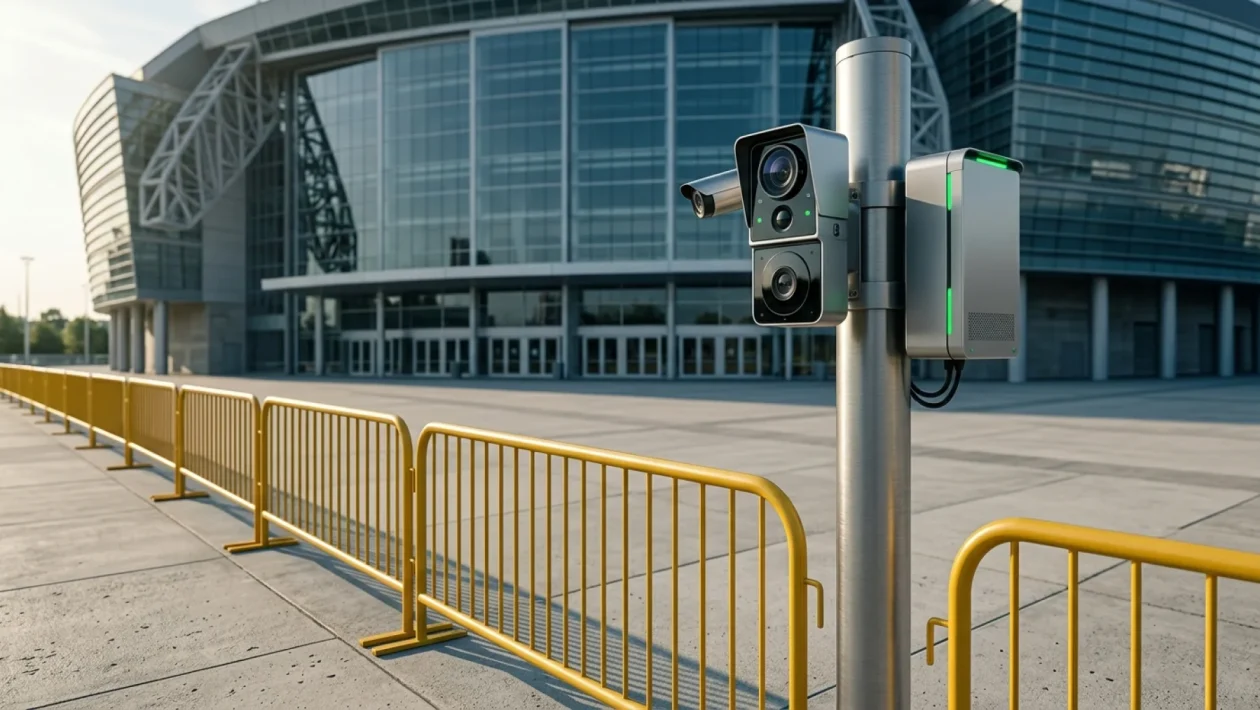
- Digital Sweeps: Undercover teams and AI cameras monitor crowd density and movement patterns to spot anomalies in real-time.
- Rapid Extraction Routing: Hidden corridors are kept entirely clear of equipment so VIPs and densely packed fan sections can be evacuated in under four minutes.
Changing Mega-Concerts Permanently
The days of showing up ten minutes before the opening act are officially over. The Taylor Swift London scare forced promoters and local governments to realize that the safety of 80,000 screaming fans is a logistical tightrope.
What you experience now as a concertgoer is a streamlined, yet incredibly intense, screening process. We have traded a bit of convenience for an absolute fortress of security.
| Old Concert Security (Pre-2024) | New Era Security (2026) |
|---|---|
| Bag checks at the physical stadium doors. | Multi-layered checkpoints blocks away from the venue. |
| Reactive crowd control by local police. | Predictive AI threat modeling and drone surveillance. |
Industry insiders have been very vocal about this permanent cultural shift in live music.
“We are no longer just managing crowds; we are securing small pop-up cities. The intelligence sharing between private tour security and national defense agencies is something we have never seen before in entertainment.”
Frequently Asked Questions
Will these new security measures affect my entry times?
Absolutely. You should plan to arrive at least two hours earlier than you would have a few years ago. The expanded perimeters mean you will go through initial screening long before your ticket is even scanned.
Can I still bring standard stadium bags?
The rules have become notoriously strict. While clear bags are generally still accepted, the size limits have been reduced drastically at most major venues to speed up the visual inspection process.
Is it safe to gather outside the stadium to listen?
Known as “Taygating,” this practice is now heavily discouraged and often actively dispersed by local authorities. Security perimeters are designed to prevent large, un-screened crowds from congregating near the main venue.
🤝 Share your thoughts with the people you’re hitting up concerts with this summer, because being prepared is half the battle when navigating these massive crowds.
💡 Good luck out there, stay hyper-aware of your surroundings, and remember that those minor inconveniences at the gate are exactly what’s keeping the bad guys out.
📱 👇 Drop a comment below if you’ve noticed these intense new security measures at your local venues, and let me know if it makes you feel safer!