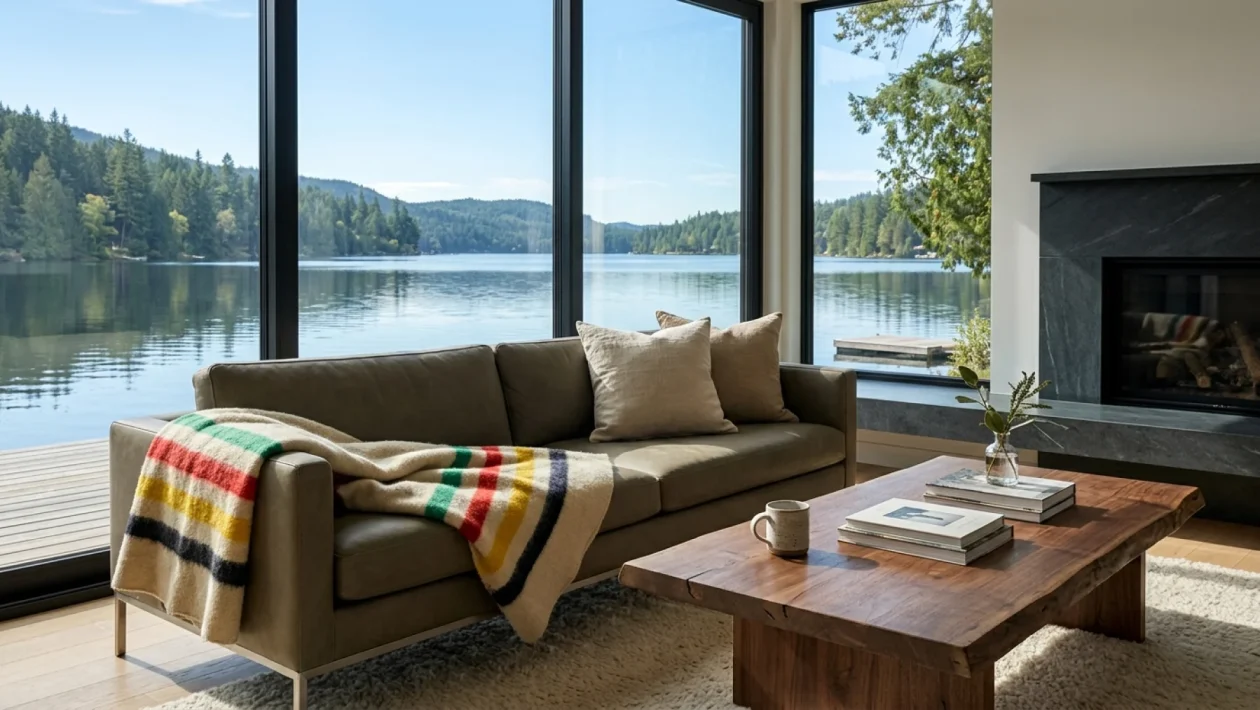
You’ve got the keys to the cottage, but the inside feels like a sterile waiting room with a view of the water. Slapping a mass-produced “Life is Better at the Lake” sign on the drywall won’t fix a room that completely lacks soul. The absolute best way to bridge the gap between a cold plywood box and a rich, inviting retreat is lake house layering. By strategically stacking textures, eras, and lighting, you can instantly engineer that lived-in, generational charm—even if the paint dried yesterday.
What Exactly is Lake House Layering?
It is not just about tossing three random blankets onto a leather couch. Layering is a highly deliberate design strategy that builds deep visual intrigue.
Think of it like building a proper campfire. You need the dense anchor logs, the varied kindling, and the initial spark.
In architectural design terms, you are intentionally mixing heavy, permanent elements with soft, transient ones. According to a recent 2026 report by the Canadian Home Builders’ Association, an incredible 72% of recreational property owners now prioritize “sensory coziness” over physical square footage.
You are aiming for a space that feels collected over decades, rather than purchased from a single showroom in an afternoon.
The 2026 Aesthetic: Moving Past Moose Antlers and Plaid
This isn’t your grandfather’s dusty hunting lodge. The summer 2026 aesthetic is completely rewriting the rulebook on waterfront living.
We are finally stepping away from the aggressive, cliché cabin kitsch. You don’t need a taxidermy bear head to prove you are in the woods.
Instead, the current movement leans hard into quiet luxury mixed seamlessly with utilitarian durability.
“The modern lake house is all about tactile tension. You want the roughness of reclaimed pine rubbing up against the softness of washed Belgian linen. That friction is where the magic happens.” – Sarah Richardson, Canadian Interior Designer
To pull this off, you might anchor the living room with a sleek, low-profile sofa from a modern Canadian brand like EQ3. Then, you intentionally rough up that clean look with a heavily textured, vintage Hudson’s Bay point blanket tossed over the armrest.
Your Blueprint For A Rugged Yet Refined Cabin
You need a concrete plan to balance these opposing forces. If you wing it, your space might end up looking like a cluttered yard sale.
Follow this exact formula to nail the execution:
- Start with a muted, earthy foundation for your painted walls and large furniture pieces.
- Introduce a heavy, natural anchor piece, like a raw-edge walnut coffee table or a soapstone hearth.
- Layer in soft textiles using highly varied materials like thick wool, breathable linen, and waxed canvas.
- Install ambient, multi-level lighting to cast warm shadows across your newly introduced textures.
Keeping track of what counts as “rugged” versus “refined” can get tricky. Use this quick cheat sheet when you are sourcing items for your living space.
| Rugged Elements (The Muscle) | Refined Elements (The Polish) |
|---|---|
| Cast iron hardware and matte black steel | Polished brass or brushed nickel accents |
| Distressed leather and reclaimed barn wood | Velvet throw pillows and clean-lined upholstery |
| Chunky knit wool rugs and heavy canvas | Sheer linen drapery and smooth glass vases |
Frequently Asked Questions
Can I pull off lake house layering in a modern, newly built cottage?
Absolutely. In fact, new builds benefit from this technique the most. Modern construction often lacks intrinsic character, so adding architectural salvage, vintage rugs, and layered textiles introduces much-needed warmth to sharp, modern drywall.
How do I layer without making the space feel incredibly cluttered?
The secret is strict color discipline. Keep your base palette cohesive—think mossy greens, slate grays, and warm oatmeals. When your colors are harmonized, you can layer a dozen different textures in a single room without it ever feeling chaotic.
🤝 Good luck bringing this highly sought-after vibe to your own waterfront property this season.
💡 Remember, building genuine character takes a little bit of patience, so trust the process and let the room organically evolve.
📱 Share your thoughts or photos of your recent cabin upgrades with us online so we can see your progress.
👇 Until next time, keep your axes sharp and your interiors incredibly comfortable!