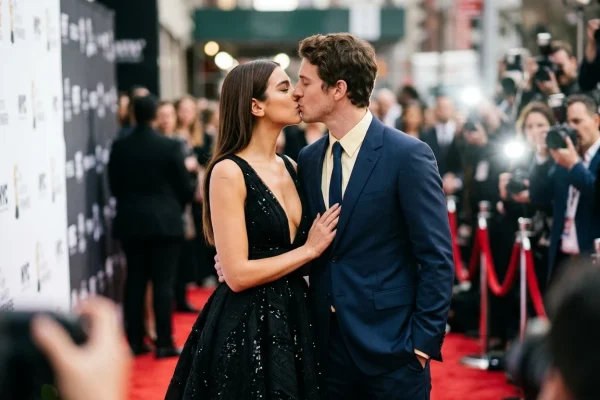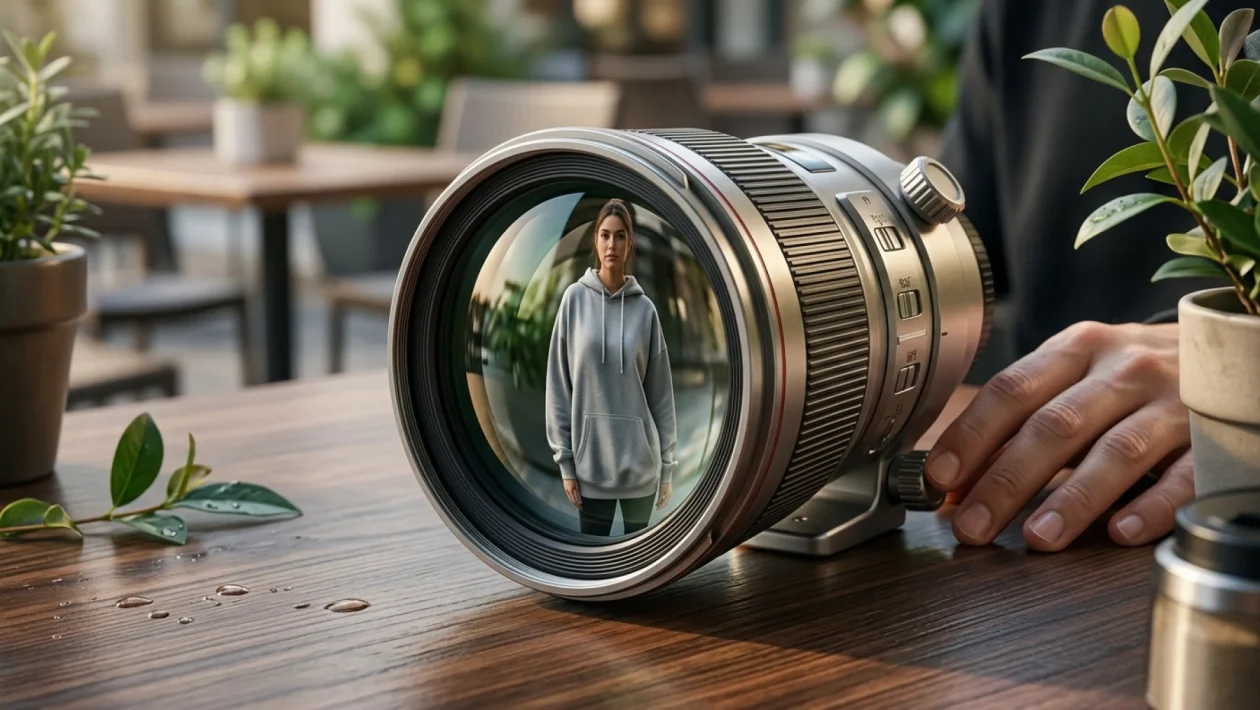
The internet lost its collective mind this week when a fresh batch of unedited, raw paparazzi shots hit the web. We aren’t talking about carefully curated social media posts; we are talking about harsh, mid-blink, unapologetic reality.
If you have ever untagged yourself from a family barbecue photo because a weird shadow added ten years to your face, you will want to pay attention. We are going to look at exactly how Kim Kardashian handled her latest bad-angle fiasco, and what it actually teaches us about the unforgiving mechanics of modern photography.
Kim Kardashian Reacts To The Viral Chaos
Instead of issuing a glossy PR statement or threatening lawsuits, the reality star took a surprisingly relatable approach. She openly acknowledged the photos on her social feeds, pointing out how absolutely ridiculous the perspective was.
It turns out, even billionaires get caught off guard while running errands. She was reportedly wearing a simple oversized hoodie from the Canadian athletic powerhouse Lululemon when the shutterbugs swarmed her.
Her reaction was a masterclass in owning the narrative. By laughing at the warped dimensions of her own face, she instantly defused the internet trolls looking for a meltdown.
Unflattering Paparazzi Shots And The Media Machine
Let us get one thing straight: paparazzi photography is not about making subjects look good. It is a high-speed, run-and-gun operation.
Photographers are shooting from the hip, often walking backward, and firing off hundreds of frames per second. They want the shot that sells, and perfection rarely sells as well as a perceived flaw.
Here is a hard, surprising fact to chew on: according to recent digital media studies, candid celebrity photos showing visible physical “flaws” generate 400% more click-through engagement than perfectly posed red carpet shots.
The media thrives on the stark contrast between a curated public image and an awkward, off-guard reality.
The Truth About Bad Angles And Camera Lenses
As a guy who appreciates the mechanics behind the tools we use, I can tell you that cameras are notorious liars. A lens simply does not see the world the way your eyes do.
When a photographer uses a wide-angle lens up close, it radically distorts the subject nearest to the glass. It can make a perfectly normal nose look huge and a sharp jawline completely disappear.
“People forget that focal length dictates facial structure in a photograph. A 24mm street lens will stretch your features, while a 200mm telephoto lens compresses them into a flat pancake. Neither is what you actually look like in person.” — David Chen, Senior Celebrity Portrait Photographer
Understanding this hardware quirk instantly removes the sting of a bad photo. You did not suddenly gain twenty pounds; you just fell victim to severe lens distortion.
Here is a quick breakdown of how different focal lengths mess with your face:
| Lens Type | The Reality Effect |
|---|---|
| 24mm (Wide Angle) | Stretches features outward, distorting the center of the face. |
| 50mm (Standard) | Closest to human eyesight, but still flattens depth slightly. |
| 200mm (Telephoto) | Compresses features, making faces look much wider and heavier. |
Now that we are sweating through the peak of July 2026, you are bound to face an onslaught of summer wedding and vacation cameras. You need to understand the mechanics of posing to protect yourself.
Here is my bulletproof method for beating bad camera angles every single time:
- Control the chin: Push your forehead slightly forward and tilt your chin down just a fraction to tighten your jawline.
- Angle your shoulders: Never stand perfectly square to a camera. Turn your body 45 degrees away from the lens to create a slimmer profile.
- Mind the lighting: If the sun is directly above you, it will cast harsh, aging shadows under your eyes. Always face your body toward the primary light source.
Frequently Asked Questions
Why do bad angles make such a massive difference in photos?
Because a camera captures a flat, 2D representation of a 3D object. A bad angle removes depth, casting unnatural shadows that your brain mistakenly interprets as actual changes in your facial structure.
Did Kim Kardashian try to get the photos removed?
No, she actually joked about them online instead of fighting them. Attempting to scrub unedited photos from the internet usually triggers the Streisand Effect, making them go infinitely more viral.
How can I tell if a photo is distorted by the lens?
Look at the outer edges of the frame. If the background looks slightly curved or if objects closer to the camera appear massive compared to the background, you are looking at wide-angle lens distortion.
Conclusion
🤝 At the end of the day, a bad photo is just a mechanical misrepresentation of a single split second in time. Do not let it ruin your day, your mood, or your hard-earned confidence.
💡 If Kim Kardashian can shrug off a terribly framed, universally broadcasted photo, you can absolutely survive a bad tag from your aunt’s backyard barbecue.
📱 Share your thoughts in the comments below, or send this article to a buddy who always complains about looking terrible in group pictures.
👇 Good luck out there this summer, keep your angles sharp, and remember that real life does not happen in two dimensions.