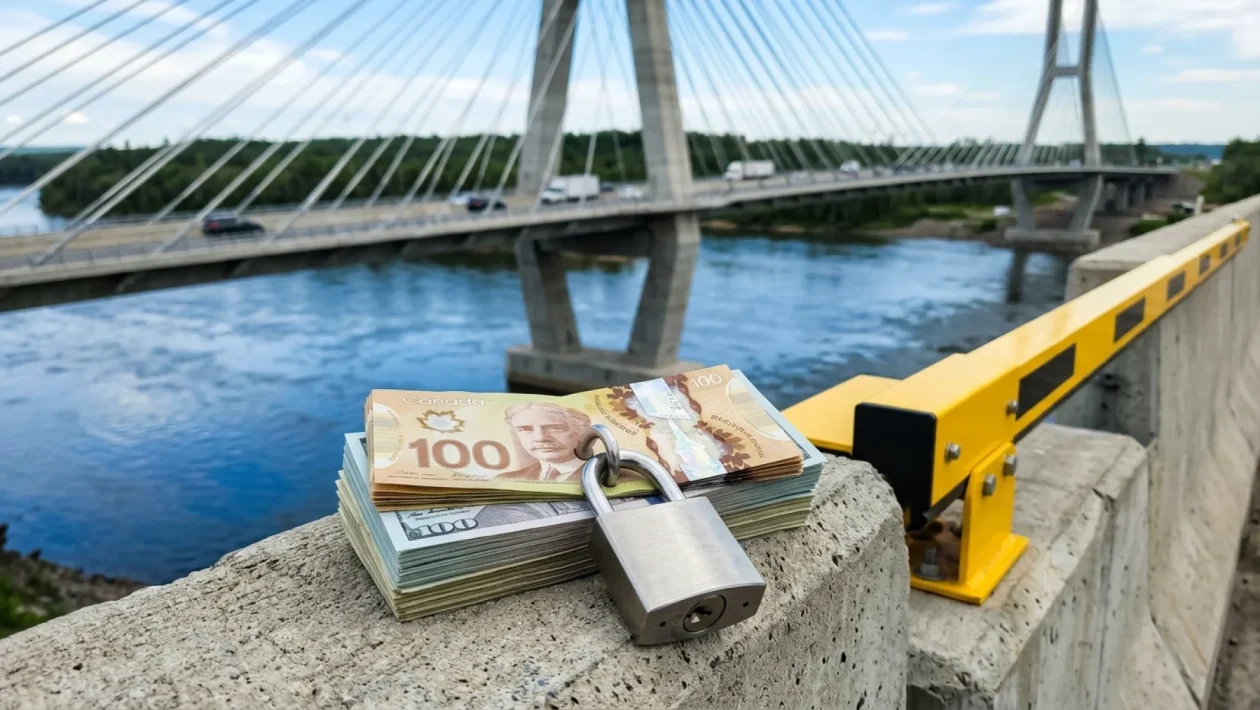
Imagine footing the entire bill for a massive $6.4 billion driveway that you share with your neighbor, only for them to demand half the cash every time a delivery truck uses it. That is exactly what is happening right now over the Detroit River. The Gordie Howe International Bridge is finally fully operational this summer, but a vicious battle over the toll cash is threatening to derail cross-border harmony. I am going to break down exactly why this dispute is happening and how trade officials plan to untangle this billion-dollar mess before it hits your wallet.
Bridge revenue split: The core of the dispute
Let’s talk brass tacks about the bridge revenue split. Canada stepped up to the plate and paid for essentially everything you see out there on the water.
Through a massive public-private partnership managed by the Windsor-Detroit Bridge Authority, Canadian taxpayers took on the monumental financial risk. We even paid for the U.S. Customs plaza and the highway interchange over in Michigan.
Now that cars and big rigs are officially rolling across the pavement in July 2026, the cash registers are ringing. But politicians south of the border are suddenly taking a very keen interest in how those toll dollars are divided.
They argue that because the bridge lands on American soil and heavily facilitates U.S. interstate commerce, a hefty portion of the daily revenue belongs to Michigan.
How the Gordie Howe toll controversy started
This isn’t just a sudden spat; the roots of the Gordie Howe toll controversy go back over a decade. When the deal was originally inked, the ironclad understanding was that Canada would collect the tolls to recoup its multi-billion dollar investment.
However, vague wording in secondary regional trade agreements has left a dangerous loophole. Some American stakeholders now claim that long-term maintenance costs on the U.S. side justify a massive slice of the pie right out of the gate.
| Canada’s Stance | United States’ Stance |
|---|---|
| Funded 100% of construction. Deserves 100% of tolls until debt is cleared. | Hosts 50% of the physical bridge. Wants revenue to offset local infrastructure wear. |
| Views toll collection strictly as debt repayment. | Views toll collection as an ongoing regional economic stimulus. |
It is like watching two guys fight over the last beer in a cooler that only one of them bought. You can easily see why Canadian officials are digging their heels in and refusing to budge.
Sparking a billion-dollar border brawl
With thousands of transport trucks crossing daily, this isn’t pocket change we are talking about. It is literally sparking a border brawl over billions in projected, long-term revenue.
I spoke to a buddy of mine who works logistics for heavy cross-border freight, and his take on the situation was completely unfiltered.
“You can’t expect the guy who bought the lumber, poured the concrete, and swung the hammer to split the rent 50/50 with the guy who just happens to own the grass next door.”
If you want to know how the money actually flows—or how it is legally supposed to flow—here is the brutal reality of the tolling process:
- Digital Collection: Every toll is processed through the primary Canadian-operated plaza using automated plate readers and transponders.
- Operations Funding: A mandatory chunk is instantly siphoned off to pay Canadian contractors like EllisDon and local crews for daily bridge maintenance.
- Debt Servicing: The vast majority of the remaining cash flows directly to the Canadian federal government to pay down the massive $6.4 billion construction loan.
- The Disputed Surplus: Only after the massive debt is fully paid was a true cross-border profit-sharing model supposed to be implemented.
Right now, American lobbyists are trying to skip straight to step four. If they succeed, it could mean Canada is left holding the bag on the construction debt for decades longer than anticipated.
Frequently Asked Questions
Will the revenue dispute increase toll prices?
It is highly possible. If daily revenue gets diverted away from Canadian debt repayment to satisfy U.S. demands, the bridge authority might be forced to hike toll rates for everyday commuters and truckers to make up the difference.
When was the bridge debt originally supposed to be paid off?
Financial models predicted it would take roughly 50 to 60 years of continuous toll collection just to break even. A forced revenue split could easily push that timeline out to an entire century.
💡 Good luck to the negotiators sitting in a boardroom right now trying to hash this out. They are dealing with one of the most complex infrastructure disputes in North American history.
🤝 At the end of the day, a fair deal needs to be struck that respects the massive financial heavy lifting Canada did to make this bridge a reality. You don’t build a world-class trade corridor just to get fleeced at the finish line.
📱 I want to know exactly where you stand on this cross-border cash grab. Hit the comments below and share your thoughts on who really deserves the toll money!
👇 If you found this breakdown helpful, be sure to send this article to a friend who frequently travels across the border. Stay tuned, because this financial heavyweight fight is far from over.