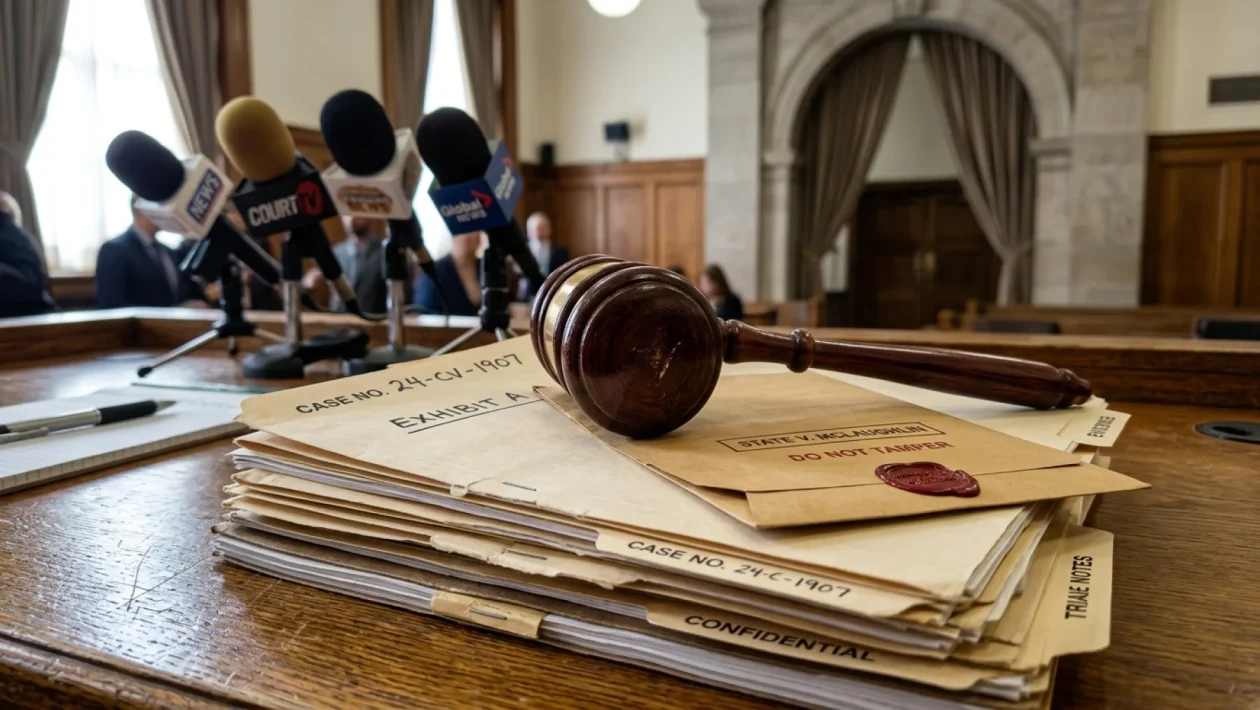
If you’ve been glued to the news this summer, you already know the Charlie Kirk trial has completely hijacked the national conversation. But what went down during this week’s preliminary hearing wasn’t just your standard legal housekeeping. It was a high-stakes masterclass in courtroom strategy that gave us our first real glimpse into how this entire legal battle will play out.
Think of a preliminary hearing like the weigh-in before a massive heavyweight boxing match. Both sides are stepping onto the scale, flexing their evidence, and trying to prove to the judge that they have enough firepower to actually take this to front of a jury. If you want to understand the true legal mechanics behind the headlines, you need to look past the media circus and dig into the actual facts of the hearing.
Charlie Kirk Trial: Why the Stakes Have Never Been Higher
By the time we rolled into July 2026, the public narrative around the Charlie Kirk trial had already spun wildly out of control. Armchair detectives on social media have spent months debating motives, alibis, and timelines. But inside the courtroom, speculation means absolutely nothing.
The prosecution had one singular job this week: to establish “probable cause.” They didn’t need to prove guilt beyond a reasonable doubt yet. They just needed to convince the judge that a crime was committed and that the defendant is likely the one who pulled the trigger.
Here is a reality check that surprises most people outside the legal profession. According to recent North American justice department statistics, roughly 95% of criminal cases end in a plea bargain and never actually see a jury. But given the absolute refusal of the defense to entertain a deal, this case is rocketing toward a full-blown, incredibly expensive trial.
Inside the Courtroom: The Vibe, Tension, and Defense Tactics
Standing outside the courthouse with a lukewarm Tim Hortons dark roast in hand, you could feel the electricity in the air. Reporters from CBC News to major U.S. networks were shoulder-to-shoulder, waiting for the doors to open. Once inside, the atmosphere shifted from chaotic to ice-cold.
The defense team came out swinging. Instead of sitting back and letting the prosecution lay out their narrative, the defense aggressively cross-examined the lead detective on the stand. It is a risky tactic in a preliminary hearing, but it was designed to poke holes early and rattle the state’s confidence.
“A preliminary hearing is usually a rubber stamp for the prosecution. But the defense treated today like it was the main event, laying traps that they absolutely plan to spring during the actual trial.” — David Cochrane, Senior Legal Analyst
The Explosive Preliminary Hearing: Core Evidence Breakdowns
The real fireworks started when the prosecution began laying out their physical timeline. They didn’t show all their cards, but they revealed enough to justify keeping the defendant locked up without bail.
Here is exactly how the prosecution built their probable cause step-by-step:
- Cell Tower Pings: The state introduced raw data showing the defendant’s mobile device pinged a tower less than a mile from the crime scene during the critical two-hour window.
- The Dashcam Footage: Grainy but functional dashcam video from a passing delivery truck was logged into evidence, allegedly showing a vehicle matching the defendant’s fleeing the area.
- Witness Statements: The prosecution read partial transcripts from a confidential witness who claims to have heard the altercation escalate.
To keep things straightforward, let’s look at how the two legal teams are framing this exact same evidence. Here is the quick breakdown of the courtroom battlefield:
| Prosecution’s Angle | Defense’s Rebuttal |
|---|---|
| Cell data puts the suspect at the scene. | Cell towers cover massive radiuses; it proves nothing specific. |
| Dashcam footage shows the getaway car. | Make and model are common; license plate is entirely unreadable. |
Frequently Asked Questions About the Hearing
What exactly happens after a preliminary hearing?
If the judge rules there is enough evidence (which they did in this case), the defendant is formally “bound over” for trial. The next major step is the arraignment in the trial court, followed by a lengthy discovery phase where both sides exchange all their evidence.
Why didn’t the defense call any of their own witnesses?
This is standard practice. The defense rarely calls witnesses during a preliminary hearing. Doing so gives the prosecution a free preview of their trial strategy and allows the state to cross-examine defense witnesses months before the real trial begins.
When will the actual trial start?
Given the massive backlog in the court system and the sheer volume of forensic evidence being processed, jury selection likely won’t begin until early 2027. Legal wheels turn incredibly slowly.
Final Thoughts
🤝 The Charlie Kirk trial is gearing up to be one of the most heavily scrutinized legal battles of the decade. The preliminary hearing proved that neither side is willing to give an inch, and the defense is preparing for a scorched-earth campaign.
💡 Pay attention to the little details as this case moves into the discovery phase. The cell phone tower data alone is going to be a massive point of contention, and it might just be the linchpin that wins or loses the case.
📱 Share your thoughts on how you think the defense handled the opening rounds. Do you think the prosecution brought enough heat, or are they holding back their best evidence?
👇 Good luck keeping up with the twists in this one—bookmark this page, and I’ll keep you updated as soon as the judge sets the official trial dates!