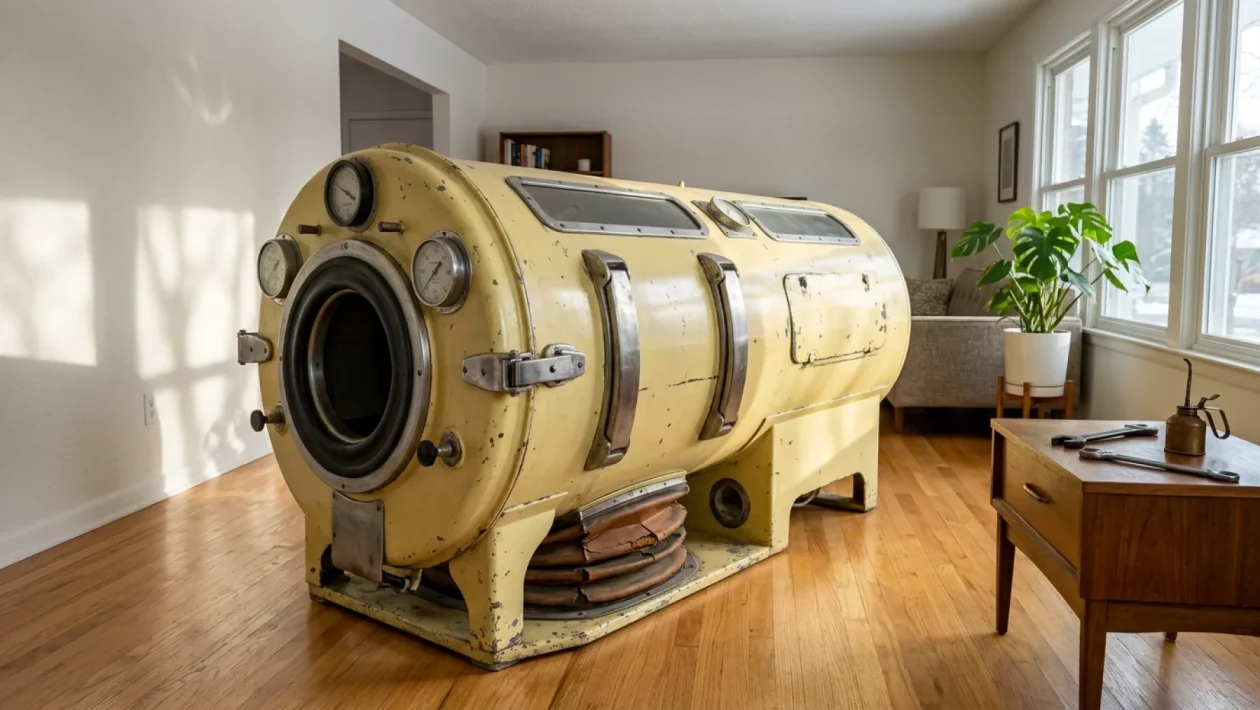
Imagine living your entire adult life inside a 600-pound steel submarine that breathes for you. When the news broke about the last polio survivor iron lung death, it wasn’t just an obituary—it was the closing of a terrifying, century-long chapter in medical history. Paul Alexander, the man who defied every medical odd, passed away, leaving behind a legacy of pure grit. Today, we’re tearing down the mechanics of the machine that kept him alive and uncovering what his 70-year battle teaches us about human resilience.
The Last Polio Survivor: Who Was Paul Alexander?
Paul contracted polio in 1952 during one of the worst viral outbreaks in North American history. Within days, the young boy was paralyzed from the neck down.
The virus attacked his central nervous system, effectively shutting down his diaphragm. Doctors in his Texas ward didn’t expect him to survive the week.
But Paul wasn’t just a survivor; he was an absolute machine. He managed to earn a law degree, write a memoir using a pen attached to a plastic stick in his mouth, and tirelessly advocate for vaccination. He outlived his parents, his brother, and incredibly, his original iron lung.
It’s a stark reminder of the sheer panic that gripped communities before the Salk vaccine. Back in the early 1950s, polio paralyzed over 50,000 children across North America in a single year—a terrifying hard fact that puts our modern medical marvels into sharp perspective.
The Iron Lung Death: End of a Mechanical Era
His passing marks the definitive iron lung death of a bygone era. The machine, invented in 1928, was once a staple in hospitals like Toronto General during the absolute height of the epidemic.
By the time we reached the summer of 2026, these clunky metal tubes were nothing more than museum artifacts to the rest of us. But for Paul, it was his lifeline, his home, and his daily reality.
“Paul Alexander’s passing isn’t just the loss of a remarkable man; it’s the final echo of the polio epidemics that redefined public health and organizations like the March of Dimes Canada.” – Dr. Michael Smith, Medical Historian
When parts for his aging machine started failing decades later, he had to rely on a ragtag group of local mechanics and tinkerers to keep the vintage motor running. It was the ultimate, high-stakes DIY repair job just to keep breathing.
The 70-Year Legacy: How Did the Machine Actually Work?
You might be wondering how a hollow steel tube actually keeps a human breathing for seven decades. It comes down to brilliant, old-school engineering.
Unlike modern positive-pressure ventilators that force air down your throat, the iron lung uses negative pressure. Here is exactly how it replicates the human respiratory system:
- Sealing the Chamber: The patient slides inside the cylinder on a specialized bed, with only their head exposed through an airtight rubber collar.
- Creating the Vacuum: A motorized leather bellows at the base of the machine expands, pumping air out of the cylinder to create a vacuum.
- Inhalation: This negative pressure causes the patient’s chest cavity to expand automatically, pulling fresh air in through their nose and mouth.
- Exhalation: The bellows contract, pushing air back into the cylinder. The pressure normalizes, the chest drops, and the patient exhales naturally.
Iron Lung vs. Modern Ventilators
Medicine has advanced lightyears since 1952. If you walk into an ICU today, you won’t hear the rhythmic, mechanical hissing of a massive metal cylinder.
Here is a breakdown of how Paul’s lifelong companion compares to the tech we use right now.
| Vintage Iron Lung | Modern Medical Ventilator |
|---|---|
| Negative pressure (pulls the chest) | Positive pressure (pushes air in) |
| 600 lbs, completely stationary | Lightweight, easily portable |
| Patient confined entirely to the tube | Patient can sit up and be transported |
| Requires custom, obsolete parts | Standardized medical supply chain |
Frequently Asked Questions
Why didn’t Paul Alexander transition to a modern ventilator?
After decades in the iron lung, his chest muscles and lungs had adapted exclusively to the negative pressure environment. Modern positive-pressure ventilators would have actually been damaging and severely uncomfortable for his specific physiological setup.
Are there any iron lungs still in use today?
With the last polio survivor iron lung death, the active medical use of these original negative-pressure machines has essentially ceased. A handful of modern, portable negative-pressure vests exist, but the classic 600-pound steel cylinders are now strictly historical artifacts.
Did Paul Alexander ever breathe on his own?
Yes, briefly! He taught himself “frog breathing” (glossopharyngeal breathing), using his throat muscles to gulp air into his lungs. This allowed him to leave the machine for a few hours at a time to represent clients in court or simply sit on his porch.
Wrapping Up a Remarkable Life
💡 Paul Alexander’s story is the ultimate testament to human stubbornness and the will to live. He took the absolute worst hand dealt by nature and turned it into a masterclass in resilience, outliving the very disease that tried to take him.
🤝 As we enjoy this warm July 2026 summer, his passing is a poignant reminder to appreciate the medical science we so often take for granted. Our modern health landscape was built on the enduring trials of survivors like Paul.
📱 I’d love to hear your thoughts on this incredible piece of history. Did your parents or grandparents ever share stories about the polio outbreaks of the 1950s?
👇 Drop a comment below and share your thoughts with the community—let’s keep the conversation going!