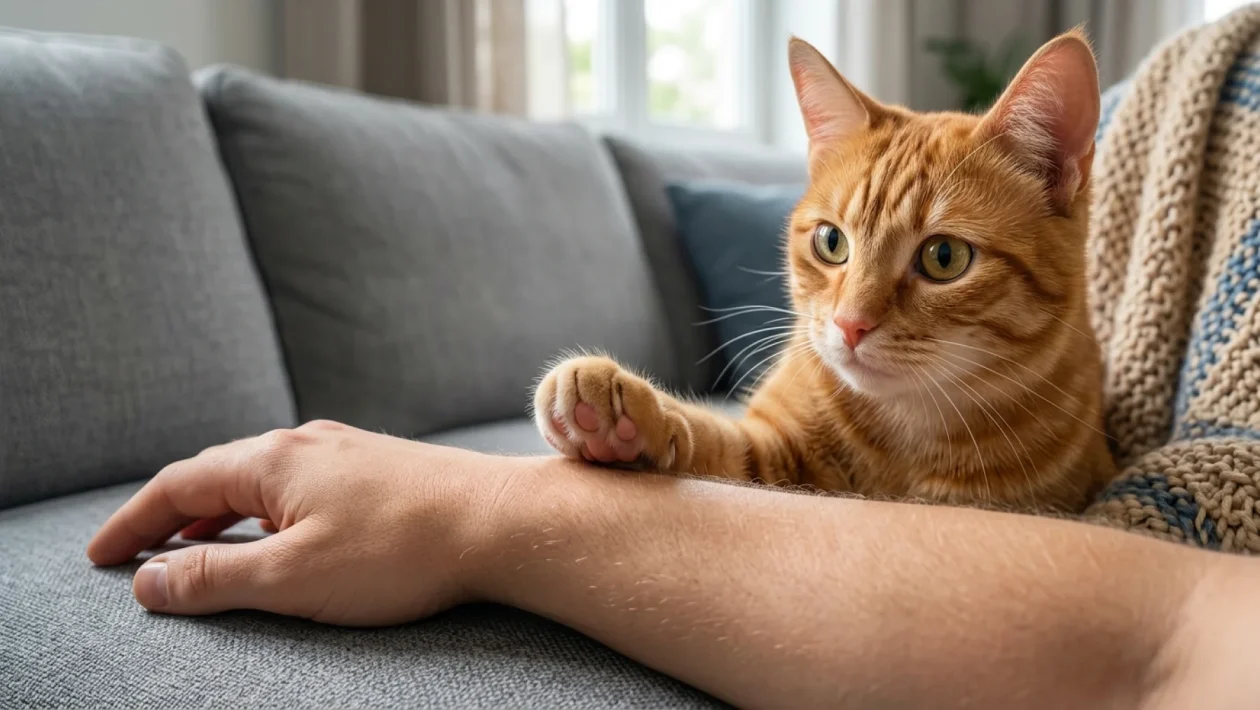
You’re chilling on the sofa, scrolling through your phone, when suddenly—boop. A soft, furry paw plants itself firmly on your arm. Cat paw tapping is one of the most hilariously direct ways our feline buddies communicate, yet most owners completely misread the signal. If you think it’s just a random twitch or a meaningless cute gesture, you’re missing out on a full-blown conversation.
Let’s cut the guesswork and get straight to the point. When your cat reaches out to physically touch you, they are making a highly calculated demand. Today, we’re breaking down exactly what your cat wants when they deliver that polite little smack, and exactly how you should react to keep the peace.
Cat Paw Tapping: The Anatomy of the Gesture
Listen, cats are absolute masters of non-verbal communication. While a dog will enthusiastically bark your ear off to get what they want, cats prefer a much more subtle, physical approach. When a cat extends a paw to touch you, they are intentionally bridging the gap between their world and yours.
This isn’t a clumsy accident. Feline paw pads are packed with specialized nerve receptors, making them incredibly sensitive sensory tools. When they use those delicate pads to tap your skin, it is a deliberate and highly focused action.
Most of the time, they resort to the tap when their previous attempts have failed. If you’ve been ignoring their subtle pacing or their quiet meows, the paw tap is their way of saying, “Hey, human, look at me.”
Decoding The Hidden Meaning
So, what exactly are they asking for? Context is absolutely everything when it comes to feline body language. You have to look at what was happening in the room right before the tap occurred.
If it’s 5:30 AM and you catch a gentle claw to the cheek, they aren’t checking your vital signs. They want breakfast, and they know a paw to the face is the most effective alarm clock in existence. Other times, it’s a clear-cut invitation to play.
If your buddy taps your leg and immediately glances over at the feather wand you picked up at Pet Valu, you’ve just been drafted into playtime. But it’s not always about demands or food; in quiet moments, a soft tap is simply a request for affection.
Here is a quick cheat sheet to help you read the room:
| Context of the Tap | Probable Feline Translation |
|---|---|
| Early morning, near your face | “Get up immediately. My food bowl is empty.” |
| Staring at a toy after tapping | “I have excess energy. Entertain me now.” |
| Soft tap while resting together | “I feel safe. Please scratch behind my ears.” |
| Tapping while you’re working | “Stop looking at the screen and look at me.” |
Your Feline’s Secret Handshake
Cats are remarkably fast learners, and they are constantly training us. If they tap you and immediately get a scoop of high-quality Orijen kibble, you better believe they are going to repeat that trick tomorrow. You are actively shaping their behavior every single time you respond.
To build a solid, trusting bond without creating a demanding monster, you need a consistent game plan. When you respond correctly to their secret handshake, you build a mutual understanding.
“Cats do not waste energy on meaningless gestures. When a paw touches your skin, it is a calculated request for resources, play, or reassurance. How you respond dictates their future behavior.” – Dr. Sarah Ellis, feline behavior specialist.
Here is the exact step-by-step process for handling the tap like a pro:
- Pause and observe: Don’t react instantly. Look at your cat’s body language and the surrounding environment to figure out what they want.
- Acknowledge calmly: Make soft eye contact and use a calm, reassuring voice. Sometimes, just knowing they have your attention is enough.
- Reward good behavior: If it’s a gentle, polite tap for affection, reward them with a chin scratch or a brief play session.
- Ignore the claws: If the tap turns into a sharp scratch or a demanding nuisance at 3 AM, completely ignore it. Do not reward aggressive behavior with food or attention.
Frequently Asked Questions
Why does my cat tap my face while I’m sleeping?
Because it works! Cats quickly learn that touching your face is the fastest way to wake you up. If they are hungry or bored in the middle of the night, your face is their favorite snooze button. If you want it to stop, you have to ignore them completely until your actual alarm goes off.
Should I be worried if my cat taps me aggressively?
An aggressive tap, especially with claws extended, usually means your cat is overstimulated or frustrated. Give them some space. If this behavior is new or accompanied by hiding and hissing, it’s worth checking in with your vet to rule out any underlying pain.
Do all cats use their paws to communicate?
Not all of them, but many do. It often comes down to their individual personality and what behaviors have been rewarded in the past. If a cat learns early on that tapping gets results, they will make it a core part of their vocabulary.
🤝 Building a better bond with your cat doesn’t require a degree in animal psychology.
💡 It just takes a little patience, consistency, and a willingness to pay attention when they reach out to connect.
📱 If you found this feline breakdown helpful, share your thoughts with us below or send this article to a fellow cat parent who needs a laugh.
👇 Good luck navigating your cat’s demands, and may your next paw tap be a friendly one!