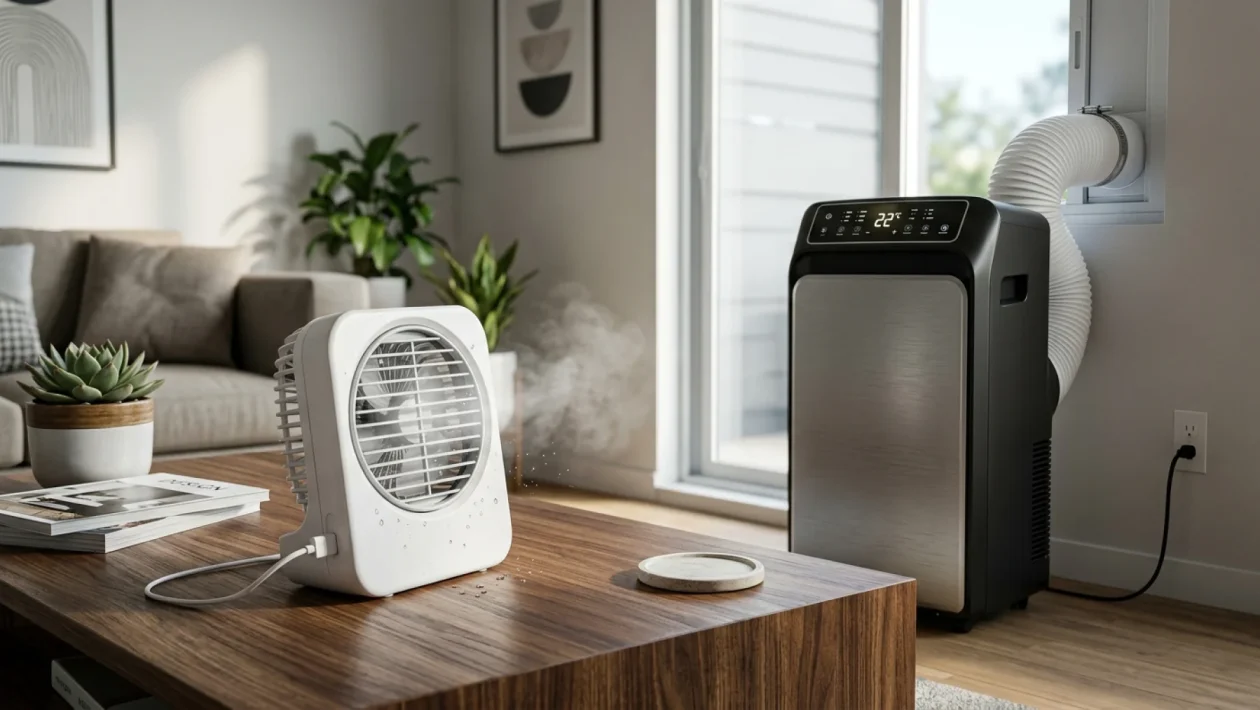
You are scrolling through your phone, sweating through your shirt, and suddenly an ad promises to turn your living room into an icebox for fifty bucks. Stop right there and put your wallet away. The market is currently flooded with targeted ads pushing miraculous, plug-and-play room coolers that are actively draining bank accounts while delivering nothing but warm, humid air. I’m going to show you exactly how these scam gadgets operate, how to spot their ridiculous claims, and what you actually need to buy to drop the temperature in your home without getting ripped off.
Fake Portable ACs
Right now, in July 2026, the internet is absolutely crawling with ads for devices like the “Epicooler.” They are marketed as the ultimate survival tool for anyone stuck in a stuffy apartment or a hot garage.
The pitch is always the same: a tiny, sleek box that supposedly cools an entire room in just 90 seconds. It sounds like the perfect, budget-friendly rescue plan.
The ugly reality? These Fake Portable ACs are nothing more than cheap battery-powered desk fans. Some of them are literally just rebranded space heaters running in reverse. If you are lucky, they have a small reservoir where you can add ice or water, turning them into highly ineffective desktop humidifiers.
Here is the hard truth that should make your blood boil: According to recent tech supply chain analyses, the wholesale purchase price for a unit like the Epicooler is a measly $17 CAD. Yet, these fly-by-night companies are flipping them to desperate consumers for ten times that amount.
Unmasking the “NASA” Scam
The marketing behind these duds is incredibly aggressive and intentionally deceptive. They use a very specific playbook to separate you from your hard-earned cash.
You will constantly see buzzwords like “revolutionary” or claims that the tech was “developed by NASA engineers.” It is pure marketing fiction. To avoid getting taken for a ride, you need to know how to tear apart these ads in real-time.
- Check the Physics: If a device is smaller than a shoebox and lacks a heavy compressor or an exhaust hose, it physically cannot remove heat from a room. Period.
- Listen for AI Voices: Scam ads frequently rely on stitched-together stock footage voiced by weird, robotic AI narrators or poorly translated scripts.
- Investigate the Seller: Click through to the website. If you cannot find a legitimate mailing address, a clear return policy, or a proper customer service number, close the tab immediately.
Securing Real Room Cooling
If you genuinely want to stop sweating, you have to invest in proper mechanics. A real portable air conditioner requires a compressor, refrigerant, and an exhaust hose to pump the hot air out of your window.
Do not rely on shady social media links. Head down to trusted local retailers like Canadian Tire or RONA where you can physically inspect the units and rely on legitimate buyer protection and warranty programs.
“An evaporative cooler might make your face feel nice if you sit two inches away from it, but it actually adds humidity to the room. To lower the ambient temperature of a space, you fundamentally need a system that exhausts hot air outside.” — Dave Miller, Master HVAC Technician
To help you see the difference at a glance, here is a breakdown of what you are actually looking at when you shop.
| Device Type | What It Actually Does |
|---|---|
| Viral “Mini Coolers” | Blows weak air, adds humidity, wastes money. No temperature drop. |
| Real Portable AC (with hose) | Extracts heat and moisture, vents outside, actively cools the room. |
Frequently Asked Questions
Why do these fake ACs feel cool for the first five minutes?
Because they rely on evaporative cooling. When you load them with ice water, the fan blows air over the moisture. It feels slightly cool directly on your skin due to the breeze, but it does absolutely nothing to lower the actual temperature of the room. Once the water warms up, you just have a noisy fan.
Are there any cheap alternatives to a real air conditioner?
If a real AC unit is out of the budget, your best bet is strategic airflow. Keep your blinds pulled down tight during the peak daylight hours to block radiant heat. Use high-velocity box fans positioned at windows during the cool night hours to pull fresh air in and push hot air out.
🤝 Listen, I know how desperate things get when the house feels like an oven, but throwing your money at a social media scam will only leave you hot and angry.
💡 Always stick to verified reviews on independent tech sites, and remember the golden rule of home maintenance: if a cheap gadget defies the laws of thermodynamics, it is a lie.
📱 Share your thoughts or let me know if you have spotted any of these ridiculous ads in your feed lately.
👇 Good luck staying cool out there, and keep your hard-earned cash where it belongs—in your pocket.