Public libraries are supposed to be safe havens, but right now, failing infrastructure is turning them into suffocating saunas. Imagine walking into a community building to apply for a job or just survive a spring heatwave, only to be turned away because the indoor temperature has hit a dangerous 81 degrees.
That is exactly what vulnerable residents are facing right now after a massive HVAC system failure forced a crucial public library to shutter its doors. When municipal cooling centers break down, you are completely on your own to beat the heat.
I have spent enough time repairing residential cooling units to know that you cannot rely entirely on public infrastructure. Today, we are breaking down why these community systems are failing and how you can bulletproof your own home against an unexpected AC breakdown.
HVAC system failure: What to do when the heat spikes and public spaces lock their doors
The situation at the Medgar Evers Library in Jackson, Mississippi, is a harsh wake-up call for all of us in May 2026. For three years, a failing air conditioning system has plagued the building, forcing employees to lock up the moment the thermostat crosses 81 degrees.
This isn’t just an inconvenience; it cuts off a literal lifeline for homeless individuals, seniors, and students who rely on that conditioned air. It all boils down to bureaucratic red tape and unpaid debts to contractors, leaving everyday people to suffer in the sweltering heat.
When public buildings fail, the burden shifts entirely to your own home. A recent CBC investigation highlighted that during unexpected spring heatwaves, emergency municipal cooling spaces are often offline due to aging infrastructure.
Shockingly, a house with a sudden HVAC system failure can see its indoor temperature spike by 15 degrees in less than three hours. If you can’t retreat to a local library, you need immediate backup plans at home.
Instead of panicking and rushing to your local Home Depot only to find every portable fan sold out, you need to know how to diagnose your own equipment. Taking a few proactive steps can save you from a miserable, sweaty weekend.
How to troubleshoot a home cooling breakdown
If your local public spaces are closed and your own air conditioner suddenly dies, don’t just sit there sweating. Follow these quick steps to get things moving again.
- Check the electrical panel: The most common reason an AC unit stops dead is a tripped breaker. Find your main panel and firmly reset the switch connected to your cooling system.
- Inspect the furnace filter: A choked filter completely restricts airflow, causing the indoor coil to freeze solid. Pull the filter out; if you can’t see light through it, replace it immediately.
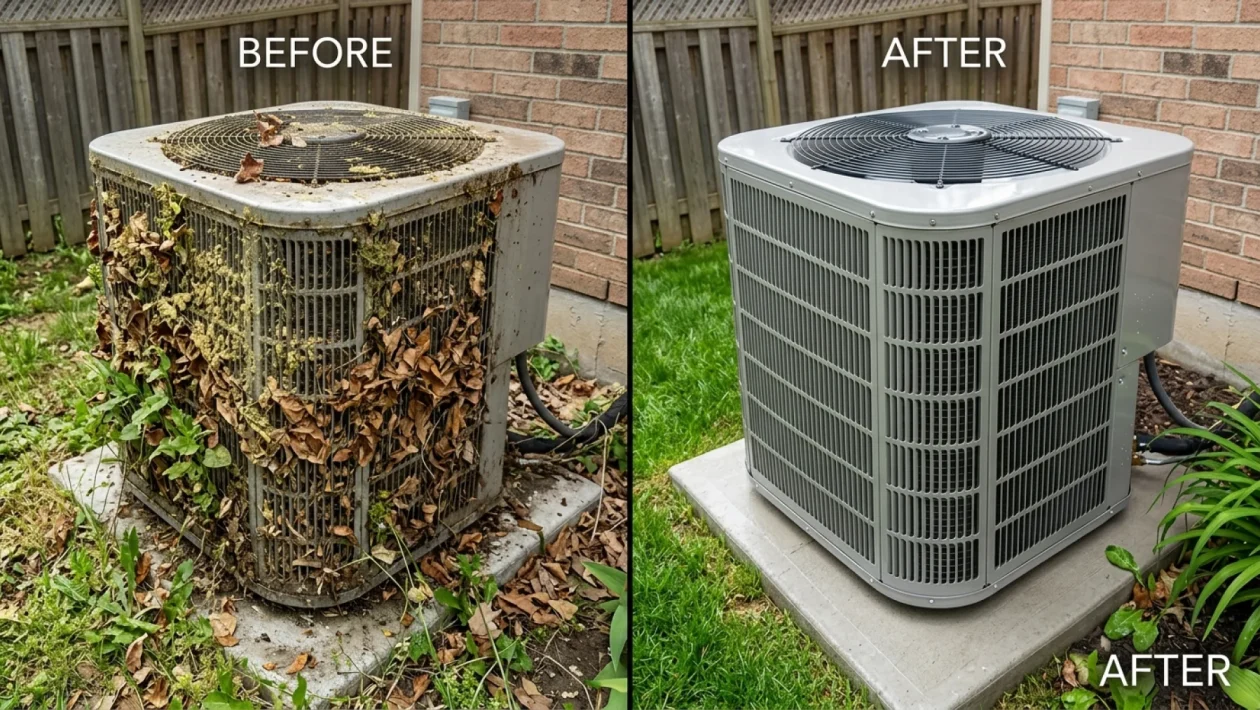
- Clear the outdoor condenser: Walk outside and look at your compressor unit. If it is buried in spring pollen, dead leaves, or overgrown bushes, it cannot expel heat.
- Create an emergency cross-breeze: If the unit is completely dead, open windows on opposite sides of your home. Place a box fan pointing inward on the cooler, shaded side of the house, and another pointing outward on the warmer side to pull the heat out.
Quick-Scan: Common AC Issues & Fixes
Here is a rapid breakdown of what might be wrong with your system and what it will take to fix it.
| Problem | Quick Fix & Estimated Cost |
|---|---|
| Dead thermostat | Swap the batteries or check the breaker ($5) |
| Weak airflow from vents | Replace a filthy air filter ($20) |
| System hums but won’t start | Blown capacitor; requires a pro replacement ($150 – $300) |
| Warm air blowing inside | Possible refrigerant leak; turn off unit and call a tech (Varies) |
Expert Insight on Infrastructure and Maintenance
It is easy to point fingers when a massive building goes down, but the root cause is almost always neglected maintenance.
“If an entire city administration can’t keep a public library’s cooling system running, your residential unit doesn’t stand a chance if you ignore it. Regular maintenance is the only difference between an easy summer and an expensive, sweltering emergency.” — Dave Miller, Veteran North American HVAC Specialist
Frequently Asked Questions About Cooling Failures
Can I just run my AC if the filter is dirty?
Absolutely not. Running your system with a blocked filter forces the blower motor into overdrive. It will eventually freeze the evaporator coil or burn out the motor entirely.
Why do public libraries close at exactly 81 degrees?
Occupational safety standards require employers to maintain a safe working environment. Once indoor temperatures surpass 80 degrees with poor circulation, the risk of heat exhaustion for staff and visitors becomes a serious liability.
How often should I service my home AC?
You should have a professional tune-up once a year, ideally in the early spring before the massive heat hits. You should also be swapping out your own indoor air filters every 30 to 60 days.
🤝 Stay cool out there, folks. We cannot always rely on our local municipalities to keep the public spaces perfectly chilled when the weather turns aggressive.
💡 Taking ownership of your own home’s comfort system is the absolute best way to protect your family from an unexpected HVAC system failure. A little DIY maintenance today saves you a massive headache tomorrow.
📱 If you found this breakdown helpful, do me a favor and share this article on Facebook or send it to a neighbor who needs a reminder to check their filter.
👇 Share your thoughts in the comments below—have you ever been stranded without AC during a heatwave? Let me know how you handled it!