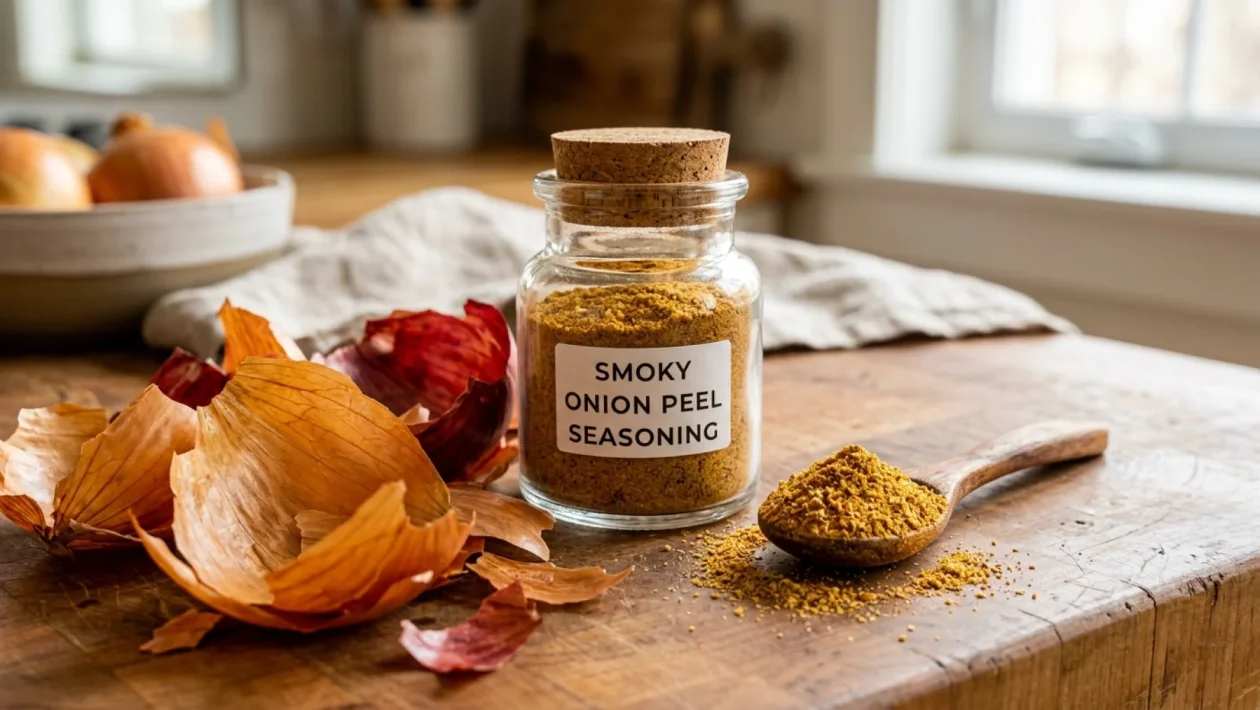
You just chopped an onion for dinner and tossed the papery skin straight into the compost bin. Stop doing that immediately. You are literally throwing away the most flavor-packed, nutrient-dense part of the vegetable.
The culinary landscape has shifted, and smart home cooks are turning literal garbage into gourmet gold. With the cost of groceries these days, stretching every single ingredient is just common sense. I’m going to show you exactly how to capture that rich, savory magic in your own kitchen.
Let’s be real, a good spice rack is expensive to maintain. But you can make one of the most versatile rubs for absolutely free, using a byproduct you already have sitting on your cutting board.
Onion Peel Seasoning: The Hidden Value In Your Trash
Those dry, seemingly useless outer layers are hiding a massive culinary secret. They are incredibly rich in natural color, deep earthy aromas, and complex compounds that the inner flesh simply doesn’t have.
Here is a surprising hard fact for you: the outer, papery skin of an onion contains up to 48 times more quercetin—a powerful, disease-fighting antioxidant—than the actual meat of the onion. By tossing the peel, you are tossing out peak nutrition.
If you wander down the spice aisle at a massive Canadian retailer like Loblaws, you will see tiny artisanal jars of vegetable powders selling for premium prices. Onion peel seasoning allows you to bypass the checkout line entirely.
Transform Kitchen Scraps: The Simple Method
You do not need fancy equipment or a culinary degree to make this happen. You just need a little bit of patience and a standard blender or coffee grinder.
This zero-waste approach is gaining massive traction across North America right now. Here is the foolproof way to make it happen in your own kitchen:
- Wash and dry: Vigorously rinse your collected onion skins to remove any field dirt, then let them air dry completely on a paper towel.
- Roast for depth: Spread the skins on a baking sheet and pop them in a low oven (around 200 degrees Fahrenheit) for about ten minutes to toast them.
- Pulverize: Toss the brittle, toasted skins into a food processor or spice grinder and blitz until you achieve a fine, uniform powder.
- Store properly: Transfer your new homemade spice into an airtight glass jar and keep it in a cool, dark cupboard.
Most home cooks don’t realize that the papery skin of an onion is essentially nature’s bouillon cube. It is packed with concentrated umami and an earthy flavor that instantly elevates any bland dish.
A Smoky Culinary Secret: Cooking With Your Powder
Now that you have your jar of magic dust, how do you actually use it? The flavor profile is shockingly complex.
Users report a distinctively sweet, slightly roasted, and deeply smoky taste that mimics high-end industrial spices. It is the ultimate secret weapon for your spring and summer grilling sessions.
You can rub it directly onto a thick cut of Alberta beef, stir it into a hearty winter stew, or toss it with potato wedges before roasting. It acts as a flavor multiplier, enhancing whatever you pair it with.
| Store-Bought Onion Powder | Homemade Onion Peel Seasoning |
|---|---|
| Costs $5 to $8 per bottle | Literally 100% free |
| Can be packed with anti-caking agents | Pure, organic, one-ingredient goodness |
| Standard, sharp onion flavor | Complex, sweet, and smoky umami profile |
Instead of hitting up Bulk Barn to refill your spice jars this month, just save your scraps. Your palate, and your wallet, will thank you.
Frequently Asked Questions
Which types of onions work best for this seasoning?
Both red and yellow onions are fantastic. Red onions will give you a slightly more robust flavor and a beautiful purple-tinged powder, while yellow onions offer a classic, savory sweetness. Avoid white onions, as their skins tend to lack the same depth of flavor.
Do I have to bake the skins first?
Technically no, but I highly recommend it. Toasting the skins in the oven draws out the natural sugars and creates that signature smoky flavor. It also ensures the skins are bone-dry, which makes them much easier to grind into a fine dust.
How long does the homemade seasoning last?
If kept in a perfectly airtight container away from direct sunlight, your homemade powder will stay fresh and potent for up to six months. Just make sure no moisture gets into the jar, or it will clump up.
🤝 Welcome to the zero-waste club, where your cooking gets significantly better and your grocery bill gets noticeably smaller.
💡 Start a scrap bag today. Just keep a ziplock in your freezer and toss your peels in there every time you make dinner until you have enough to blend.
📱 Share your thoughts and let me know how your first batch turns out! Did you use it on a steak, or did you mix it into a soup base?
👇 Good luck in the kitchen, keep experimenting, and never look at your vegetable scraps the same way again.