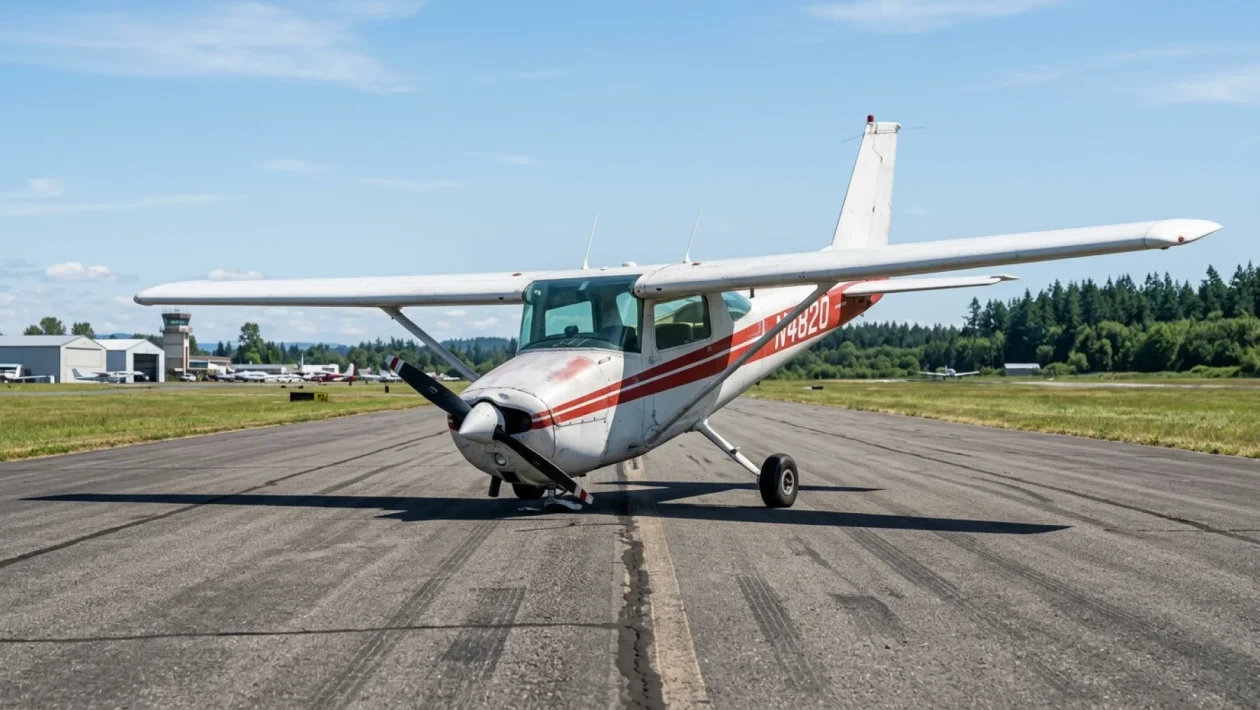
A 1970s aircraft takes a violent nose-dive onto the tarmac, but both the pilot and passenger walk away with barely a scratch. This isn’t a Hollywood action sequence; it is exactly what went down at Ottawa’s Carp Airport this Monday evening around 6:30 p.m. If you have ever wondered how modern emergency protocols and sturdy vintage aviation engineering keep us safe when gravity stops cooperating, you are in the right place.
When an unexpected aviation emergency strikes in May 2026, the real hero is usually the aircraft’s underlying design. Let’s break down exactly what happened during this small plane crash and why everyone went home safe.
Small Plane Crash Survival
Surviving an aviation scare often comes down to the specific hardware you are flying in. In this case, the aircraft involved was a classic, two-seat Cessna 150.
These mid-1970s machines are practically the aviation equivalent of a classic Ford F-150 pickup truck. They are rugged, incredibly reliable, and remarkably forgiving when things go sideways on the runway.
Here is a surprising fact for you: The Cessna 150 is actually the fifth most produced civilian plane in history. It boasts a safety and survivability record that outshines many modern sports cars on the highway today.
“When a lightweight aircraft like a 150 hits the tarmac nose-first, the engine mount acts like a massive crumple zone, absorbing the kinetic energy before it can breach the cabin,” explains veteran Canadian aviation mechanic Dave Mitchell.
How a Carp Airport Runway Mishap Unfolded
So, what actually caused this tense situation in Ottawa’s rural west? Photographs from the scene show the propeller plane resting nose-down on the runway.
In the aviation world, this is known as a “prop strike” scenario. While there is very little visible damage to the main fuselage, a runway mishap like this immediately triggers a massive, highly structured procedural response.
The Transportation Safety Board of Canada (TSB) has already stepped in to handle the official investigation. Here is exactly how authorities tackle a runway incident to find the root cause:
- Secure the perimeter: First responders and local police immediately shut down the active runway to prevent secondary accidents and treat occupants.
- Assess the mechanics: TSB investigators physically examine the landing gear, brake calipers, and propeller blades for sudden mechanical failures.
- Review the flight logs: Aviation authorities pull local weather data, pilot records, and flight tower communications to piece together the final seconds of the flight.
Ended With Zero Serious Injuries
The absolute best news from this Monday evening scare is the outcome. Paramedics treated both occupants right there at the scene.
There were no blaring sirens, no panicked hospital trips, and absolutely zero serious injuries. It is a testament to both the quick work of Ottawa first responders and the brilliant structural design of the aircraft.
Let’s look at exactly why these vintage trainers are built for maximum survivability.
| Aircraft Safety Feature | Direct Impact Benefit |
|---|---|
| Heavy-duty engine mounts | Absorbs extreme forward impact forces. |
| Rigid steel-tube cabin structure | Prevents the cockpit from collapsing inward. |
| Ultra-low landing speeds | Drastically reduces overall kinetic energy during a crash. |
Frequently Asked Questions
How often do small planes crash in Canada?
While they make headlines when they happen, aviation incidents are actually quite rare. The strict maintenance regulations enforced by Transport Canada ensure that private flights remain one of the safest modes of transportation.
What causes a plane to end up nose-down?
A nose-down resting position usually results from heavy braking, a collapsed front nose gear, or catching a wheel on soft ground just off the runway edge. The exact cause of the Carp Airport incident is currently under TSB investigation.
Who investigates aviation incidents in Ontario?
The Transportation Safety Board of Canada (TSB) is the primary federal agency responsible for investigating all aviation, marine, pipeline, and rail occurrences across the country.
🤝 Good luck to the diligent investigators at the TSB as they piece together the final mechanical details of this Carp Airport incident.
💡 The next time you see one of these vintage propeller birds flying overhead, remember that solid engineering saves lives every single day.
📱 If you found this breakdown helpful and informative, share your thoughts with us on social media or send this article to an aviation buff in your life.
👇 Stay safe out there, trust in your local first responders, and always keep your eyes on the skies!