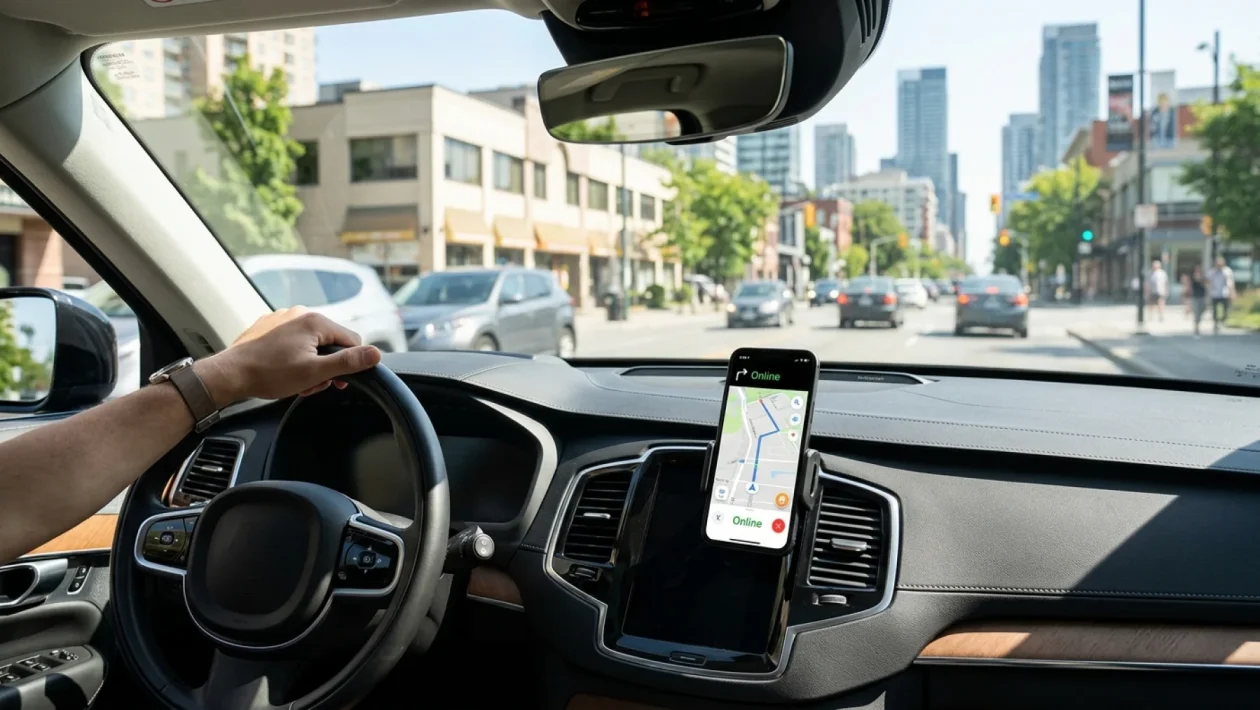
You fire up the app, put up with rowdy passengers, front the cost of expensive gas, and just hope the algorithm pays out a fair wage. For years, driving for a ride-share platform felt like playing a rigged game in a lawless digital frontier. Many drivers have found themselves pulling brutal hours only to take home less than the provincial minimum wage after expenses. But out on the West Coast, the rules just dramatically changed. Gig workers in Victoria, B.C., just locked in Canada’s very first collective agreement with a tech giant, proving that the modern hustle doesn’t have to mean zero safety nets.
Let’s pop the hood on this landmark deal. This isn’t just about a few drivers venting their frustrations—it is a massive structural shift in how tech platforms operate in Canada. If you rely on these apps to pay your rent, or even if you just use them to get home from the bar, this ripple effect is heading your way.
Uber Union Contract: Breaking Down The Deal
Getting a multi-billion-dollar tech company to sit at a bargaining table is no small feat. For a long time, the platform economy operated on a very specific loophole: drivers were independent contractors, not employees. This meant they absorbed all the risk.
But in late April 2026, over 1,000 drivers in the B.C. capital formally approved an Uber Union Contract with the United Food and Commercial Workers (UFCW) Local 1518. It is a four-year agreement that actually gives drivers some tangible leverage.
Here is a quick look at what this historic shift actually changes for the folks behind the wheel:
| Before The Deal | Under The New Contract |
|---|---|
| Unpredictable algorithm deactivations | A formal, binding dispute resolution process |
| Zero medical safety nets | $500 allowance for health benefits |
| Stagnant platform pay structures | 5% yearly increase on specific driver fees |
For drivers like Amninder Singh, who have dealt with passenger racism and false complaints leading to account suspensions, this contract finally offers peace of mind. It turns a vulnerable gig into a slightly more predictable livelihood.
How Victoria Drivers Beat The Gig Economy
Organizing a workforce you can’t even see is a logistical nightmare. Unlike a traditional factory where workers gather in a breakroom, ride-share drivers are isolated in their own cars.
To pull this off, the organizers had to get creative. They couldn’t just hand out flyers at a water cooler. Instead, they relied on modern guerrilla tactics.
- Legislative Groundwork: Everything kicked off when B.C. altered its Employment Standards Act in 2023, officially classifying online platform workers as employees rather than independent contractors.
- Guerrilla Networking: Union reps and driver advocates literally ordered rides just to pitch the union to the driver. They hijacked local WhatsApp groups and ambushed drivers at popular Tesla charging stations and airport waiting lots.
- Securing the Vote: After months of relentless digital and physical door-knocking, the workforce successfully rallied together to vote and ratify the four-year collective agreement.
The sheer effort required to organize an invisible workforce is staggering. But getting it done in Victoria proves the model is viable.
“The agreement has shown that Uber drivers have the unambiguous right to unionize. That alone sets a massive precedent.” — Patrick Johnson, President of UFCW Local 1518
What It Means For Your Next Ride
So, does this mean your morning commute is about to get more expensive? Not necessarily right away, but the landscape is shifting. When drivers are treated like human beings rather than disposable data points, retention improves. You might actually get drivers who aren’t exhausted, stressed, and one bad rating away from losing their livelihood.
However, the push for nationwide unionization is still facing massive hurdles. While grabbing a Tim Hortons coffee and firing up the app in Vancouver or Victoria might feel like a new era, drivers in Toronto are still fighting an uphill battle. Time spent organizing is time not earning, and many drivers simply can’t afford to stop driving.
Toronto advocates point out that larger cities present a completely different beast. Without provincial legislation forcing the tech giant’s hand, organizing 10,000 drivers is exponentially harder than organizing 1,000. Still, the Victoria deal proves that the tech giants are no longer untouchable.
Frequently Asked Questions
Does this new union contract cover Uber Eats drivers too?
No. At this time, the collective agreement strictly covers ride-hailing drivers in Victoria. Delivery workers operating under the same umbrella are currently excluded from these specific benefits.
Why haven’t drivers in other Canadian cities unionized yet?
It comes down to provincial law and raw logistics. B.C. changed its labour laws in 2023 to classify these workers as employees. In places like Ontario, drivers are still largely classified as independent contractors, making union certification a much longer, wildly expensive legal battle.
Will this make ride-share apps leave Canada?
Highly unlikely. While platform companies historically resist unionization to keep overhead low, this collective agreement echoes similar deals already struck in the U.K. and Australia. The company adjusts, adapts, and continues to operate.
🤝 Good luck to anyone trying to stuff this gig-economy genie back into the bottle.
💡 Whether you rely on these apps to put food on your family’s table or you just want a reliable ride home on a Friday night, this monumental shift in platform labour is going to impact us all.
📱 If you found this breakdown helpful, drop a comment below and share your thoughts on where you think platform work is heading next in Canada.
👇 Until next time, stay sharp, know your worth, and drive safe out there.